Contributory negligence in NC slip and fall claims


On this page
A fall in a grocery aisle, a rain-slicked shopping center walkway, or the tile floor inside a bank lobby usually happens in the time it takes to glance at a shelf or check a phone. In North Carolina, what happens next often has less to do with the fall itself than with which of a handful of arguments an insurance adjuster decides to use against you.
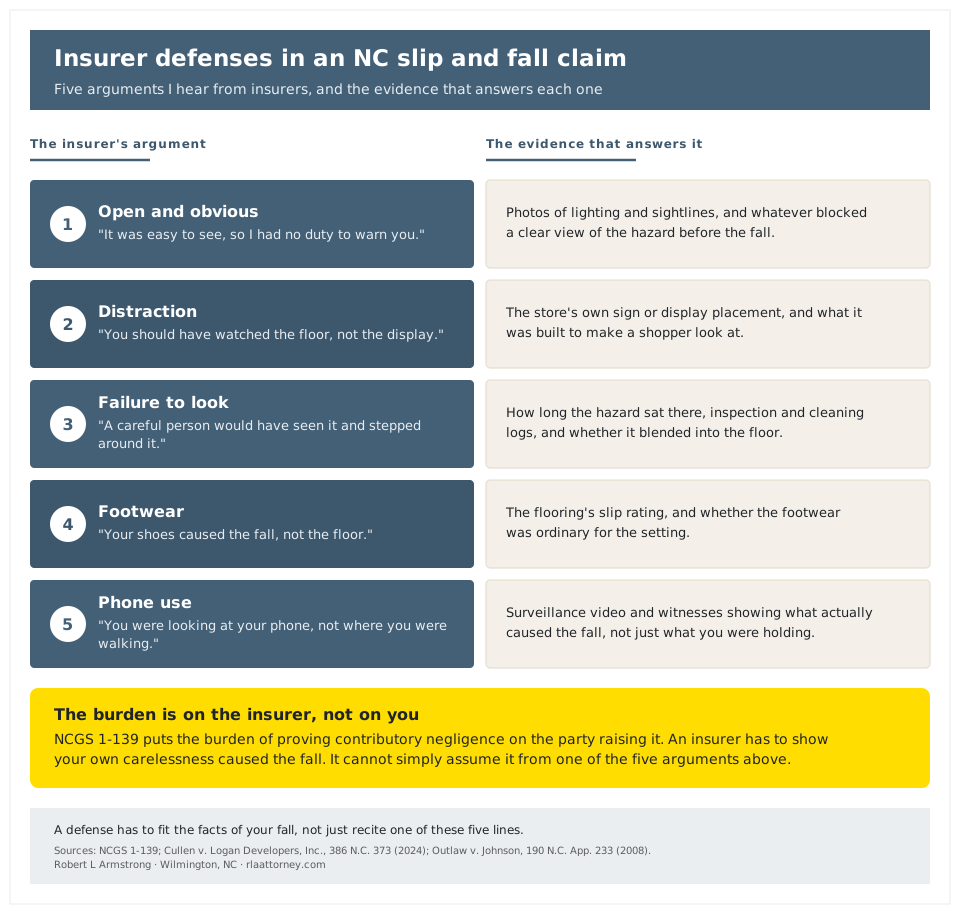
This post walks through three things: the five arguments I see most often after a slip and fall (open and obvious, distraction, failure to look, footwear, and phone use), the narrow exception that can undo them, and the kind of evidence that answers each one before it ever reaches a jury. I’m Robert L Armstrong, and I have handled personal injury cases in eastern North Carolina for over 41 years.
Why insurers reach for contributory negligence after a fall
North Carolina is one of a small number of states that still follows the contributory negligence rule. If a judge or jury finds you even one percent responsible for your own fall, that finding can bar you from recovering anything, no matter how careless the property owner was. I cover the same rule as it applies to car accident claims, but a fall on someone else’s property raises a different set of arguments, because the hazard was usually sitting there before you ever arrived.
That is why an insurer’s first move after a fall is rarely to deny that a hazard existed. It is to argue that you should have avoided it. Under NCGS 1-139, the party raising contributory negligence carries the burden of proving it. The insurer has to show that your own carelessness caused the fall. It does not get to assume that from the fact that you fell at all.
The five arguments insurers raise most often
The structural and legal basics of a fall claim are covered on my slip-and-fall claims page. Here I want to focus on the specific defenses insurers raise once they decide to fight liability instead of paying a claim, because each one calls for a different answer.
Open and obvious hazards
North Carolina courts do recognize an open and obvious rule, and the insurer’s argument is usually a version of “it was easy to see, so you should have avoided it.” In Cullen v. Logan Developers, Inc., 386 N.C. 373 (2024), the state Supreme Court held that a homeowner who stepped backward into an open scuttle hole in the attic floor of her newly built house was contributorily negligent as a matter of law, because the hole was an open and obvious risk she admitted she would have seen if she had looked behind her. That is the argument in its strongest form, and it shows how completely the rule can end a claim. The real question is rarely whether the hazard existed. It is whether it was truly obvious given the lighting, the angle, and whatever else was competing for a reasonable visitor’s attention at that moment.
Distraction from a display
Stores build displays, end caps, and signage to catch a shopper’s attention on purpose. When an insurer argues you should have been watching the floor instead of the promotion the store built to be looked at, the fairness of that argument depends on the store’s own choices as much as your own attention. The same reasoning applies to a hazard placed near a menu board, a checkout screen, or a directory sign, anywhere a business wants a visitor looking up rather than down.
Failure to look, or should have seen it
This argument overlaps with the open and obvious defense, but it puts the focus on you rather than the hazard. It asks whether a reasonably careful person, using their own eyes, would have noticed the hazard in time to avoid it. How long the hazard had been there, whether it matched the color of the floor around it, and whether anything blocked a clear line of sight all bear directly on that question, and none of them come from your side of the story alone.
Footwear
An insurer may point to your shoes, especially sandals, heels, or worn soles. Footwear only supports a contributory negligence argument if it was unreasonable for the setting and it actually contributed to the fall. Ordinary shoes on a floor that needed a slip-resistant surface, or that had no warning about a known hazard, rarely carry this argument on their own.
Phone use
A phone in your hand at the moment of a fall does not, by itself, prove carelessness. The insurer still has to connect your phone use to the actual cause of the fall. Surveillance video, when it exists, usually settles this question faster and more fairly than either side’s memory of events.
The last clear chance exception, and why it rarely fits a fall
North Carolina recognizes a last clear chance exception to contributory negligence, discussed in more detail in the UNC School of Government’s overview of NC negligence doctrines. In Outlaw v. Johnson, 190 N.C. App. 233 (2008), a case about a construction worker struck by a tractor-trailer, the doctrine required the defendant to discover the injured person already in a position of helpless peril and to have the time and ability to avoid the injury.
That fact pattern fits a driver bearing down on someone in the road far better than a wet floor or a torn stair tread that was already sitting there before you arrived. I check whether it applies in every case I look at, but it helps far fewer slip and fall claims than it helps car accident claims, where a moving vehicle gives the other side a real, later chance to avoid the harm.
How North Carolina compares to the rest of the country
Most states use some version of comparative fault, where a jury reduces your recovery by your own share of the blame instead of erasing it. North Carolina is one of just five jurisdictions, shown in my state-by-state chart, that still use the older, harsher pure contributory negligence rule: North Carolina, Virginia, Maryland, Alabama, and the District of Columbia. In the other 46 states, being ten or twenty percent at fault for your own fall would reduce a recovery, not eliminate it. Here, an insurer only needs to convince a jury of one percent.
The evidence that answers these defenses
Each of these arguments can be answered with evidence, as long as that evidence is gathered before it disappears.
Photographs of the lighting and the hazard from multiple angles, taken as close to the time of the fall as possible, often do more to answer the open and obvious and distraction arguments than any witness statement. A hazard that blended into the floor’s color and pattern is a very different case from one that stood out and was ignored.
Whether the property owner posted a warning, or reasonably could have, matters just as much as whether the hazard was hidden. Under North Carolina’s lawful visitor standard, a property owner owes reasonable care to anyone with permission to be there, and that duty includes warning about dangers the owner knew about or would have found with a reasonable inspection.
How long the hazard existed matters too, and that is often where the notice requirement comes in. A spill that sat on a security camera for forty minutes tells a very different story than one that appeared thirty seconds before you walked through. Surveillance video, when it exists, tends to answer the footwear and phone use arguments better than anything else, because it shows what actually happened instead of what an adjuster assumes happened.
A fall from a standing height, not a ladder or a roof, can still cause serious harm. Fracture injuries to a wrist, hip, or ankle are common even in a fall that looks minor on video, and the medical record from that first visit becomes part of the evidence too.
None of this evidence lasts long on its own. A store’s surveillance system often overwrites footage within days or weeks, a spill gets mopped up within minutes, and a torn stair tread gets replaced before anyone thinks to photograph it. If you’re still at the scene, photograph the hazard from several angles and distances before cleanup starts, and ask whether a manager will preserve the video. If you’ve already left, a written request asking the property to preserve its surveillance footage often has to go out quickly, before the recording cycles over and is gone for good.
Talking to a Wilmington premises liability lawyer about your fall
An insurer’s first offer after a fall usually leans on one or two of the arguments above, sometimes before you have even seen a doctor. I look at the same evidence the insurer is using, the lighting, the notice, the footage, and build the answer to their argument before I ever talk about a number. I handle every case personally, the consultation is free, and there is no fee unless I win. I work with injury victims and their families in New Hanover, Brunswick, Pender, Onslow, Bladen, and Duplin counties and throughout eastern North Carolina.
If an insurer has already told you the fall was your own fault, call me. Talk to a Wilmington premises liability lawyer about what happened and whether that argument holds up.
Frequently asked questions
If I wasn’t looking down when I fell, is my case automatically over?
No. An adjuster will often suggest that, but North Carolina law puts the burden of proving contributory negligence on the insurer, not on you. Walking normally, the way most people walk through a store or parking lot, does not by itself prove carelessness.
The hazard was easy to see. Doesn’t the open and obvious rule end my claim?
Not automatically. North Carolina courts do apply the open and obvious rule, but the analysis looks closely at the lighting, the angle, and whether anything reasonably diverted your attention at the moment. A hazard that was technically visible is not the same as one a reasonable person would have actually noticed in time to avoid it.
I was looking at a store display when I fell. Does that count against me?
It depends on what the store built the display to do. If the display was placed to draw a shopper’s eye, that cuts against an argument that you should have been watching the floor instead. I look at the store’s own layout choices as part of that analysis, not just where your eyes happened to be.
Can an insurer use my shoes against me?
They can raise it, but footwear alone rarely wins the argument. It has to be both unreasonable for the setting and an actual cause of the fall, not just a detail an adjuster noticed in a photo.
Does the last clear chance rule help in a slip and fall case?
Rarely. That exception requires the property owner to discover you already in a position of danger and have a fresh chance to prevent the injury, which fits a moving hazard, like an oncoming vehicle, far better than a hazard that was already sitting on the floor. I check for it in every case, but it helps far fewer fall claims than it helps car accident claims.
I already gave a recorded statement to the store’s insurance adjuster. Did I hurt my case?
Maybe, maybe not. What you said matters less than whether it gets read fairly and in context. Bring me the claim number and what you remember saying, and I’ll look at what the adjuster is likely to do with it before you talk to them again.
How long do I have to file a slip and fall lawsuit in NC, and how much does it cost to talk with you?
Most personal injury claims must be filed within three years under NCGS 1-52. The consultation is free, and there is no fee unless I win, so there is no cost to finding out where you stand before that deadline arrives.
An insurer only needs a jury to find you 1% at fault.
Open and obvious, distraction, failure to look, footwear, phone use. Insurers have five go-to arguments after a fall, and each one has an answer built from the same evidence, before it disappears. Get a free review of what the evidence actually shows.
Related Articles

Premises liability notice for NC slip-and-falls
Insurers deny premises liability notice by claiming ignorance. See how NC proves actual vs constructive notice, then schedule a free Wilmington consultation.

Hip fracture fall injury in NC and the notice rule
Hip or heel fracture from a store or rental fall in Wilmington? See the 4 facts NC law requires, from owner notice to surgery records. Free consultation.
Contributory negligence in North Carolina and the 1% rule
In Wilmington and eastern NC, 1% of fault can bar an injury claim. See a $100,000 worked example, the exceptions, and a state-by-state chart. Free consultation.