
Settlement Values
Practice area · Wilmington, NC
A Wilmington brain injury lawyer who builds experts others can't.
TBI is the invisible injury — symptoms surface hours, days, or weeks after impact, and the insurer's first move is to argue you were not really hurt. I have worked one brain-injury case to the end with 14 expert witnesses and 32 depositions, and I am listed in the Brain Injury Association of North Carolina Provider Guide. Consultation is free. No fee unless I win your case.
How I work TBI cases
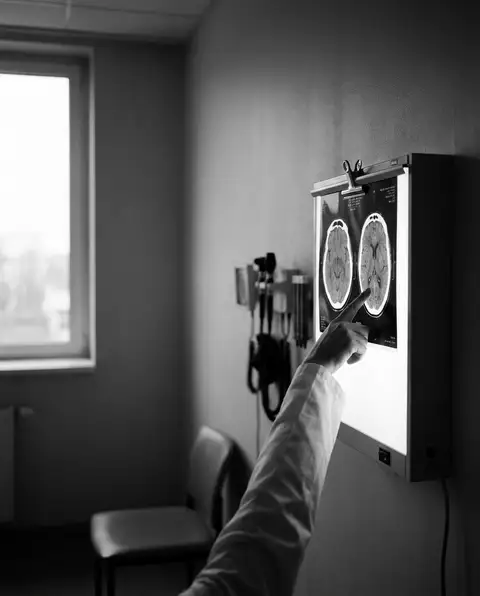
Brain-injury cases are won by the team you build around the medicine.
Traumatic brain injury is the invisible injury. The scan can be clean, the emergency room can release you the same night, and the cognitive, mood, and sleep changes that follow can take days or weeks to show up. By then, the at-fault driver's insurer has already called with a fast offer and a friendly voice. I see this pattern after car accident cases, motorcycle wrecks, serious falls, and assaults. The defense playbook is the same every time: no loss of consciousness, no real injury; preexisting cognitive issue; delayed onset is not credible. Answering that playbook is the case.
I have worked one brain-injury malpractice case to the end with fourteen expert witnesses and thirty-two depositions, over three years of investigation. Neuropsychologist to document the cognitive deficits with formal testing. Neurologist to explain the mechanism of injury and the prognosis. Life-care planner to project decades of treatment, therapy, supervision, and equipment. Economist to convert the life-care plan into present-value dollars the jury can understand. The result was a substantial monetary result for life. I do not lead with the number; I lead with the work. That is what a brain-injury case is built out of.
I am listed in the Brain Injury Association of North Carolina Provider Guide — an independent vetting of attorneys who handle these cases — and I have practiced personal injury, and only personal injury, for over 41 years. You can read more about Robert on the about page. The third hard piece is contributory negligence: if the defense pins even one percent of fault on you, recovery in North Carolina can be barred entirely. That is why the investigation has to start while the medical record is fresh. The consultation is free. There is no fee unless I win your case.
— Robert L Armstrong
What this case depends on
Three load-bearing pieces of every brain-injury case.
Most TBI pages list symptoms. Below is what the case actually turns on once the medical picture is in. Each of these is where the case is won or lost — and where a 41-year specialist looks different from a volume firm intake form. For background on the underlying rules, see the statute of limitations and the insurance claim process.
The expert team
A serious TBI claim is built on four specialists: a neuropsychologist to document cognitive deficits with formal testing, a neurologist to explain mechanism and prognosis, a life-care planner to project decades of treatment, and an economist to convert that plan into present-value dollars. Assembling that team and getting them all in alignment is the work.
Causation evidence
The insurer's first defense is almost always 'no loss of consciousness, no injury.' Defeating it requires a longitudinal medical record — repeat neuropsychological testing, imaging, contemporaneous symptom documentation, and treating-provider opinion stitched into one timeline. I start that record as early in the case as possible.
The contributory-negligence stake
North Carolina is one of only four states that follows contributory negligence. If the defense pins even 1% of fault on you, recovery can be barred entirely. On TBI cases this often shows up as 'you should have been wearing a helmet,' 'you should have seen the hazard.' The investigation has to be right from day one.
41+
Years of experience
Practicing personal injury, and only personal injury, since 1985.
BIANC
Provider Guide listing
Brain Injury Association of North Carolina — an independent vetting of TBI attorneys.
5.0
Across 43 Google reviews
Zero public reviews below five stars. Robert responds to nearly every review personally.
In their words
What people said after they called.
“I was in a car accident on New Year's Eve and did not know which way to turn. I googled attorneys and Robert's name popped up, so I gave him a call. He was amazing to work with and very responsive.”
Dawn
Google review
“Mr. Armstrong is the best! Not only is he a good attorney, he truly cares about the health of his clients. He is very easy to get in touch with and has no problem answering any questions you may have. He did a wonderful job with my case.”
Hannah
Google review
“Robert handled my case in a prompt, professional manner. All dealings with his office were pleasant, courteous and expedient. Phone calls returned, questions answered, and results obtained quickly. Would recommend him without hesitation.”
Louis
Avvo review
From the resource library
Guides for cases like this.

Catastrophic Injuries
Do I Need a Lawyer for a Concussion After a Car Accident?

Catastrophic Injuries
How to Prove a Mild TBI in North Carolina: Legal Guide

Settlement Values
Mild Traumatic Brain Injury Settlement North Carolina Guide

Catastrophic Injuries
Why Insurers Dispute Mild TBI Claims in NC

Catastrophic Injuries
Diffuse Axonal Injury Lawyer North Carolina | How We Help
Common questions
About brain-injury cases.
The questions that come up most when people call about a brain-injury case. Answered the way I would answer them on the phone. For more on related claims, see the brain injury resources and the broader catastrophic injuries hub, which covers spinal cord injuries as well.
Frequently asked questions
What counts as a traumatic brain injury?
A traumatic brain injury is any injury that disrupts how the brain functions, caused by a blow, jolt, or penetrating wound to the head. It does not require a skull fracture. Closed-head injuries (no fracture) are common after car wrecks, motorcycle crashes, falls, and assaults, and they can produce cognitive, sensory, motor, mood, and sleep symptoms that show up immediately or days and weeks later. Concussion is a mild TBI. Diffuse axonal injury, brain bleed, and stroke after injury fall on the more serious end.
The hospital said I didn’t lose consciousness — does that mean I don’t have a TBI?
No. Loss of consciousness is one possible marker, not a requirement. The defense will argue ‘no LOC, no injury,’ and I have to answer that with the actual medical record: imaging, neuropsychological testing, contemporaneous documentation of symptoms, and treating-provider opinion. Many of my TBI clients never lost consciousness at the scene. They knew something was wrong when memory, mood, sleep, or balance changed in the days that followed.
My symptoms started a week after the crash. Is it too late to do anything?
Delayed onset is common with brain injuries — symptoms can appear hours, days, or even weeks after impact. North Carolina’s three-year statute of limitations still applies, so legal time is on your side. What is not on your side is the medical record. Document everything you are experiencing, get evaluated, and call. The longer the gap between the crash and the first documented symptom, the harder I have to work to defeat the ‘delayed onset is not credible’ defense.
Why do brain-injury cases need so many expert witnesses?
Because the defense has its own. A serious TBI case typically requires a neuropsychologist to document cognitive deficits, a neurologist to explain mechanism and prognosis, a life-care planner to project decades of treatment, and an economist to convert that plan to dollars. I have coordinated 14 expert witnesses on one brain-injury malpractice case, with 32 depositions, over three years of work. That depth is what separates a serious TBI claim from a quick-settle file.
How long does a TBI case typically take?
Longer than other personal-injury cases. The longitudinal medical record itself takes time to build — neuropsychological testing is usually repeated at intervals, and the prognosis for cognitive recovery is rarely clear in the first six months. I do not push for an early settlement when the long-term picture is still developing. The full long-term cost of the injury is the recovery I am trying to capture, and the insurance claim process needs to track the medical record, not race it.
What does it cost to hire you?
Nothing up front. The consultation is free. Representation is on contingency — no fee unless I win your case. My office advances the costs of investigation, medical records, and expert witnesses, and those costs are reimbursed from the recovery if there is one. If there is not, you owe no fee. Tell me what happened. I will tell you honestly whether I think the case can be built.
When you're ready to talk through what happened, the call is free.
A brain injury changes what your future costs. I will read what you have, ask the questions that need asking, and tell you honestly whether I think the case can be built. No fee unless I win your case.
Contingency-fee representation. Free consultation. No fee unless I win.