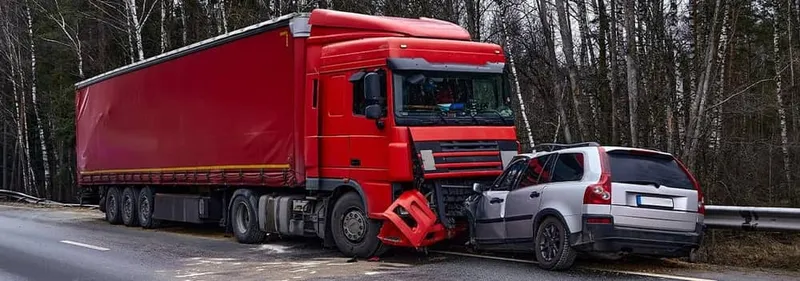
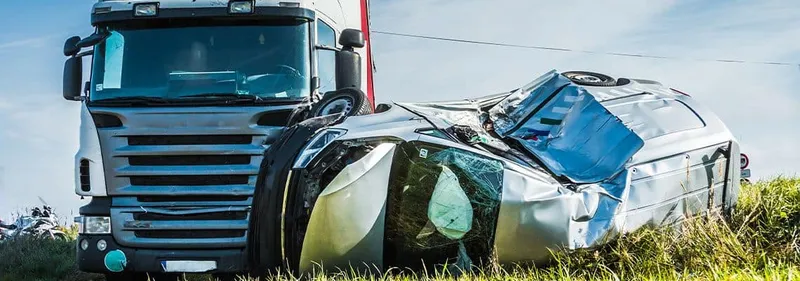
A collision with a tractor-trailer is not a car accident with a bigger vehicle. It is a different kind of case entirely, and treating it like an ordinary crash claim is one of the costlier mistakes an injured person can make. I have handled truck cases for over 41 years, and this section of my library explains what makes them different and what has to happen quickly after the wreck.
Start with the defendants. In a car crash there is usually one at-fault driver and one policy. In a truck case, liability can reach the driver, the motor carrier that employed him, the company that dispatched the load, the shipper that loaded it, the mechanic who signed off on the brakes, and sometimes a broker in between. Each of those parties carries its own insurance, and commercial policies run far larger than personal auto coverage. Finding every responsible party and every policy is where truck-case value actually comes from, and it takes investigation that a quick settlement never includes.
Then there are the federal rules. Interstate trucking is governed by FMCSA regulations covering hours of service, driver qualification, drug testing, maintenance, and cargo securement. A violation, a driver over his hours, a skipped inspection, an overloaded trailer, can establish negligence in a way ordinary traffic law cannot. The proof lives in electronic logging devices, black-box data, dashcams, and inspection records, and here is the urgent part: much of that evidence is only retained for a limited time. A preservation letter needs to go out within days of the crash, not months. In North Carolina, where the contributory negligence rule means the trucking company's lawyers will comb the evidence for any fault to pin on you, controlling that evidence early matters twice over.
This region sees more commercial traffic than people realize. The Port of Wilmington feeds container trucks onto local roads every day, I-40 and I-140 carry long-haul freight past the city, and the growth in home delivery has put box trucks and delivery vans on residential streets that never used to see them. Each of those categories raises its own coverage questions: port drayage operators, national carriers, and app-dispatched delivery drivers are insured in very different ways, and figuring out which policies apply is half the case. The articles here reflect that local mix, because a wreck with a container truck on College Road is a different investigation than an interstate 18-wheeler collision, even though both start with the same phone call.
The articles here cover the crash types I see most, including 18-wheelers on I-40, delivery trucks in Wilmington neighborhoods, and construction haulers, along with how the investigation works and why truck settlements run higher than car settlements when the case is built correctly. Trucking companies put rapid-response teams on serious wrecks, sometimes the same day. You should have someone moving just as fast on your side. If a truck hurt you or someone in your family, call me and tell me what happened. The consultation is free.