What to do after a truck accident in Wilmington, NC


On this page
A crash with a tractor-trailer, box truck, or delivery van is a different event from a crash between two cars. The truck can weigh 20 to 30 times more than your vehicle, the injuries tend to be worse, and the company that owns the truck usually has an insurer and a response team working on the case within hours. The steps you take in the first days affect your health, your evidence, and your claim.
I represent injury victims and their families in Wilmington and the surrounding eastern North Carolina counties, and I have practiced personal injury law for over 41 years. This guide walks through what to do at the scene, in the days that follow, and before you talk to the trucking company’s insurer, along with the federal record rules that decide how long key evidence survives.
Steps to take at the scene of a truck accident
If you are able to move safely, these steps protect both your health and your claim. If you are seriously hurt, let the first responders do their work and ask a family member to handle what they can.
- Call 911. North Carolina requires drivers to report any crash involving an injury or death to law enforcement. A police report also creates an early, neutral record of the scene.
- Accept medical care. Let paramedics check you even if you feel fine. Adrenaline hides pain, and a record made at the scene links your injuries to the crash.
- Photograph the truck. Capture the company name on the cab door, the USDOT number, the license plates on both the tractor and the trailer, and any damage. The DOT number identifies the motor carrier responsible for the truck.
- Photograph the scene. Take pictures of skid marks, debris, road signs, traffic signals, weather, and the position of each vehicle before anything is moved.
- Get witness names and phone numbers. Truck crashes often happen on busy roads like I-40, US-17, and US-74, and witnesses leave quickly.
- Say as little as possible about fault. Be polite, share your insurance and contact information, and let the investigation decide what happened.
Why a truck accident claim is different from a car accident claim
Most car accident claims involve two drivers and two insurance policies. A truck accident can involve a driver, a motor carrier, a trailer owner, a cargo loader, and a maintenance shop, each with its own insurance and its own lawyers. Interstate carriers must also follow federal safety rules, and those rules create records that ordinary drivers never keep.
That difference cuts both ways. The records can prove what happened, but only if someone asks for them before they are discarded. The trucking company’s investigator knows those timelines well. Crashes involving an 18-wheeler usually produce the most records, but the same rules apply to many box trucks and delivery trucks used in interstate commerce.
The injuries are different too. The Insurance Institute for Highway Safety reports that most people killed in large truck crashes are the occupants of the smaller vehicles, not the truck drivers. Serious injuries lead to larger claims, and larger claims draw a harder defense.
The evidence that proves what happened in a truck crash
Federal rules require interstate motor carriers to keep several kinds of records. In a truck accident claim, these are often the most important evidence:
- Hours-of-service logs. The Federal Motor Carrier Safety Administration’s hours-of-service rules limit most property-carrying drivers to 11 hours of driving after 10 consecutive hours off duty, within a 14-hour window. Electronic logging devices record that time, and the logs show whether fatigue played a role.
- Engine control module data. Often called the black box, the module records speed, braking, and throttle position in the seconds before a hard stop.
- Driver qualification and training files. These show whether the driver held the right license, passed a medical exam, and had a history of violations.
- Inspection and maintenance records. Brake, tire, and lighting problems often appear in these files before a crash.
- Post-crash drug and alcohol tests. After a crash involving a death, or an injury or tow-away with a citation, the carrier must test the driver on a strict schedule.
- Dispatch records, dashcam video, and cell phone data. These can show whether the driver was pushed to meet a delivery time or was distracted.
The infographic below shows how long several of these records last and when the filing deadlines run.
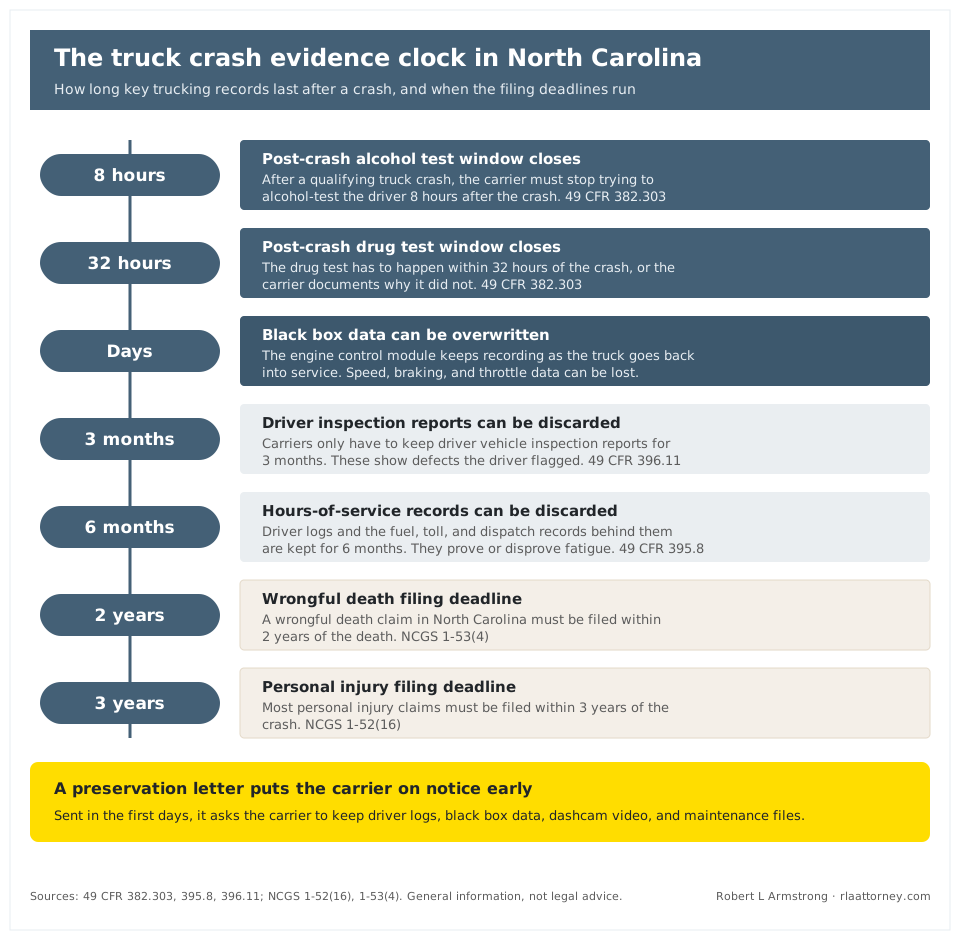
A preservation letter, sent in the first days after the crash, puts the carrier on notice that litigation is likely and that it must keep these records. Once a carrier has that notice, destroying the evidence can carry serious consequences in court.
What should you not do after a truck accident?
Some of the most common mistakes after a truck crash happen in the first week, often before the injured person has had time to think about a claim.
- Do not skip or delay medical care. A gap between the crash and your first doctor visit gives the insurer room to argue that something else caused your injuries. Some injuries, including concussions, show delayed symptoms that appear days later.
- Do not give the trucking company’s insurer a recorded statement. The adjuster may sound helpful, but the call is part of the carrier’s defense. A recorded statement can be used to question your account of the crash or the extent of your injuries.
- Do not sign a release or accept an early check. Quick offers usually come before anyone knows the full cost of your medical care and lost income, and a signed release ends the claim.
- Do not post about the crash online. Photos and comments on social media are often pulled into the case.
- Do not repair or sell your vehicle yet. The damage to your car helps show the force and angle of the impact.
Who is liable in a truck accident?
Fault in a truck crash depends on the facts, and more than one party can be responsible. The driver may have been speeding, fatigued, distracted, or impaired. The motor carrier is generally responsible for the driver’s conduct on the job and may also be responsible for its own choices, such as hiring an unqualified driver, pushing unrealistic schedules, or skipping maintenance. A shipper that overloaded or poorly secured cargo, a repair shop that did faulty brake work, or the maker of a defective part can share the blame.
North Carolina adds a serious complication. The state follows contributory negligence, a rule that bars an injured person from recovering anything if their own carelessness contributed to the crash in any amount. Most other states reduce the recovery instead. Trucking insurers know this rule well and look hard for any fact that suggests you share even a small part of the fault, such as a lane change near the truck or a moment of distraction. The black box data, logs, and video described above are often what answers that argument.
How much insurance do trucking companies carry?
Federal rules require most interstate carriers hauling general freight to carry at least $750,000 in liability coverage, and carriers hauling certain hazardous materials must carry up to $5,000,000. Many carriers carry more through excess or umbrella policies. By comparison, the minimum liability coverage for a North Carolina passenger car is far lower.
Higher limits mean more money may be available for a serious injury, but they also mean the insurer has more reason to fight. Identifying every policy that applies, including the carrier’s, the trailer owner’s, and your own underinsured motorist coverage, is part of the early work in a truck case.
What compensation is available after a truck accident?
An injury victim in North Carolina may be entitled to recover:
- Past and future medical bills, including surgery, rehabilitation, and physical therapy
- Lost wages and reduced ability to earn income in the future
- Pain and suffering, including physical pain and emotional distress
- Permanent injury, scarring, or disfigurement
- Property damage to your vehicle
When a truck crash causes a death, the family may bring a wrongful death claim through the estate for medical and funeral expenses, lost income, and the loss of the person’s companionship and care. Every case is different, and the value of a claim depends on the injuries, the evidence, and the insurance available.
How long do you have to file a truck accident claim in North Carolina?
For most injury victims, the filing deadline is three years from the date of the crash under NCGS 1-52(16). A wrongful death claim must be filed within two years of the death.
Those deadlines sound generous, but trucking evidence does not wait for them. Driver inspection reports can be discarded after 3 months and hours-of-service records after 6 months, and black box data can be overwritten as soon as the truck goes back on the road. The practical deadline for protecting a truck accident claim is measured in days and weeks, not years.
Talking with a Wilmington lawyer about your truck accident
After a truck accident, the most important steps are getting medical care, documenting the truck and the scene, staying off the record with the carrier’s insurer, and making sure the trucking records are preserved before the federal retention clocks run out. North Carolina’s contributory negligence rule makes each of those steps matter more than it would in most states.
I handle personal injury cases for injury victims and their families in New Hanover, Brunswick, Pender, Onslow, Bladen, and Duplin counties, and I work each case personally. The consultation is free, and there is no fee unless I win. You can read more about how I handle truck accident cases in Wilmington, then call (910) 256-1233 to schedule a free consultation. I’d like to hear your story.
Frequently asked questions
Should I talk to the trucking company’s insurance adjuster after the crash?
You can give basic information such as your name and contact details, but you do not have to give the trucking company’s insurer a recorded statement. The adjuster works for the carrier, and early statements are often used to argue about fault or about how badly you were hurt. I usually handle those conversations for my clients once they have a lawyer.
Who can be held responsible for a truck accident in North Carolina?
Depending on the facts, responsibility can fall on the truck driver, the motor carrier that employed the driver, the company that loaded the cargo, a maintenance shop, or the manufacturer of a defective part. Many truck crashes involve more than one of these, and each may carry its own insurance policy.
What if the police report says I was partly at fault?
A police report is important, but it is not the final word on fault. Under North Carolina’s contributory negligence rule, the insurer will use any suggestion of shared fault to deny the claim, so the report needs to be tested against the truck’s black box data, driver logs, dashcam footage, and witness accounts. Exceptions such as the last clear chance doctrine can apply in some cases.
How much does it cost to hire a truck accident lawyer?
The consultation is free, and I work on a contingency basis, which means there is no fee unless I win. During the free consultation I go over what happened, the insurance involved, and the evidence that needs to be preserved, and I tell you plainly whether I think you have a claim.
How long do I have to file a truck accident claim in North Carolina?
Most personal injury claims must be filed within three years of the crash under NCGS 1-52(16). Wrongful death claims must be filed within two years of the death. The trucking records that prove the case can be discarded much sooner, some within months, which is why an early review matters.
Do I need a lawyer if my truck accident injuries seem minor?
Not every case needs a lawyer, but truck crashes often cause injuries that show up days later, such as concussions, disc injuries, and soft tissue damage. The trucking company’s insurer also moves quickly. A free consultation is a low-cost way to learn whether the claim is worth pursuing before any evidence is lost.
Truck crash evidence disappears fast. Trucking companies know it.
Driver logs, maintenance records, and black box data can be lost or overwritten within days of a truck accident. A free consultation gets preservation letters out immediately and protects your claim's evidence.
Related Articles

Truck Accident and Wrongful Death
If you lost a loved one in a truck accident, you may be able to seek damages with a wrongful death claim. Free consultation to learn your options.

Delayed TBI Symptoms After a Crash in North Carolina
Delayed TBI symptoms can surface days or weeks after a crash. Learn what to watch for, what to document, and how NC law protects your claim.

Underinsured Motorist Settlement in North Carolina: A Guide
Navigate your underinsured motorist settlement in North Carolina. Get expert legal help to protect your rights and maximize compensation. Free consult.