
Truck Accidents
Practice area · Wilmington, NC
A Wilmington truck accident lawyer who calls back before they do.
When an 80,000-lb tractor-trailer hits a passenger vehicle, the motor carrier's investigators, defense lawyers, and insurers are usually on scene the same day. With over 41 years of exclusive personal-injury work and NC contributory-negligence experience, I send the preservation letter, pull the ELD and black-box data, and treat every truck file as a multi-defendant case from day one. The consultation is free. No fee unless I win your case.
How I work truck cases
Preservation letter on day one, multi-defendant theory from the start, FMCSA discovery in writing.
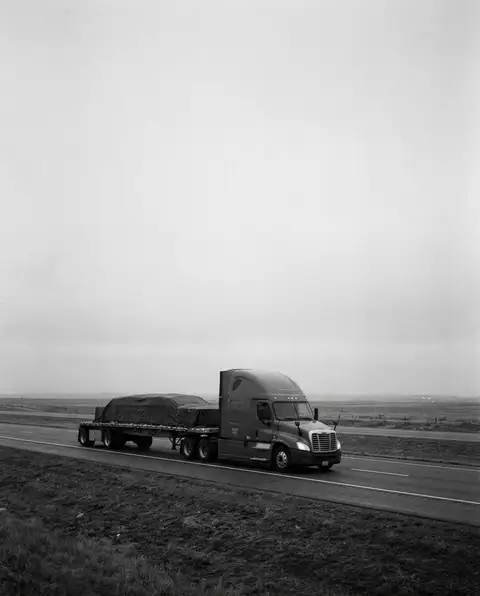
A truck case begins with an asymmetry. A fully loaded tractor-trailer weighs up to 80,000 lb under federal limits — roughly twenty times a typical passenger vehicle. The injuries are almost always serious, and the trucking company knows it. Major carriers have rapid-response teams that reach the crash scene within hours, sometimes within minutes. The driver is briefed on what to say. The vehicle is moved. The on-board data starts to age. By the time most injury victims have finished a hospital admission, the defense file is already organized. The first job is to interrupt that head start. I send a preservation letter the day I am retained — to the carrier, the insurer, and every party I can identify — putting them on written notice to hold the electronic logging device records, the engine control module or black-box data, the driver qualification file, post-trip inspection reports, dashcam footage, dispatch records, and maintenance logs. North Carolina also still follows contributory negligence — even with that weight asymmetry, if the defense can place 1% of fault on you, recovery can be barred. The preservation letter and a fast, documented investigation are how I keep that 1% argument from taking root.
A truck case is almost never a single-defendant case. I look at the driver, the motor carrier (negligent hiring, training, supervision, and vicarious liability under FMCSA), the maintenance company, the broker, the shipper, and the loader. On contractor-network deliveries — Amazon DSP routes, FedEx Ground ISPs, certain construction haulers — the contractor structure adds another defendant layer to map. I read the carrier's Safety Measurement System record, pull FMCSA records through subpoena, and review the driver qualification file alongside the hours-of-service rules the driver was bound by. When the ELD records show a violation, or the black-box data contradicts the driver's story, the negotiation looks very different. I handle that work personally. There are no associates because there are no associates — when you call my office, you reach my legal assistant or you reach me, and the strategy on your file stays on my desk. If you want background on my practice, the about page covers it.
The consultation is free. No fee unless I win your case. The firm advances the cost of investigators, accident reconstructionists, and expert witnesses. If the injury is catastrophic — TBI, spinal cord, fractures — those experts are not optional, and the depth I bring to brain-injury cases carries over into the truck-case context. If I do not believe the case can be defended under NC law, I will tell you that on the first call rather than after a retainer is signed.
— Robert L Armstrong
Sub-types I handle
The trucking sub-types I handle in North Carolina.
The two case structures below cover most of the commercial-vehicle work I see across New Hanover, Brunswick, Pender, Onslow, Bladen, and Duplin counties. Each one has its own defendant map and its own evidence playbook.
Delivery truck accidents
Amazon DSP, FedEx Ground, UPS, and last-mile delivery crashes — contractor-network liability mapped from the carrier down to the route.
18-wheeler and commercial trucking
Tractor-trailer, semi, and motor-carrier crashes — FMCSA hours-of-service, ELD evidence, multi-defendant claims, MCS-90 coverage analysis.
41+
Years of exclusive PI
Over 41 years handling personal-injury cases, and only personal injury, since 1985.
1
Attorney on every case
No associates, no paralegal handoffs. The strategy on your truck file stays with me.
$385K
Car vs. truck recovery
Motor-vehicle collision against a truck defendant. Past results do not guarantee future outcomes.
5.0
Across 43 Google reviews
Perfect record. Zero reviews below 5 stars. Owner responses written personally, not by a marketer.
In their words
What clients said after a serious vehicle case.
“Mr. Armstrong is a wonderful attorney! He listens to your concerns and has sensible answers for you. If you need an injury attorney, you can't go wrong with Bob!”
Kathy
Google review
“Robert was the only lawyer I looked to when I got into my accident. He looked out for me and my family and got me a fair settlement for a fair price. I will continue to use him and refer people to him.”
Anthony
Avvo review
“I veered away from your typical commercial attorney because I did not feel it would be a good fit for me. Robert and his assistant Stephanie are very genuine and made me feel comfortable from the moment I spoke with them.”
Cindy
Google review
From the resource library
Guides for cases like this.

Truck Accidents
Truck Accident and Wrongful Death

Car Accidents
Car Accident Cases With Multiple Defendants
Common questions
About NC truck cases.
The questions that come up most often after a commercial-vehicle crash. The answers below cover preservation, multi-defendant strategy, FMCSA evidence, contributory negligence, deadlines, and fees — the same building blocks that show up across my broader personal-injury practice. For more depth on commercial-policy stacking, see my notes on UM/UIM stacking, and for jury-verdict context the settlement values hub publishes representative ranges.
Frequently asked questions
Why are truck accident cases handled differently than car accident cases?
A passenger-vehicle collision is usually one driver, one insurer, and one set of state traffic rules. A commercial truck case involves a driver, a motor carrier, often a broker or shipper, sometimes a maintenance company, and the Federal Motor Carrier Safety Regulations on top of NC law. The defense team is built within hours of the crash. The investigation has to be just as fast on my side. That is why I take the preservation steps below on day one and treat every truck case as a multi-defendant matter until the file proves otherwise.
What is a preservation letter and why does it matter on day one?
A preservation letter is a written notice to the trucking company and its insurer that they must hold all evidence related to the crash. That includes electronic logging device records, engine control module or black-box data, driver hours-of-service logs, the driver qualification file, dispatch records, post-trip inspection reports, dashcam footage, and maintenance records. Without it, that material can be overwritten or rotated out under routine retention schedules. I send the letter the day I am retained. If you have a serious truck case and the letter has not gone out yet, that is the call I want.
Who can be held liable in a Wilmington truck accident case?
Often more than one party. The truck driver is the obvious defendant, but the motor carrier can be liable for negligent hiring, training, or supervision, or under vicarious liability for the driver. The maintenance company can be liable for failed brakes or tires. The broker or shipper can be liable for loading errors or for hiring a carrier with a known safety record. On contractor-network deliveries — Amazon DSP, FedEx Ground, certain construction haulers — the contractor structure adds another layer. Sorting out the right defendants is part of why these cases reward depth.
What are FMCSA hours-of-service rules and why do they come up in my case?
The Federal Motor Carrier Safety Administration limits how long an interstate truck driver can drive and work in a day and week. The core rules: 11 hours of driving inside a 14-hour duty window, after 10 consecutive hours off duty, with a 60- or 70-hour weekly cap. Drivers must log hours electronically. When a tired driver crashes, the ELD records and the carrier’s hours-of-service compliance history are often the most powerful evidence in the case. Hours-of-service violations also open the door to a punitive-damages argument when the conduct is willful or reckless.
What happens to the truck’s black-box and ELD data after a crash?
Modern tractor-trailers carry an engine control module that records speed, throttle, brake application, and event-data snapshots around a crash. The electronic logging device records duty status and driving time. Both can be downloaded, overwritten, or — on older fleets — cycled out under routine retention schedules. A preservation letter freezes them. A subpoena, served promptly, gets them produced. The combination of black-box data and ELD records is what turns a he-said-she-said collision into a documented timeline.
Does NC’s contributory negligence rule still apply when an 80,000-lb truck hit me?
Yes. North Carolina is one of only four states that still follow contributory negligence: if the defense can prove you were even 1% at fault, your recovery can be barred entirely. The weight asymmetry between a passenger vehicle and a tractor-trailer does not change the legal rule. The defense will still look for any speed, lane-change, or attention argument it can build. That is the reason the investigation has to be right from day one, and the reason I take the preservation steps above on the day I am retained.
How long do I have to file a truck accident claim in North Carolina, and what does it cost?
The North Carolina statute of limitations is three years for most personal-injury claims and two years for wrongful death. Property-damage claims run three years. Evidence in trucking cases degrades much faster than the deadline — ELD data, dashcam footage, and witness memory can all disappear in months. On fees: the consultation is free. There is no fee unless I win your case. The firm advances the costs of investigation, expert witnesses, depositions, and filings, and is reimbursed from the recovery if there is one. If there is not, you do not owe a fee.
When you're ready to talk through what happened, the call is free.
A truck case rewards depth and speed. Tell me what happened, and I will tell you honestly whether I think the case can be defended under NC law — and what the preservation steps should look like this week. No fee unless I win your case.
Contingency-fee representation. Free consultation.