Understanding Settlement and Release Agreements


On this page
A settlement and release agreement is the contract that ends your personal injury case. You accept a payment, and in exchange you give up your right to pursue the at-fault driver or their insurer over that same crash, for good.
In my Wilmington practice, I have seen how casually insurance adjusters present this document, as if it were just paperwork standing between a client and their check. It isn’t. Once you sign a release form after a car accident settlement, North Carolina treats it as final. There is no cooling-off period and no do-over if your injuries turn out to be worse than the adjuster’s first number assumed.
That risk is sharper here than in most states. North Carolina is one of only a few states left that still follows contributory negligence, so if you were even slightly at fault, an insurer can use that fact to justify a lowball offer and rush you toward a release. Once you sign, you cannot go back and ask for more, even if a doctor finds a new injury six months later.
What Goes Into a Settlement and Release Agreement
A settlement and release agreement is a short contract with a long reach. The sections below cover the elements every valid NC release should contain and the bundled-claims traps that surface in routine-looking forms.
Required Elements
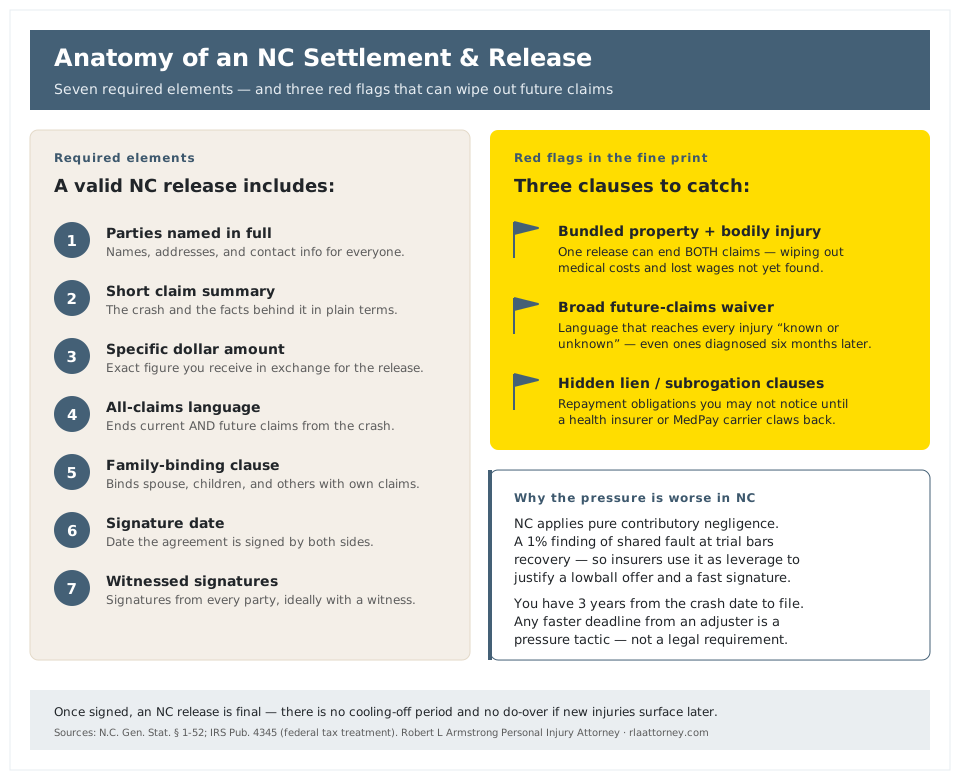
A valid settlement and release agreement in North Carolina should include:
- The names, addresses, and contact information of everyone involved, both the injured party and the at-fault party.
- A short summary of the claim and the facts behind it.
- A clear statement of what you are receiving in exchange for giving up your right to sue, usually a specific dollar amount.
- Language confirming that the release ends all current and future claims arising from the crash, including injuries that show up later.
- A clause binding your spouse, children, or other family members who might otherwise have a claim of their own.
- The date the agreement is signed by both sides.
- Signatures from every party, ideally with a witness present.
Watch for Bundled Claims
Watch the release language closely before you sign anything. Some forms bundle your property damage claim and your bodily injury claim into a single release, which can end your right to pursue medical costs and lost wages you have not even discovered yet.
Taken together, the required elements and the bundled-claim clauses decide what the release actually gives up, so no single line of the document should be signed on a skim.
Why NC’s Contributory Negligence Raises the Stakes
North Carolina’s contributory negligence rule turns even a modest fault dispute into a total-loss risk, which is exactly why insurers push releases so hard here. The next three subsections walk through the rule itself, how it shows up in adjuster tactics, and the extra layer that applies when a minor is involved.
The One-Percent Rule
North Carolina is a contributory negligence state, which means if a court finds you even one percent at fault for the crash, you can recover nothing at trial. Insurers know this, and they use it as leverage in settlement talks, pointing to any shred of shared fault to justify a smaller check and a faster signature.
Pressure Tactics in the Release Paperwork
That pressure often shows up in the release paperwork itself. Adjusters may push you to:
- Settle before your medical treatment is finished.
- Sign before you have talked with an attorney about what the file actually shows about fault.
- Meet an artificial deadline — you have three years from the crash date to file a lawsuit in North Carolina, so a fast deadline from the insurance company is almost always a pressure tactic, not a legal requirement.
When a Minor Is Involved
If your case involves a minor, a court must approve the settlement before it becomes final.
Between the one-percent rule, the pressure tactics, and the minor-approval requirement, the leverage in an NC release negotiation runs almost entirely toward the insurer unless the injured driver slows the process down.
Why a Release Agreement Carries So Much Weight
A release is not just paperwork attached to a check. It is the document that closes the file, cancels the right to sue, and locks in every allocation inside it. That is why the fine print deserves more attention than the settlement number.
How Most Personal Injury Cases End
A settlement and release agreement is how most personal injury cases actually end. Trials are rare, and this document is what closes the file, pays your bills, and lets you move forward. But knowing whether to sign matters just as much as knowing what the terms say, because a release you sign too early can cost you far more than the number on the check.
Hidden Terms I Have Found in Routine-Looking Releases
I have reviewed releases that looked routine on the surface but contained:
- Broad waiver language
- Hidden lien provisions
These are terms that don’t show up unless someone reads the document with your injuries and future medical needs in mind.
That combination of how final the release is and how easily its fine print can quietly waive future medical or lien-related claims is what makes a careful read before signing worth the extra day or two.
Do You Need a Lawyer for a Release Agreement?
You are not legally required to have an attorney review a settlement and release agreement, but I would not sign one without it.
What I Do When a Client Sends Over a Release
When a client calls me about a release an adjuster just sent over, I:
- Read every clause against their medical records.
- Weigh it against their long-term prognosis, not just the number on the first page.
- Negotiate directly with the insurer when the offer does not match what the case is worth.
Having an experienced personal injury attorney who knows North Carolina’s contributory negligence rules can be the difference between a fair settlement and one you regret in a year.
An hour of legal review before the release is signed usually costs nothing on a contingency case and can flag the exact clauses that would have quietly closed off future claims.
Get Help From a Wilmington Personal Injury Attorney
If an insurance company has sent you a release form and you are not sure what it means for your case, do not sign it yet. I can:
- Review the language.
- Explain what you would be giving up.
- Negotiate for a fairer number when the offer falls short.
A release you sign this week can quietly waive medical treatment, wage loss, and consortium claims you will need next year, so it is worth getting a second set of eyes on the document before you send it back. To walk through the terms line by line and price out what the case is actually worth, book a free consultation with Robert L Armstrong or call (910) 256-1233.
Before you sign a release, get a free review.
Once you sign, the claim is over, even if new injuries show up six months later. Have the release read against your medical records and future prognosis before it becomes final.
Related Articles

Should I Sign a Release After a Car Accident in NC?
Should I sign a release after a car accident in North Carolina? Know your rights, risks, and next steps. Protect your finances—get a free attorney review.

NC Personal Injury Settlement Liens and Subrogation Guide
Discover how North Carolina personal injury settlement liens and subrogation affect your car accident recovery. Protect your settlement. Free consultation.

NC Insurance Adjuster Tactics After a Car Accident
Discover North Carolina insurance adjuster tactics after a car accident. Protect your rights and get fair compensation. Call for a free consultation today.