Delayed TBI Symptoms After a Crash in North Carolina

On this page
You walked away from the crash. The ER checked you over, sent you home, and told you to rest. A week later the headaches will not quit, you cannot follow a conversation at work, and your spouse is asking why you seem like a different person. That is not weakness. That is a common pattern in mild traumatic brain injuries, and it can start days or weeks after the initial impact.
This guide covers what delayed TBI symptoms look like, why standard ER imaging often misses them, and how North Carolina’s filing deadlines and contributory negligence rule affect a claim that is diagnosed weeks after the crash.
Why Delayed TBI Symptoms Show Up Days or Weeks Later
Delayed onset is the norm, not the exception, in mild TBI cases. Understanding the physical mechanism, the typical three-wave symptom pattern, and why an ongoing medical record matters more than any single scan helps make sense of what to watch for in the weeks after a crash.
What the Crash Actually Does to the Brain
A crash that jerks the head, even without a direct blow, can stretch and tear microscopic connections between brain cells. The damage is real, but it does not always show up on the first CT scan the ER runs. In the first 24 to 72 hours after the crash, adrenaline, prescribed pain medication, and swelling can also mask what is happening.
How the Symptoms Emerge in Waves
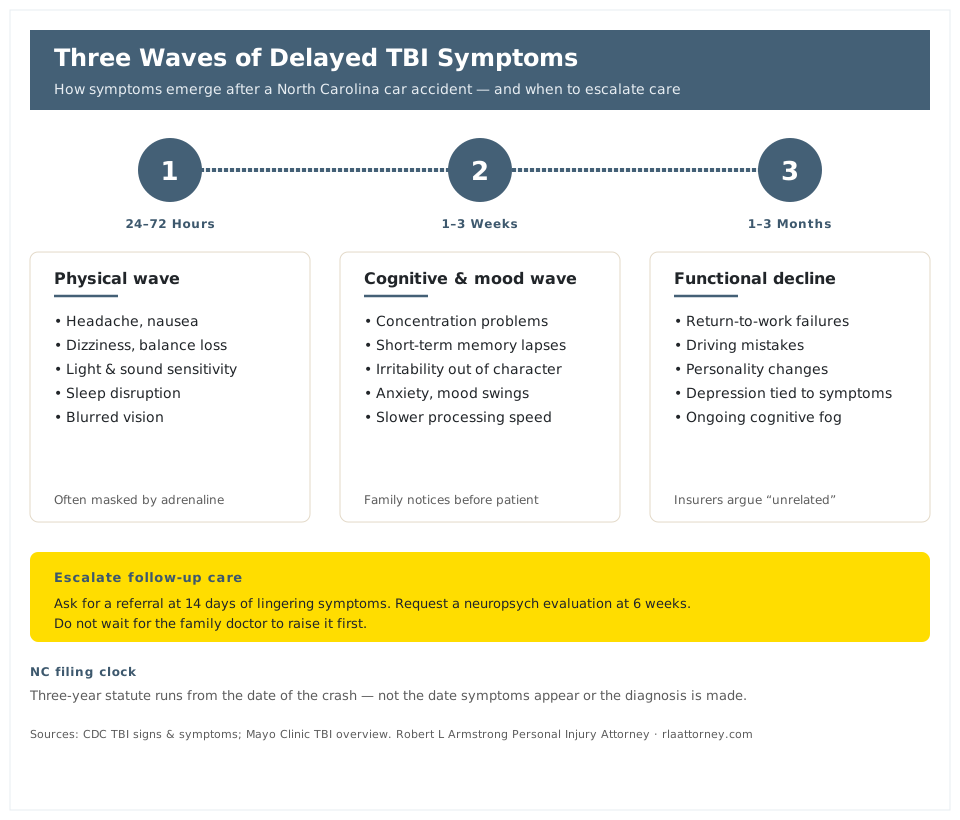
The symptoms tend to surface in three waves:
- Within 24 to 72 hours. Headache, nausea, dizziness, light sensitivity, sleep disruption.
- Within one to three weeks. Concentration problems, short-term memory lapses, irritability, and mood changes that family notices first.
- Within one to three months. Return-to-work failures, driving mistakes, personality changes, and depression tied to the ongoing symptoms.
Why the Ongoing Record Matters
The pattern is well documented in the medical literature, and it is what makes proving a mild TBI in North Carolina so different from proving a broken bone. There is no single scan to point to. Instead the case is built from a running record of when symptoms started, how they progressed, and how they affected daily life. Keeping that kind of running record from day one is one of the most useful things a crash victim can do, both medically and legally.
Common Delayed TBI Symptoms to Watch For
Delayed TBI symptoms usually fall into four groups. Any combination that persists beyond a few days deserves a specialist visit. The CDC’s traumatic brain injury pages publish plain-language checklists that patients and family members can use to track symptoms in real time.
Physical Symptoms
- Headaches that will not respond to over-the-counter medication
- Dizziness or balance problems
- Nausea, sensitivity to light and sound, ringing in the ears
- Vision changes, including trouble focusing or reading
Cognitive Symptoms
- Trouble concentrating, following a meeting, or reading a full page
- Short-term memory lapses, forgetting appointments and names
- Slower processing speed when driving, working, or making decisions
Emotional Symptoms
- Irritability that is out of character
- Anxiety, depression, mood swings
- Feeling overwhelmed by tasks that used to be routine
Sleep Symptoms
- Insomnia or, oppositely, sleeping far more than normal
- Waking headaches, disrupted sleep cycles
For a symptom-by-symptom look at memory loss, light sensitivity, and the danger signs that call for the ER right away, see the guide to concussion symptoms after a crash.
Any single symptom on its own is easy to dismiss. It is the cluster that usually points to a mild TBI, which is why tracking two or three of these categories together for more than a week deserves a specialist referral rather than another wait-and-see appointment.
Why the ER Often Misses It
Emergency rooms are built to rule out things that will kill you tonight, not to diagnose the slower-developing brain injuries that surface days or weeks later. That mismatch is why an ER clearance and a clean brain are not the same thing, and why the follow-up plan matters more than the initial visit.
What ER CT Scans Catch, and What They Miss
Emergency rooms run CT scans to rule out life-threatening bleeding and skull fractures. Those scans are excellent at catching those things and poor at catching the diffuse, cellular-level axonal damage that drives most mild TBIs. That is why a normal CT does not mean a normal brain, and why an ER discharge with “no fracture, no bleed” is not the same as clearance.
| Setting | What it catches well | What it tends to miss |
|---|---|---|
| ER CT scan | Life-threatening bleeding, skull fractures | Diffuse, cellular-level axonal damage that drives most mild TBIs |
| Specialist workup | Cognitive, memory, and processing deficits over time | Emergent bleeds that need same-day imaging |
What Specialists Use Instead
Neurologists, concussion specialists, and neuropsychologists rely on a different toolkit:
- A detailed clinical history
- Standardized cognitive testing
- Sometimes MRI or advanced imaging
- When useful, a formal neuropsychological evaluation
That work usually happens weeks after the crash, once symptoms are stable enough to measure. The Mayo Clinic’s overview of traumatic brain injury explains the diagnostic process in patient-friendly language and is a useful reference for families deciding whether to seek follow-up care.
When to Escalate Follow-Up Care
- At 14 days with lingering symptoms: ask for a referral.
- At 6 weeks with lingering symptoms: ask for a neuropsychological evaluation.
- Do not wait for the family doctor to raise it. Bring it up yourself.
Getting the right specialist in front of the right symptoms early is what turns a scattered post-crash record into a coherent diagnosis, and it is also what keeps an insurance adjuster from later arguing that the symptoms came from somewhere else.
The Legal Clock in North Carolina
The medical picture is only half the fight. The other half is a set of NC-specific rules that reward early filing, punish gaps in the record, and can end an otherwise strong case with one bad fact. Two rules do the heavy lifting: the three-year filing deadline and the contributory negligence bar.
The Three-Year Deadline Starts on the Crash Date, Not the Diagnosis
North Carolina gives most personal injury plaintiffs three years to file suit, and the clock starts on the date of the injury. A delayed diagnosis does not restart it. That means a person whose TBI is not confirmed until month five of a three-year window still has to file within three years of the crash, not three years from the diagnosis.
Two Other Rules That Shape Delayed-Symptom Cases
- Contributory negligence. NC bars recovery if the injured person is even 1 percent at fault. Insurers will use the delay between crash and diagnosis to argue the symptoms came from something else, so the fault case has to be tight. For background on how strict this rule is in practice, our contributory negligence explainer walks through how it plays out in NC courtrooms.
- Medical documentation gaps. Any period where the injured person did not seek care becomes ammunition for the insurer’s mild-TBI dispute. Consistent follow-up, even for symptoms that seem minor, protects both the medical record and the legal claim.
For a full breakdown of the filing window and the exceptions, how long you have to file a TBI claim in North Carolina covers the statute and the wrongful-death, minor-plaintiff, and government-defendant carve-outs.
Between the fixed three-year clock and the fault defense insurers reach for in delayed-diagnosis cases, the medical record and the legal file need to be built in parallel, not in sequence.
What to Do Now
If you were in a crash and any of the symptoms above are showing up now:
- Call your primary care doctor and describe every symptom, including the ones that feel embarrassing or vague.
- Ask for a referral to a neurologist or a concussion clinic. Do not accept “give it more time” if symptoms have persisted past two weeks.
- Start a symptom journal that day. Time, trigger, severity, duration.
- Tell your employer in writing. Even short accommodations create a record that supports a lost-wages claim.
- Call a lawyer before the three-year clock gets close, not after.
None of those steps takes a full day, but together they anchor the medical timeline, the employment picture, and the legal deadline that a delayed-diagnosis case is later built on.
Get a Delayed-Symptom TBI Case Reviewed Early
Delayed symptoms are the exact place insurers try to sever the medical picture from the crash, and the fix is a consistent record and an early legal review. If new headaches, sleep changes, or cognitive fog have shown up in the weeks after a Wilmington-area crash, do not let the file cool off while the three-year clock runs. Robert L Armstrong handles Wilmington traumatic brain injury cases on a contingency basis, so there is no fee unless the case recovers. Book a free consultation or call (910) 256-1233 to have your timeline, medical records, and next steps reviewed before the fault defense hardens.
Frequently asked questions
How long after a car accident can TBI symptoms appear?
Symptoms can start within hours or take up to several weeks to emerge. Post-concussive symptoms most often show up in the first 7 to 14 days, but memory, mood, and sleep changes tied to a mild TBI can surface a month or more after the crash, especially once the person returns to work or school.
What are the most common delayed TBI symptoms?
Persistent headaches, dizziness, blurred vision, sensitivity to light and sound, sleep disruption, brain fog, short-term memory lapses, irritability, anxiety, and slower processing speed at work. Family members often notice the personality changes before the injured person does.
Why did the ER tell me my head was fine but I still feel off?
Standard CT scans catch bleeding and skull fractures but miss the microscopic axonal damage that drives most mild TBIs. A normal ER scan does not rule out a brain injury. If symptoms persist, ask your primary care doctor for a referral to a neurologist or a concussion clinic.
Does a delayed diagnosis hurt my personal injury claim in NC?
It can, but not if you build the record correctly. Insurers argue that a gap between the crash and the diagnosis means the symptoms are unrelated. Consistent primary-care visits, a symptom journal, and a specialist evaluation as soon as symptoms appear give your attorney the documentation needed to close that gap.
How long do I have to file a TBI claim in North Carolina?
Three years from the date of the crash, in most cases. The clock runs from the date of injury, not the date you were diagnosed with a TBI, so a delayed diagnosis does not extend your window. Wrongful-death, minor-plaintiff, and government-defendant cases follow different deadlines.
What documentation matters most for a delayed-symptom TBI case?
Contemporaneous medical records, a daily symptom journal, statements from a spouse or coworker describing changes in function, neuropsychological testing, and any imaging beyond a basic CT. Employment records showing missed work, demotions, or reduced hours also help prove the injury’s real-world impact.
Can I recover compensation if I only have a ‘mild’ TBI?
Yes. Mild TBIs, including concussions, can produce months or years of symptoms that cost people jobs, relationships, and independence. NC juries can award both economic damages, such as medical bills and lost wages, and non-economic damages for cognitive and emotional harm.
Symptoms showing up now? Don't wait on the three-year clock.
Delayed TBI symptoms are harder to link to the crash the longer they go undocumented. We help NC families build the medical record and preserve the claim before the deadline runs out.
Related Articles

How Long Do I Have to File a TBI Claim in North Carolina?
Learn how long you have to file a TBI claim in North Carolina. Protect your rights and secure compensation. Contact us for a free consultation today.

How to Prove a Mild TBI in North Carolina: Legal Guide
Learn how to prove a mild TBI in North Carolina. Get legal help, document symptoms, and build your case. Free consultation with Robert Armstrong.

Why Insurers Dispute Mild TBI Claims in NC
Discover why insurance companies dispute mild TBI claims in North Carolina. Protect your rights—contact Robert L Armstrong for skilled legal help today.