How Long Do I Have to File a TBI Claim in North Carolina?


On this page
After a traumatic brain injury from a car accident, families face mounting medical bills while delayed symptoms may not appear for weeks or months. North Carolina law gives most injury victims three years to file a lawsuit, but the deadline begins from the date of injury, not when you discover the full extent of brain damage. Missing this deadline can mean losing your right to compensation for medical expenses, lost wages, and ongoing care costs.
While the basic rule seems straightforward, understanding how long you have to file a TBI claim in North Carolina involves more than just knowing the filing deadline. Special circumstances can shorten or extend your filing window, depending on factors like the victim’s age, the type of accident, or when symptoms become apparent. Robert L Armstrong has guided countless families through these complex timelines, helping them secure the compensation needed for long-term recovery.
North Carolina TBI Claim Statute of Limitations: The Basics
Understanding filing timeframes protects your family’s access to compensation for medical bills, lost wages, and long-term care needs. North Carolina law sets specific time limits for filing TBI claims that vary depending on your situation and the type of case you’re pursuing.
| Claim type | Filing window | Clock starts |
|---|---|---|
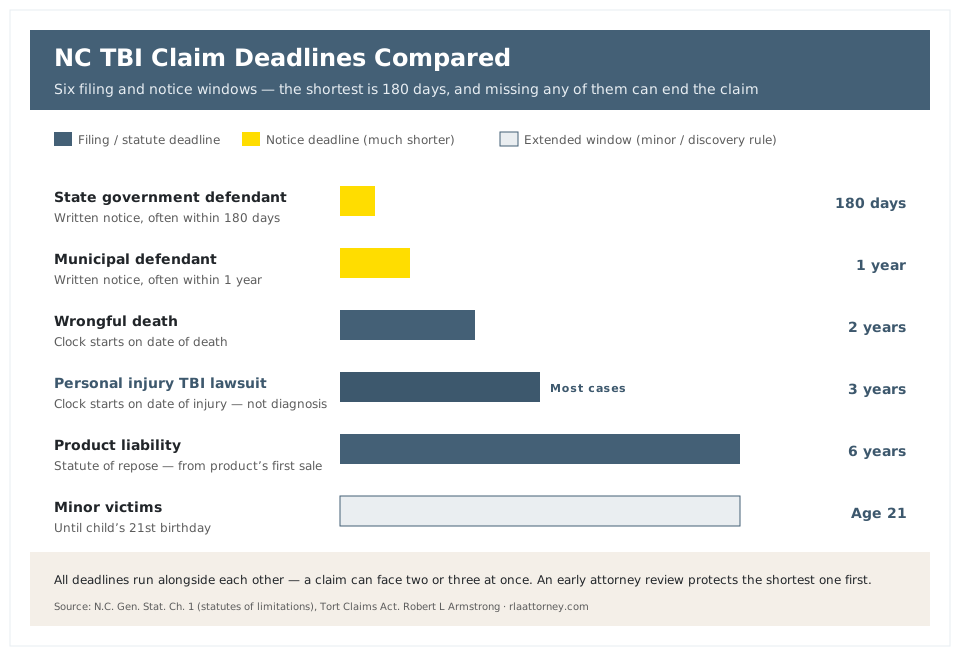
| Personal injury TBI lawsuit | Three years | Date of injury |
| Wrongful death | Two years | Date of death |
| Product liability (statute of repose) | Six years | Product’s first sale |
What is the general time limit for filing a TBI lawsuit in North Carolina?
You have three years from the date of injury to file a personal injury lawsuit for a traumatic brain injury. This filing window typically begins on the day the accident occurred. The statutory three-year window applies to car crashes, workplace accidents, and most other situations causing traumatic brain injuries.
How do wrongful death claims differ from personal injury cases?
When it comes to wrongful death cases, families face a shorter time limit of two years from the date of death. If a family member survived the initial TBI but later passed away from complications, the two-year period begins when death occurs. Wrongful death claims allow families to recover damages for their loss and the deceased person’s suffering.
Do insurance claims have the same timeframe as court lawsuits?
Insurance claims and court lawsuits operate on completely different schedules. While you should report accidents to insurance companies promptly, filing an insurance claim doesn’t stop the 36-month lawsuit window. Early insurance communications can affect your case, so consult with a personal injury attorney before accepting quick settlement offers that may undervalue your claim.
What special rules apply to product-related TBI cases?
Product liability claims involving defective helmets, car parts, or medical devices follow additional timing rules. North Carolina has a statute of repose that can bar claims after six years from the product’s first sale, regardless of when you discovered the defect. This creates an absolute time limit that can be shorter than the standard three-year rule.
Which documents help prove when my filing window started?
Certain records establish the injury date that begins your legal timeframe:
- Police reports
- Emergency room records
- Incident reports
- Initial medical evaluations
- Diagnostic imaging
- Any workplace injury documentation
Keep copies of each. These records become important if questions arise about when your TBI was discovered or when symptoms first appeared. Review our FAQ page for a complete evidence checklist.
The baseline deadlines above cover most TBI files, but they are the ceiling, not the floor. Product liability, wrongful death, and any case with a government angle can compress that window in ways families rarely see coming.
Exceptions and Special Situations Affecting Your TBI Deadline in NC
When you’re caring for a loved one with a TBI, the last thing you want to worry about is missing a legal deadline. Several important exceptions to filing deadlines for TBI can either extend or shorten your time to seek compensation, and understanding these special situations helps ensure your family doesn’t lose the financial support you deserve during this difficult time.
| Situation | Filing or notice window |
|---|---|
| Minor victims | Until the child’s 21st birthday |
| State government defendant | Written notice, often within 180 days |
| Municipal government defendant | Written notice, often within one year |
| Hit-and-run / UM / UIM | Three-year lawsuit deadline plus policy notice requirements |
Do children with TBI have different filing deadlines in North Carolina?
Yes, minors receive extended protection under North Carolina law. Children can file a TBI lawsuit until their 21st birthday, regardless of when the injury occurred. This gives families time to understand the full impact of a child’s brain injury as they grow and develop.
What special rules apply when a government employee causes my TBI?
Claims against state government agencies require written notice within specific timeframes—often just 180 days for state agencies or one year for municipalities. These deadlines are much shorter than typical personal injury cases. Missing these notice requirements can prevent you from recovering compensation under North Carolina statutes.
Do hit-and-run or uninsured driver TBI cases have different deadlines?
These cases typically follow the same three-year deadline, but you must also comply with your insurance policy’s notice requirements for uninsured motorist coverage. Prompt notification to your insurer protects your right to UM/UIM benefits that can cover medical costs and lost wages from your TBI.
Any one of these carve-outs can override the three-year default, and more than one usually applies at the same time. Mapping every deadline that touches your file, in order, is what keeps the shortest one from quietly closing the case.
How to File a TBI Claim in North Carolina and Protect Your Rights
Taking the right steps early can make the difference between a strong TBI claim and a missed opportunity for your family’s financial recovery. The weeks following a brain injury are overwhelming, but knowing which actions to prioritize helps you concentrate on getting better while protecting your legal rights.
What should I do immediately after my TBI to protect my claim?
Take these actions in the first days and weeks after the injury:
- Get medical attention right away, even if symptoms seem mild.
- Take photos of the accident scene, your injuries, and damaged property within the first few weeks.
- Collect witness contact information and request police reports.
- Preserve evidence like traffic camera footage quickly, as it may be deleted within 30 days.
Which medical records matter most for my North Carolina TBI case?
Your case foundation is built on:
- Brain imaging scans (CT, MRI)
- Neurological evaluations
- Cognitive testing results
- Emergency room records
- Specialist reports
- Rehabilitation assessments
- Wage statements from before and after the injury (to prove lost income)
Brain injury symptoms can worsen over time, so ongoing medical records strengthen your case. The CDC’s TBI signs and symptoms guide helps families track changes between visits so nothing gets missed at the next appointment.
How do I handle insurance company calls without damaging my claim?
Be polite on the call, but keep it brief.
Do
- Confirm your name.
- Confirm the accident date.
- Confirm the accident location.
Don’t
- Discuss fault.
- Share injury details.
- Accept quick settlement offers.
- Sign documents without legal review.
Insurance adjusters may seem helpful, but their goal is to minimize payouts, not maximize your compensation. Mild-TBI disputes often turn on exactly these early recorded statements.
What should I expect during a free consultation about how to file a TBI claim in North Carolina?
Your attorney will review your medical records, accident details, and insurance policies to assess your potential for recovery. Expect honest answers about compensation and timeline. Most traumatic brain injury cases work on contingency fees, meaning no upfront costs while you concentrate on your health and family responsibilities.
How do I track important deadlines to avoid missing my filing window?
Build a simple deadline-tracking system:
- Create a calendar with your accident date and mark the three-year deadline clearly.
- Set reminders every six months leading up to that date.
- Mark your calendar 30-60 days before the actual deadline as your personal cutoff.
This gives your attorney time to prepare and file properly without last-minute pressure that could hurt your case.
Early medical care, careful insurance calls, and a written deadline calendar are three of the cheapest, highest-value things a family can do in the first month after a TBI, and each of them is easier to build now than to reconstruct later.
What Happens If You Miss the North Carolina TBI Claim Deadline
Missing a filing deadline can feel devastating when you’re already struggling with medical bills and lost wages from a brain injury. Understanding the consequences of missing TBI claim deadline helps you know what options remain and how to move forward with confidence.
What happens if I miss the three-year deadline to file my TBI lawsuit in North Carolina?
If the statute of limitations expires, North Carolina courts will typically dismiss your lawsuit even if you have a strong case. The court cannot award compensation once this deadline passes.
Are there any exceptions that might extend my filing deadline?
North Carolina law provides limited exceptions for special situations. You might have more time if:
- You were under 18 when injured.
- You had mental incapacity.
- The discovery rule applies because your TBI wasn’t immediately apparent — though this has strict limits.
What other benefits can I still pursue if my lawsuit deadline has passed?
Even if you cannot file a court case, you may still have access to insurance benefits. Coverages with their own deadlines include:
- Uninsured motorist coverage
- MedPay
- Disability benefits
These benefits can provide medical coverage and wage replacement while you focus on recovery.
How quickly should I act if I think I’ve missed a deadline?
Contact an attorney immediately, within days, not weeks. A lawyer can review your injury circumstances and medical records, check for applicable exceptions, and identify alternative recovery options. Time-sensitive insurance claims or appeals may still be available, but these also have tight deadlines.
How can I avoid missing important deadlines in the future?
Build a system now so nothing slips:
- Create a written timeline with all relevant dates and set calendar reminders well in advance.
- Keep copies of all medical records, insurance correspondence, and legal documents in one place.
- Work with an experienced traumatic brain injury attorney who helps track all deadlines, and you pay nothing unless we recover compensation for your family.
A missed deadline does not always mean a missed recovery. Insurance benefits, appeals, and coverage-specific claims can still be in play, but every one of them runs on its own clock, so the response window after a missed date is usually measured in days.
Next Steps: Protect Your North Carolina TBI Claim Deadline Today
Acting quickly after a brain injury protects your family’s access to medical care and financial recovery. North Carolina’s statute of limitations can pass faster than you expect, especially when you’re focused on healing.
Why families choose Robert L Armstrong
When facing these tight deadlines, Robert L Armstrong provides dedicated advocacy focused solely on personal injury cases, helping families understand legal deadlines and pursue full compensation. Don’t let important deadlines slip by while managing medical appointments and recovery.
What a free consultation covers
Schedule a free consultation to review:
- Your timeline
- Your evidence
- Your legal strategy, before any deadline passes
Getting all three on paper before any deadline gets close is what turns a stressful timing question into a routine planning step.
Get Your TBI Deadline Reviewed Before the Clock Runs
The three-year window, the two-year wrongful-death rule, and the shorter government-defendant deadlines rarely line up the way families expect, and the tolling exceptions are narrower than the internet suggests. If a Wilmington-area brain injury is anywhere in your family’s timeline, get the filing dates on paper before any of them get close. Book a free consultation with Robert L Armstrong or call (910) 256-1233 to walk through your dates, your evidence, and your legal strategy before a deadline quietly closes the case.
Disclaimer: The content provided here is for informational purposes only and should not be relied on as legal advice. Accessing this content or contacting Robert L Armstrong through this site does not create an attorney-client relationship. Please contact a lawyer in your specific jurisdiction for advice on specific legal issues. Please note that any results achieved on behalf of a client does not guarantee or indicate similar results can be obtained for other clients. Each case stands on its own facts, law and merits.
Don't lose the claim to a missed deadline.
North Carolina's three-year TBI window runs out faster than families expect, and government-defendant cases have deadlines measured in months, not years. Get your timeline reviewed before evidence and appeal rights expire.
Related Articles

Delayed TBI Symptoms After a Crash in North Carolina
Delayed TBI symptoms can surface days or weeks after a crash. Learn what to watch for, what to document, and how NC law protects your claim.

How to Prove a Mild TBI in North Carolina: Legal Guide
Learn how to prove a mild TBI in North Carolina. Get legal help, document symptoms, and build your case. Free consultation with Robert Armstrong.

Why Insurers Dispute Mild TBI Claims in NC
Discover why insurance companies dispute mild TBI claims in North Carolina. Protect your rights—contact Robert L Armstrong for skilled legal help today.