Concussion symptoms after a car accident in NC

On this page
After a crash, it is normal to feel shaken, sore, and a little out of focus for a few hours. When the headache hangs on, bright light starts to hurt, or you cannot remember parts of the drive home, something more may be going on. Those are some of the most common signs of a concussion, and a concussion is a brain injury.
I represent injury victims and their families in Wilmington and the surrounding eastern North Carolina counties, and I bring over 41 years of personal injury experience to every case. Brain injury cases are some of the most misunderstood files I see, because the person looks fine on the outside while the symptoms change how they work, drive, and get along at home. This guide explains the symptoms to watch for after a wreck, which ones need emergency care, how a concussion differs from a more serious TBI, and how to document what you are going through.
What are the most common concussion symptoms after a car accident?
A concussion happens when a blow or a violent jolt moves the brain inside the skull. In a car accident, that can happen when the head strikes the steering wheel, side window, or headrest, and it can also happen with no direct blow at all when the head whips forward and back on impact.
The Centers for Disease Control and Prevention groups the signs of a mild TBI and concussion into four areas:
- Physical. Headache, dizziness, balance problems, nausea, blurred vision, and being bothered by light or noise.
- Thinking and memory. Feeling foggy or slowed down, trouble concentrating, and difficulty remembering new information.
- Emotional. Irritability, sadness, anxiety, or mood swings that are out of character.
- Sleep. Sleeping much more or much less than usual, or trouble falling asleep.
Most people do not have every symptom. A headache plus trouble concentrating, or dizziness plus light sensitivity, is a common pattern. The sections below cover the symptoms injury victims ask me about most often.
Headaches and confusion after a crash
Headache is the most frequently reported concussion symptom. It may feel like pressure inside the head, a dull ache, or throbbing that gets worse with screen time, reading, or noise. A headache that steadily worsens instead of easing is a danger sign and needs emergency care.
Confusion can be harder to recognize in yourself. Family members often notice it first: repeated questions, a blank look, slow answers, or trouble following what someone just said. Confusion right after the crash is common. Confusion that grows over the next several hours is an emergency.
Short-term memory loss and amnesia after a car accident
Many people with a concussion cannot remember the moments just before or after the impact. Doctors call this post-traumatic amnesia, and the length of the memory gap is one of the things they use to judge how serious the injury is. Losing a few seconds around the crash is common. Losing hours, or being unable to form new memories for a while afterward, points to a more significant injury.
Short-term memory problems can also show up days later. Injury victims describe missing appointments, forgetting why they walked into a room, losing track of conversations, or reading the same paragraph several times. Those lapses matter medically and legally, so they should be written down and reported to the doctor rather than brushed off as stress.
Light and noise sensitivity after a concussion
Sensitivity to light, called photophobia, is a common concussion symptom. Sunlight, headlights, fluorescent office lighting, and phone or computer screens can trigger headaches, eye strain, or nausea. Noise sensitivity often travels with it, so a busy restaurant or a loud workplace suddenly becomes hard to tolerate.
For many people, these symptoms improve over the first few weeks. When they do not, they can make driving at night, working at a computer, or spending time with family much harder, and that daily impact is part of what a doctor and a claim both need to capture.
Trouble with speech, focus, and reading people
Some of the symptoms I hear about most are ones people do not connect to a head injury at first. After a concussion, an injury victim may have trouble coming up with the right word, ramble or drift off topic, lose the thread of a conversation, or struggle to follow what others are saying. Some become restless and cannot sit still or finish a task. Others have trouble reading facial expressions, catching sarcasm, or responding to the nonverbal cues they used to pick up without thinking.
These changes affect the parts of life that depend on attention, planning, judgment, and patience. They can strain a marriage, cost someone a promotion, or make a parent short with their children. They are real symptoms, and they belong in the medical record.
Is a concussion a traumatic brain injury?
Yes. A concussion is a mild traumatic brain injury. “Mild” describes how the injury looks at the time of diagnosis, usually a short or no loss of consciousness and a normal CT scan. It does not mean the effects will be minor.
Brain injuries from car accidents are usually grouped into two categories:
- Closed head injuries. The skull stays intact. This includes concussions, bruising of the brain (contusions), blood clots (hematomas), bleeding in or around the brain, and diffuse axonal injury, which involves widespread microscopic damage to the brain’s connecting fibers.
- Open head injuries. Something breaks through the skull, such as a fracture from striking the pillar or pavement after an ejection. These injuries often need surgery.
A concussion can heal fully, and many do. It can also be the visible part of a more serious injury, which is why a doctor’s follow-up matters even after an ER visit.
Which concussion symptoms need emergency care?
Some symptoms point to bleeding or swelling in the brain and cannot wait for a regular appointment. The chart below sorts common symptoms by how quickly they need medical attention.
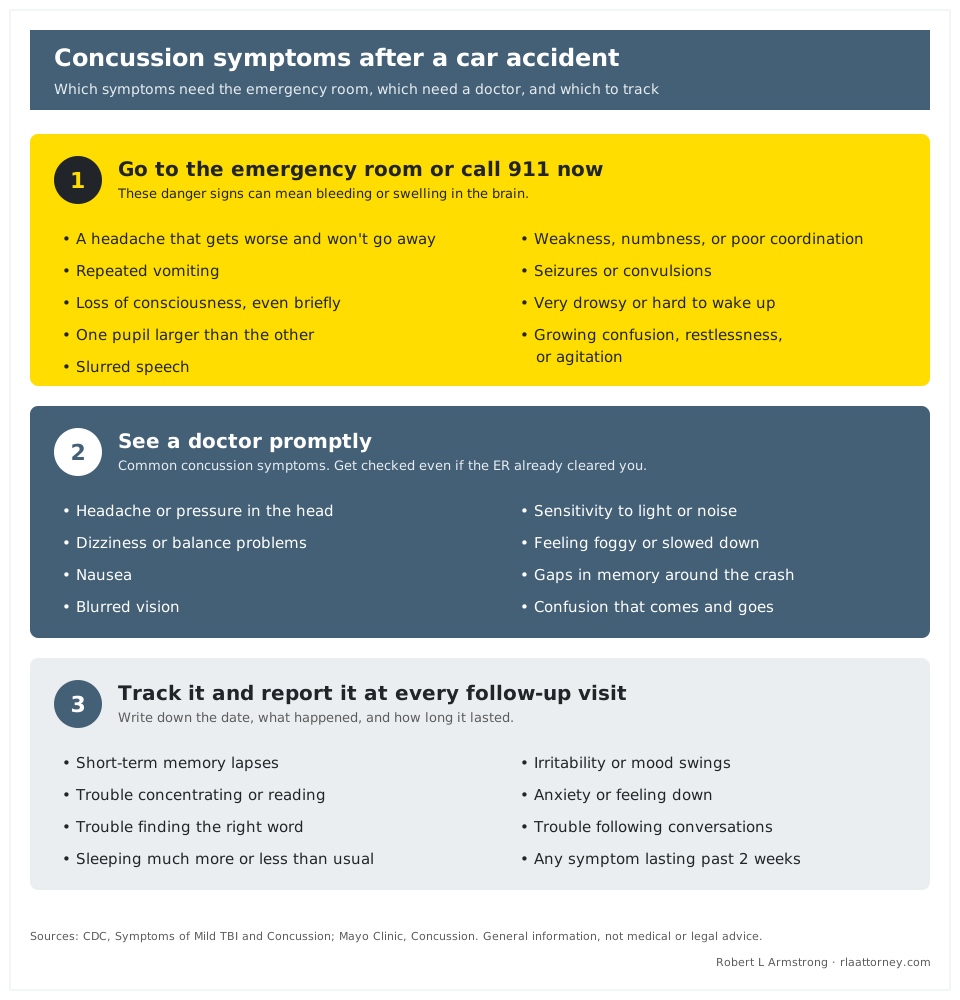
The Mayo Clinic’s concussion overview lists similar warning signs, including loss of consciousness and symptoms that get worse, as reasons to get emergency care after a head injury. If you are unsure, go. An ER visit rules out the dangerous injuries and creates a record that ties your symptoms to the crash.
How long can a concussion last after a car accident?
Many people recover from a concussion within a few weeks. Some take months, and a smaller group develops persistent post-concussive symptoms such as headaches, dizziness, memory problems, and fatigue that continue well beyond the expected recovery window.
Timing also varies on the front end. Some symptoms start at the scene, while others appear only after the adrenaline fades or the person returns to work. I cover that pattern in more detail in a separate guide to delayed TBI symptoms, including why ER scans often miss them.
When symptoms that do not improve point to a TBI
Ordinary soreness after a crash usually eases day by day. Concussion symptoms that stay the same, get worse, or pile up over time are a signal to push for more evaluation. Warning patterns include:
- Headaches or dizziness that have not improved after about two weeks
- Memory, concentration, or word-finding problems that are affecting work or school
- Personality or mood changes that family members keep pointing out
- New trouble with balance, vision, or coordination
- A return to work or driving that has not gone well
At that point, it is reasonable to ask a primary care doctor for a referral to a neurologist, a concussion clinic, or a neuropsychologist. Specialists use detailed histories, balance and vision testing, cognitive testing, and sometimes MRI to measure what a standard CT scan cannot. More serious injuries, such as skull fractures or bleeding in the brain, are usually found early, but diffuse injuries can take longer to identify.
How to document concussion symptoms for your claim
Insurance companies often treat concussions as minor because there is no cast, no stitches, and frequently no abnormal scan. The strongest concussion claims are built from a consistent record that shows when symptoms started and how they affected daily life. The steps below are general guidance, not advice for any particular case.
- Get seen early and keep going. A prompt medical visit links the symptoms to the crash. Gaps in treatment give the insurer room to argue that something else caused them. My guide on doctor visits after a crash covers the timing in more detail.
- Describe every symptom to every provider. Mention the embarrassing or vague ones too, such as forgetting words, crying more easily, or struggling with bright light. If it is not in the chart, it is hard to prove later.
- Keep a daily symptom journal. Note the date, the symptom, what triggered it, and how long it lasted. Short entries are fine.
- Ask family and coworkers to write down what they notice. Spouses and coworkers often see changes in memory, patience, and focus before the injured person does.
- Save work records. Missed days, reduced hours, and written accommodations help show the injury’s effect on income.
These records are the core of mild TBI evidence when imaging looks normal. They also answer the arguments adjusters raise most often in insurance disputes over concussion claims.
What compensation is available for a concussion after a car accident?
When another driver’s negligence caused the crash, an injury victim with a concussion or other brain injury may be entitled to recover:
- Current and future medical bills, including specialist care and testing
- Rehabilitation, such as vestibular, speech, or cognitive therapy
- Lost wages and reduced ability to earn income in the future
- Pain and suffering, including emotional distress and the loss of normal daily activities
- Property damage to your vehicle
The value of a concussion claim depends on how long symptoms last, how they affect work and family life, the medical documentation, and the insurance available. My overview of mild TBI settlements in North Carolina walks through the factors insurers weigh. Every case is different, and past results do not predict the outcome of any other case.
How long do you have to file a concussion claim in North Carolina?
Most personal injury claims in North Carolina must be filed within three years of the crash under NCGS 1-52(16). The clock generally starts on the date of the accident, not the date a doctor diagnoses the brain injury. My guide to the TBI filing deadline covers the exceptions for wrongful death, minors, and claims against government entities.
North Carolina also follows contributory negligence, a rule that can bar an injury victim from recovering anything if their own carelessness contributed to the crash in any amount. Insurers use that rule to look for any fact suggesting shared fault. Early evidence about how the crash happened, together with a clear medical record, is what answers those arguments.
Talking with a Wilmington brain injury lawyer about your symptoms
Concussion symptoms after a car accident range from a headache that clears in a few days to memory, focus, and mood changes that last for months. Knowing which signs need emergency care, getting consistent follow-up treatment, and keeping a written record of what you experience protects both your health and your claim.
Robert L Armstrong represents injury victims and their families in New Hanover, Brunswick, Pender, Onslow, Bladen, and Duplin counties, and I work each case personally. The consultation is free, and there is no fee unless I win. I’d like to hear your story. Talk to a Wilmington brain injury lawyer about your symptoms and your claim.
Frequently asked questions
Can you have a concussion without hitting your head?
Yes. The sudden stop in a crash can whip the head forward and back hard enough to move the brain inside the skull, even when the head never strikes the steering wheel, window, or headrest. Many concussions from rear-end collisions happen this way.
My CT scan was normal. Can I still have a concussion?
Yes. A CT scan is designed to find bleeding and skull fractures. Most concussions do not show up on standard imaging, so doctors diagnose them from symptoms, a physical and neurological exam, and cognitive testing. A normal scan rules out some emergencies, but it does not rule out a brain injury.
Is a concussion from a car accident worth a personal injury claim?
It can be. A concussion that clears up in a few days may only involve modest medical bills, but one that lingers can cause lost work, ongoing treatment, and real changes at home. Whether a claim makes sense depends on the injury, the medical record, and who caused the crash, which is what I review during a free consultation.
Should I talk to the other driver’s insurance company about my symptoms?
You can share basic contact information, but you do not have to give the other driver’s insurer a recorded statement. Early statements such as “I feel fine” are often used later to argue that a concussion was minor or unrelated to the crash, even when symptoms showed up the next day.
How much does it cost to talk to a lawyer about a concussion claim?
The consultation is free, and I work on a contingency basis, which means there is no fee unless I win. In that first conversation I go over how the crash happened, the symptoms you have had since, and the insurance involved, and I tell you plainly what I see in your case.
Still having symptoms weeks after the crash?
A concussion that does not clear up can affect work, driving, and family life. A free consultation looks at your medical records and your timeline so the claim is protected while you focus on getting better.
Related Articles

Delayed TBI Symptoms After a Crash in North Carolina
Delayed TBI symptoms can surface days or weeks after a crash. Learn what to watch for, what to document, and how NC law protects your claim.

Do I Need a Lawyer for a Concussion After a Car Accident?
When a concussion needs a lawyer: the symptoms insurers dispute, the records that prove a mild TBI, and how NC contributory negligence applies.

How a Concussion Injury Attorney in North Carolina Can Help
Need a concussion injury attorney in North Carolina? Get legal help for head injuries, lost wages, and insurance claims. Call for a free consultation.