Hip fracture fall injury in NC and the notice rule


On this page
A fall in a grocery aisle, on a rental cottage step, or in an apartment stairwell can break a hip, a heel, a wrist, or an ankle in less than a second. The surgery and the months of rehab that follow are what stay with injury victims and their families. So does the question that comes next: was this an accident nobody could have stopped, or was it a hazard the owner should have fixed?
North Carolina law draws that line carefully. In my experience, a broken bone alone does not make a property owner responsible. What decides the case is what the owner knew, how long the hazard sat there, and whether the way you landed explains the fracture your surgeon repaired. I bring over 41 years of personal injury work to every case, and this guide explains how I look at a fall fracture claim from a store, rental, or other property in eastern North Carolina.
Why falls at stores and rentals so often end in a broken bone
A slip on a wet floor tends to throw the body sideways or backward, and the hip or wrist takes the landing. A missed step or a collapsing tread drops the body straight down, so the heels and ankles absorb the force. In the slip-and-fall cases I see around Wilmington, the injury usually follows the hazard: spills and loose mats lead to hip and wrist fractures, while broken stairs and deck boards lead to heel and ankle fractures.
A hip fracture is a break in the upper part of the thigh bone (the femur) near the hip joint. Surgeons describe it by location, most often the femoral neck just below the ball of the joint or the intertrochanteric area a little lower. The American Academy of Orthopaedic Surgeons explains that most hip fractures need surgery, either to fix the bone with screws, rods, or plates or to replace part or all of the joint.
The heel bone is the calcaneus. It breaks most often when a person lands on their feet after dropping from a height, such as a stair, a porch, a ladder, or a deck. A calcaneus fracture can be one of the harder breaks to recover from, because the bone supports the whole weight of the body and forms part of joints that allow the foot to move side to side.
What NC law requires before a property owner is responsible for a fall
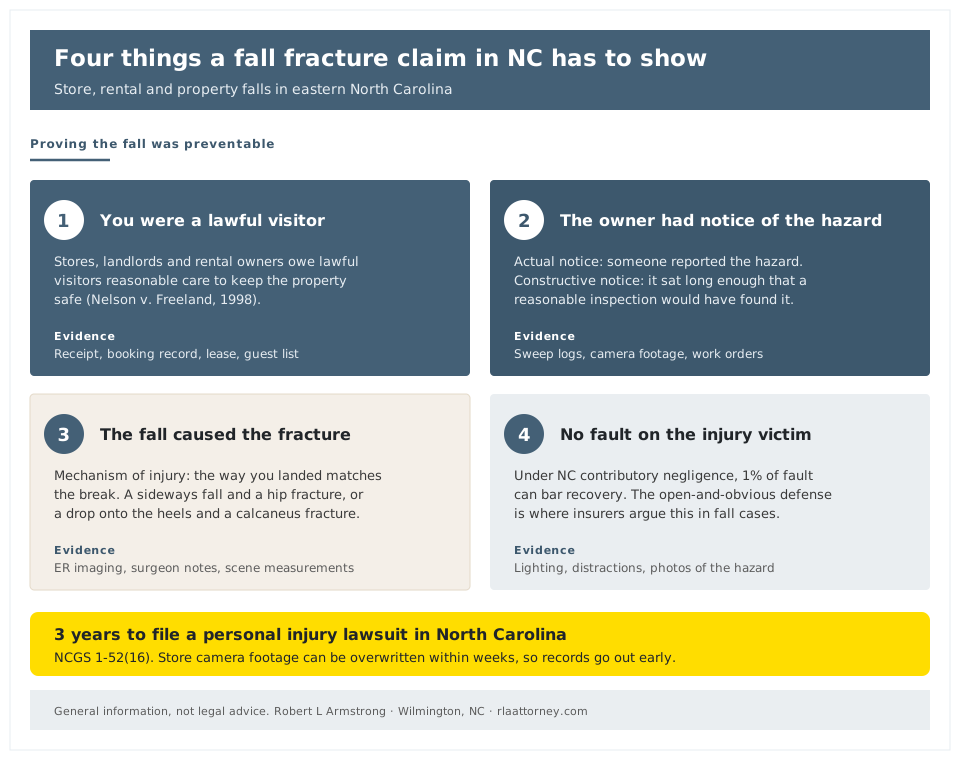
A fall fracture claim in North Carolina rests on four facts. The chart below shows them, along with the kind of evidence I use to prove each one.
Lawful visitors and reasonable care
Since the North Carolina Supreme Court’s 1998 decision in Nelson v. Freeland, owners and occupiers owe every lawful visitor the same duty: reasonable care to keep the property safe. That covers a shopper in a store, a guest at a short-term rental, a tenant in a common stairwell, and a friend visiting a home. Reasonable care does not mean a perfect floor. It means inspecting, repairing, and warning the way a careful owner would.
Actual notice and constructive notice
Most fall cases turn on notice. Actual notice means the owner or an employee knew about the hazard, perhaps because a customer reported the spill or a tenant filed a repair request about a loose tread. Constructive notice means the hazard was there long enough that a reasonable inspection would have found it. If the store’s own policy calls for aisle checks every 15 minutes and the camera shows a puddle sitting for 40, that gap is strong evidence of constructive notice.
Rentals work the same way. At a beach cottage or a vacation rental, the question is often whether the owner or management company had a record of complaints, a prior inspection, or a repair that was put off. Rot, loose railings, and dim exterior lighting leave paper trails.
The open-and-obvious defense and contributory negligence
The property owner’s insurer usually answers with two related arguments. The first is the open-and-obvious doctrine: a careful visitor would have seen the hazard and avoided it, so the owner had no duty to warn. The second is contributory negligence, North Carolina’s rule that an injury victim who is even slightly at fault can be barred from any recovery.
These defenses matter more in North Carolina than in most states, so I build against them from the start. Lighting, a display placed to draw your eye, a clear liquid on a glossy floor, a step that looked level until it gave way: each of these facts helps show the hazard was not obvious and that you were walking the way any careful person walks.
How mechanism-of-injury evidence ties the fall to the fracture
Mechanism of injury is the medical and physical explanation of how a force caused a specific injury. In a fall case, it links the hazard to the break. A person who slips on a wet tile and lands on their side has a mechanism that fits a hip fracture. A person who steps onto a rotted porch board and drops two feet onto their heels has a mechanism that fits a calcaneus fracture.
The insurer may argue the reverse order. With hip fractures in particular, the defense sometimes claims that a weakened bone broke first and caused the fall, rather than the fall causing the break. I answer that with the evidence closest to the moment: the store’s video, witness accounts, the ER triage notes describing how you said you fell, the imaging, and the surgeon’s operative report. When those line up with the hazard, the reverse theory has little to stand on.
Scene measurements help too. On broken stairs, the height of the drop, the condition of the tread, and the handrail all go into the file before the owner repairs anything.
What ORIF surgery means for your injury and your claim
ORIF stands for open reduction internal fixation. “Open reduction” means the surgeon makes an incision and moves the broken pieces of bone back into position. “Internal fixation” means the surgeon holds them there with metal plates, screws, rods, or pins. The AAOS overview of internal fixation explains that the hardware often stays in the body for good, though it is sometimes removed later.
ORIF is common for displaced heel fractures, ankle fractures, wrist fractures, and some hip fractures. For a claim, the operative report matters for three reasons:
- It documents exactly how serious the break was, in the surgeon’s own words.
- It sets the recovery path, including weeks or months with limited or no weight on the leg.
- It can point to future care, such as hardware removal or treatment for arthritis in a damaged joint.
Some hip fractures are treated with a partial or total hip replacement instead of ORIF. The claim analysis is similar, since a replaced joint has its own future care needs.
How long does it take to heal from a hip fracture after a fall?
Most people need months, not weeks. Surgery is usually done within a day or two of the fall, and physical therapy often starts right after. Many people spend a period in inpatient rehab before going home, then continue outpatient therapy. Doctors commonly describe the recovery in terms of months, and some people take a year or longer to reach the point where they are not expected to improve further. Doctors call that point maximum medical improvement.
I usually wait for that point, or close to it, before valuing a fracture claim. Resolving the case earlier risks leaving out future surgery, long-term therapy, or a permanent limp that has not shown itself yet.
Can you still walk on a fractured hip?
Sometimes, yes, though most people with a broken hip cannot stand or bear weight. A small number of hip fractures, especially impacted ones where the bone ends are pressed together, may let a person walk with pain for a day or more before an X-ray finds the break. Heel fractures can also be mistaken for a bad sprain at first.
Walking after a fall does not mean the bone is intact, and a delayed diagnosis does not sink a claim. It does mean the medical record needs to connect the later diagnosis to the fall. If you felt pain in the hip or heel right after the fall, telling the first provider you see and following up promptly helps close that gap.
When a fall fracture needs a life care plan
Some fractures heal well, but others leave a person with a permanent change in how they walk, climb stairs, or work. A shattered calcaneus can lead to arthritis in the joints below the ankle. A hip fracture can end a person’s ability to do a physical job.
When the injury is likely to cause lifelong problems, I often work with a life care plan, a written projection of future medical care, equipment, home changes, and costs prepared by a qualified planner. It turns the surgeon’s predictions into numbers a jury or an insurer can follow. The factors that drive case value in a North Carolina fall, including lost wages and pain and suffering, follow the same pattern, with the fracture and the surgery at the center.
Evidence I request after a store or rental fall
The owner controls most of the proof, and much of it can be lost within weeks. Early in a case, I send written preservation requests for:
- Surveillance video from before, during, and after the fall
- Sweep logs, floor inspection sheets, and cleaning schedules
- Incident reports and the names of employees on shift
- Work orders, repair requests, and prior complaints about the same area
- For rentals, booking records, inspection reports, and messages with the host or management company
On your side, photos of the hazard, your shoes, the lighting, and any warning signs (or their absence) help. So do the names of anyone who saw the fall, your ER and surgical records, and a simple journal of how the injury affects your days.
The filing deadline also runs in the background. Most North Carolina personal injury claims must be filed within three years under NCGS 1-52(16). A long recovery can eat up much of that time, so it helps to start early even while you are still in therapy.
Talking to a Wilmington lawyer about your fall fracture
A broken hip or heel from a fall at a store, rental, or other property is a serious injury, and North Carolina’s rules on notice, open-and-obvious hazards, and contributory negligence make these cases demanding to prove. The strongest ones are built early, with the owner’s records preserved and the medical story tied to the way the fall happened.
I represent injury victims and their families in Wilmington and across New Hanover, Brunswick, Pender, Onslow, Bladen, and Duplin counties. I work each case personally, and I’d like to hear your story. This article is general information, not legal advice for your specific situation. The consultation is free, and there is no fee unless I win. Talk to a Wilmington premises liability lawyer about your fall and your fracture.
Frequently asked questions
Do I have to prove the store or landlord knew about the hazard?
Yes, in most North Carolina fall cases the injury victim has to show notice. Actual notice means the owner or an employee knew about the spill, the loose tread, or the broken light. Constructive notice means the hazard was there long enough that a reasonable inspection would have found it. Sweep logs, work orders, and camera footage are how I usually prove the second kind, which is why I ask for them early.
The insurer says the hazard was in plain view. Does that end my case?
Not automatically. The open-and-obvious defense argues that a careful person would have seen the hazard and avoided it. Whether that is true depends on lighting, what else was drawing your attention, how the floor or step looked from where you approached, and whether you had a safe way around it. Those are fact questions, and they often favor the injury victim once the scene is documented.
I have osteoporosis. Can I still bring a claim for a broken hip?
Often, yes. North Carolina law generally lets an injury victim recover for the harm a negligent fall causes, even when a pre-existing condition made the bones more fragile. The defense may argue that the bone broke before you fell. Your ER records, imaging, surgeon notes, and an account of how you landed are what answer that argument.
What does it cost to talk with you about a fall fracture?
The consultation is free, and there is no fee unless I win. I explain at the start how case costs, such as medical records and outside reviewers, are handled, so there are no surprises later.
How long do I have to file a lawsuit after a fall in North Carolina?
Most personal injury claims in North Carolina have a 3-year statute of limitations under NCGS 1-52(16). The evidence window is much shorter. Store camera systems can record over footage in weeks, and a landlord can repair a step long before a claim is filed, so I send preservation requests as soon as I take a case.
I already gave a recorded statement to the property owner’s insurer. Is my claim ruined?
Usually not, but what you said matters. Adjusters often ask questions aimed at contributory negligence, such as whether you were looking at your phone or had seen the spill before. Tell me what you remember saying during the free consultation, and I can explain how it fits with the rest of the evidence.
What happens during the free consultation?
I ask where you fell, what the hazard was, who saw it, and what the doctors have told you about the fracture and any surgery. I look at the photos, discharge papers, and letters you have. You leave knowing how North Carolina law applies to a fall like yours and what evidence needs to be requested first.
A hip or heel fracture claim rests on notice, not just the fall.
Sweep logs and camera footage that prove an owner knew about a hazard can disappear within weeks of your fall. Get a free review of your fracture claim while that proof still exists.
Related Articles

Broken Stair Fall Injury Lawyer Wilmington | Get Legal Help
Injured in Wilmington from a broken stair fall? Our lawyer helps you claim compensation. Contact a broken stair fall injury lawyer for a free consultation.
Deck collapse lawsuit in NC for beach rental guests
A deck collapse lawsuit in NC often turns on salt-worn hardware, not guest counts, plus a 6-year builder deadline. Free consultation with a Wilmington lawyer.

How Much Is a Slip and Fall Case Worth in North Carolina?
What a slip and fall case is worth in North Carolina: the factors that drive value, and why contributory negligence can end a claim outright.