Who's liable after a broken stairs injury in NC

On this page
A handrail that wobbles when you grab it, or a step that gives slightly underfoot, rarely happens overnight. In a rental apartment, a condo breezeway, or a beach house on the coast, a broken stair or a failing rail is usually the end of a slow process: a bolt that rusted, a repair that got skipped, or a shortcut taken during a renovation that nobody caught. When someone falls because of it, the question that decides the case is not just how the stair broke, but who was supposed to keep it safe.
This post walks through what North Carolina’s residential code actually requires for a rental stairway and handrail, who has to meet that code, and how I prove a landlord or manager already knew about the hazard before someone got hurt. I’m Robert L Armstrong, and I have represented injury victims and their families in eastern North Carolina for over 41 years.
What North Carolina’s residential code requires on a rental stairway
North Carolina builds its residential stairway requirements on the International Residential Code, and the numbers are specific enough that a stair or rail is either in compliance or it isn’t. I check four figures on every broken-stair claim I take, because a stairway that misses even one of them was already a problem before anyone fell. For the immediate steps to take after any fall on stairs, from photographs to medical records, my stair fall guide covers that ground; this post focuses on the code numbers and the rental-specific liability question.
Handrail height
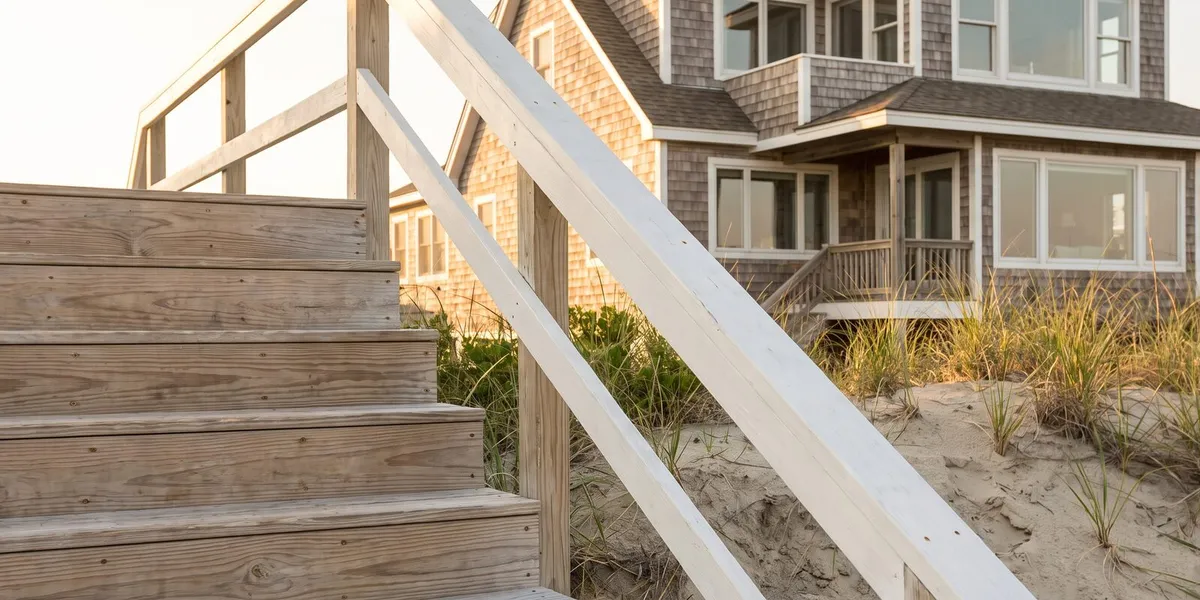
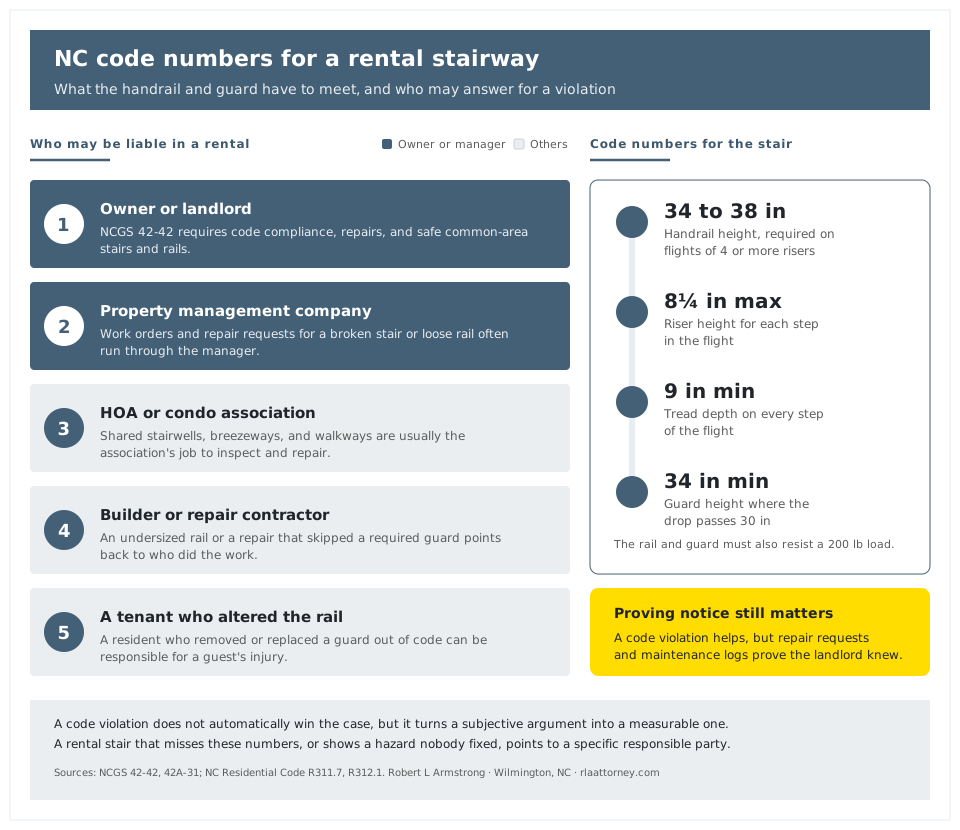
Under the stairway section of the NC Residential Code, a graspable handrail has to sit between 34 and 38 inches above the front edge of the tread, measured the same way at every step. A rail that was installed too low, too high, or that sags out of that range with age no longer meets the code, even if it looked fine when it went in.
When a handrail is required
Any continuous flight of four or more risers needs a handrail on at least one side, running the full length of the stairs without gaps. A short set of two or three steps at a doorway does not trigger the requirement, but most apartment stairwells, deck stairs, and beach-house entries do.
Riser and tread limits
Each step can rise no more than 8¼ inches, and the tread has to be at least 9 inches deep. North Carolina sets these numbers a little differently from the model code many other states use, so a national checklist is not a safe guide here. Just as important, no single step in a flight can differ from the others by more than 3/8 of an inch. That uniformity rule exists because an inconsistent step is what actually causes most trips, even when every individual step is within the height limit.
Guard height
On the open side of a stairway that sits more than 30 inches above the ground, the required guard height is at least 34 inches, and the guard has to resist a 200-pound load pushed against it. A landing, deck, or porch at that same height needs a taller 36-inch guard. A guard that was never installed, or one that was removed during a repair and not replaced, is one of the more common defects I see on older rental properties.
Who can be liable for a broken stair in a rental
A broken stair or a rail that fails rarely traces back to one person. Depending on the property and how the defect happened, the owner, a property manager, an HOA, the contractor who last touched the stair, or even a tenant can carry part of the responsibility.
The owner or landlord
The person or company that owns the rental is the first place I look. An owner who received a complaint about a loose rail or a soft step, or who simply never had the stairs inspected in years, has a hard time explaining that choice under North Carolina’s landlord duties.
The property manager
Many owners, especially ones who live out of state or own several rental units, hire a management company to handle repairs and tenant complaints. A manager who logged a work order and never scheduled the repair can share liability with the owner, depending on the management agreement.
The HOA or condo association
In condo buildings and planned communities, the stairwells, breezeways, and shared walkways usually belong to the association rather than any individual unit owner. That means the duty to inspect and repair a common-area stair or rail typically falls on the HOA and whatever maintenance company it hires.
The builder or repair contractor
When a stair or rail fails because of how it was built or repaired, the contractor who did the work can be responsible. A rebuilt deck stair with an undersized rail, or a repair that reused a rotted post instead of replacing it, points to the crew that did the job rather than the owner alone.
A tenant who altered the rail
Occasionally the hazard traces back to a tenant, not the landlord. If a resident removed a section of railing to move furniture and never put it back, or installed a rail that does not meet code, that tenant can bear responsibility for an injury to a guest, even on rented property.
The landlord’s duty under North Carolina law
For a standard residential lease, NCGS 42-42 requires the landlord to comply with applicable building and housing codes, make the repairs needed to keep the property fit and habitable, and keep all common areas in safe condition. A stairwell shared by several units falls squarely inside that last duty, and a landlord who knew about a hazard there and did nothing has a difficult defense.
For a short-term beach rental, NCGS 42A-31 layers a nearly identical duty onto the host, requiring compliance with building codes and safe common areas even though the guest never signed a traditional lease. That statute is the starting point for how I evaluate vacation rental injuries along the coast, and it applies whether the rental is a single cottage or one unit in a larger oceanfront building.
That duty of reasonable care runs to every lawful visitor on the property, not just the person who signed the lease or booked the reservation. A tenant’s guest, a renter’s children, and a friend who came over for the weekend all get the same protection under North Carolina law.
How coastal humidity and salt air wear down a rail
Along the coast, the ordinary wear on a stairway happens faster than most tenants expect. Salt-laden air corrodes handrail brackets and lag bolts from the inside of the connection, where nobody sees the damage until the rail moves. Humidity works on the wood itself, softening a rail post or a stair stringer years before paint or stain shows any sign of a problem. The same corrosion and rot pattern shows up in cases involving a coastal deck collapse, where hardware that would last decades inland fails on the oceanfront in a fraction of that time. A rail that feels solid in October can be dangerously weak by the next summer season if nobody has checked the hardware underneath it.
How I prove the landlord already knew about the hazard
Meeting the code numbers only answers half the question. North Carolina’s notice requirement asks whether the owner or manager knew, or reasonably should have known, about the broken stair or the loose rail before you were hurt. A code violation that has existed for months is strong evidence of what a reasonable inspection would have found, but the clearest proof usually comes from the property’s own paper trail.
I request maintenance logs, prior repair invoices, and any tenant complaints about the same stairway. A text message to a landlord about a wobbly rail, an email to a property manager, or a maintenance request submitted through a rental app can each show the property knew about the hazard weeks or months before the fall. Save that kind of message the moment you send it, because some rental platforms and management systems only retain a limited history of past requests.
How contributory negligence plays out in a stair case
Under North Carolina’s contributory negligence rule, an insurer will look for any reason to place even a small amount of fault on the person who fell, so the question of who altered the rail matters on both sides of the case. If a tenant removed a section of guard or built an out-of-code replacement rail, that tenant, not just the landlord, can be a named party when a guest gets hurt. At the same time, a landlord cannot avoid liability simply by pointing to a tenant’s do-it-yourself repair if the landlord knew about it and let it stand. Both facts often come out of the same maintenance record.
Getting help after a broken stair or handrail failure in an NC rental
A broken stair or a failed handrail almost always involves more than one responsible party. The evidence that proves it (the maintenance log, the repair invoice, the text about a wobbly rail) tends to disappear once the property gets fixed. Most claims like these must be filed within three years under NCGS 1-52, but the records that prove notice are worth preserving long before that deadline gets close. I handle every case personally, the consultation is free, and there is no fee unless I win. I work with injury victims and their families in New Hanover, Brunswick, Pender, Onslow, Bladen, and Duplin counties and throughout eastern North Carolina.
If you or someone in your family was hurt because of a broken stair or a handrail that failed at a rental property, call me. Talk to a Wilmington premises liability lawyer about the code violation, the records that prove who knew, and who may be responsible.
Frequently asked questions
Does the handrail height only matter for a set of exterior wooden stairs?
No. The same code numbers apply to interior stairs, apartment breezeways, condo stairwells, and the exterior stairs on a beach rental. Any flight with four or more risers needs a handrail between 34 and 38 inches. Any stair more than 30 inches above the ground needs a guard at least 34 inches high, and a landing, deck, or porch at that height needs a 36-inch guard. A missing or undersized rail on an interior apartment staircase is just as much a code violation as one on a rental deck.
The landlord says the stair passed inspection years ago. Does that end the case?
Not by itself. A stair that met code when it was built can fall out of compliance as wood rots, bolts loosen, or a prior repair skips the rail entirely. North Carolina law asks what the landlord knew or should have known at the time of your fall, not just what an inspector saw years earlier. Maintenance history since that inspection usually matters more than the original approval.
I rented through a booking site for a weekend at the beach. Does the same law apply?
Yes, with an added layer. North Carolina’s Vacation Rental Act applies to most short-term vacation rentals and requires the host to meet building codes and keep the property safe, on top of the general landlord duties. The rental platform is usually not treated as the property owner, but its host protection program may add another layer of insurance to the claim.
What if I told the property manager about the loose rail before I fell?
That kind of record often becomes the center of the case. A text, an email, or a maintenance request about a wobbly rail or a soft step is strong evidence the landlord had notice of the hazard before your injury. Save every message and screenshot, since some property-management apps only keep a limited history of past requests.
Can I still have a claim if I live in the building and used those stairs every day?
Often, yes. Familiarity with a stairway does not excuse a landlord from keeping it in code, and it does not automatically bar your recovery under contributory negligence. Whether the condition changed recently, whether the lighting was poor, or whether a partial repair created a new hazard all factor into that question. Tell me what happened and I will tell you honestly where the case stands.
How much does a free consultation cost, and what happens during it?
Nothing. I review what happened, look at any photos or messages about the stair or rail, and explain who may be responsible and what deadlines apply. There is no fee unless I win your case, and no obligation to hire me after we talk.
How long do I have to file a claim over a broken stair or handrail failure in NC?
Most personal injury claims in North Carolina must be filed within three years under NCGS 1-52. That deadline runs from the date you were hurt, not from when repairs were eventually made, so evidence like the maintenance log or the original hardware is worth preserving long before the deadline approaches.
A landlord can fix a loose rail before you ever call a lawyer.
The bolt, the bracket, or the step that failed is usually repaired within days of a fall, and the records that prove a landlord already knew about it don't stay in one place for long. Get a free review of who may be responsible.
Related Articles

Broken Stair Fall Injury Lawyer Wilmington | Get Legal Help
Injured in Wilmington from a broken stair fall? Our lawyer helps you claim compensation. Contact a broken stair fall injury lawyer for a free consultation.

Contributory negligence in NC slip and fall claims
NC's 1% contributory negligence rule can bar a Wilmington slip and fall claim over footwear, phone use, or an obvious hazard. Schedule a free consultation.
Why NC calls a business invitee a lawful visitor
North Carolina merged business invitee and licensee into lawful visitor in 1998. Trespasser status cuts your protection. Free Wilmington-area consultation.