Loss of Consortium in North Carolina: Spouse Claims Explained

On this page
When a catastrophic injury changes your spouse, it changes your marriage. The person who cooked dinner, drove the kids, and shared the bed now needs help getting dressed and cannot manage a full conversation without pain. North Carolina law recognizes that harm and calls it loss of consortium. It is a separate claim, brought by the uninjured husband or wife, for the companionship, intimacy, and household services that the injury took from the marriage.
This guide explains:
- Who qualifies for a loss of consortium claim
- What it covers
- How it fits with the injured spouse’s underlying case
- Where NC’s strict contributory negligence rule can shut the door on both claims at once
What Loss of Consortium Actually Means in NC
Loss of consortium is often confused with the injured spouse’s own pain-and-suffering claim, but NC law treats it as a distinct claim owned by the healthy spouse. The three subsections below cover whose claim it is, what it covers in day-to-day terms, and what it does not cover.
The uninjured spouse’s own claim
Loss of consortium is not a claim for the injured spouse’s pain. It is the uninjured spouse’s own claim for what the marriage lost. North Carolina courts describe it as the loss of the “conjugal fellowship” of a husband or wife, which includes love, companionship, affection, sexual relations, and the domestic services each spouse contributes to the household.
Practical examples of what the claim covers
- The end of physical intimacy after a spinal cord injury
- Loss of a partner who used to help raise children, run errands, and cook meals
- The emotional withdrawal that follows a serious brain injury
- Round-the-clock caregiving that replaces the shared life the couple had before
What sits outside the consortium claim
| Belongs to the consortium claim | Belongs to the underlying injury case |
|---|---|
| Lost companionship, affection, and intimacy | Injured spouse’s medical bills |
| Household services the marriage has lost | Injured spouse’s lost wages |
| The jury’s compensation to the marriage itself | Injured spouse’s own pain and suffering |
The consortium claim sits alongside the underlying case and asks the jury to compensate the marriage itself.
Who Can Bring the Claim
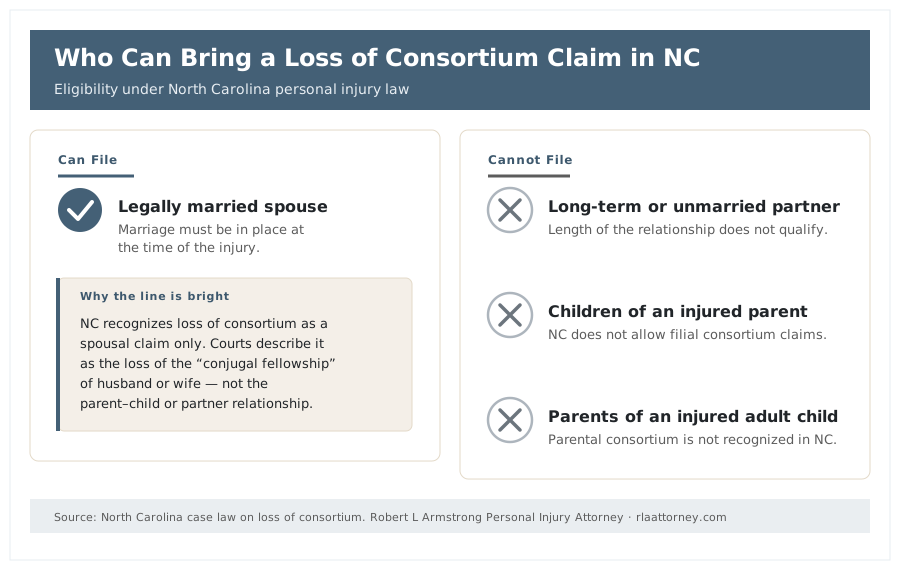
North Carolina draws a hard line on who owns a consortium claim. Two rules do most of the work: the claimant must be a legally married spouse, and the marriage must have existed before the injury.
Only a legally married spouse
North Carolina limits the claim to legally married spouses. That means:
- Children cannot recover for the loss of a parent’s guidance or companionship in a personal injury case.
- Parents cannot recover for an adult child’s injury.
- Long-term partners who never married cannot bring a consortium claim, no matter how long they have lived together.
Marriage must predate the injury
The marriage must have existed at the time of the injury. If a couple marries after a serious injury, the healthy spouse generally has no consortium claim because there was no marital relationship in place when the harm occurred.
Together, those two rules keep the field of eligible claimants narrow and put a premium on documenting the marriage’s status on the date of the crash.
How the Claim Fits With the Injured Spouse’s Case
A consortium claim never travels alone. NC procedure ties it to the injured spouse’s underlying case, which means one lawsuit, one jury, and one set of settlement decisions covers both claims.
The joinder rule
North Carolina requires the consortium claim to be joined with the injured spouse’s underlying case. That means both claims proceed as part of the same lawsuit, before the same jury, based on the same evidence about fault and injury. This rule protects defendants from having to defend two lawsuits over the same accident, but it also means the consortium claim’s fate is tied to the underlying claim’s fate.
Two things flow from that:
- If the injured spouse loses the underlying case, the consortium claim loses too.
- Any settlement of the injured spouse’s case must expressly account for the consortium claim, or the healthy spouse risks signing a release that wipes out their own recovery.
Marriage documentation that helps a jury
Good documentation of the marriage matters. Evidence that helps a jury put a value on what was lost includes:
- Anniversary photos
- Testimony from friends and family about the couple’s life before the crash
- A clear picture of who did what around the house
For a broader look at how catastrophic-injury cases are built, our Wilmington spinal cord injury practice area walks through the same evidentiary work from the injured spouse’s side.
Because the two claims are welded together procedurally, the marriage evidence, the fault evidence, and the settlement strategy all need to be handled as one file from the start.
The Contributory Negligence Trap
Even a strong consortium claim can be wiped out by NC’s contributory negligence rule, and it happens more often than most spouses expect. The rule shapes how the underlying case has to be worked up, which in turn shapes whether the consortium claim survives.
The 1 percent rule
NC is one of the few states that still follows pure contributory negligence. If the injured spouse is found even 1 percent at fault for the accident, the underlying claim is barred. Because the consortium claim depends on the underlying claim, it is barred too.
How that rule shapes case preparation
That rule shapes how both cases have to be prepared:
- Every fact that could suggest shared fault, from a rolling stop to a distracted glance at a phone, needs to be addressed before the defense raises it.
- Wilmington-area juries take the rule seriously, and insurers know it.
- A well-prepared case anticipates the fault defense and neutralizes it with evidence, expert testimony, and a clear crash reconstruction.
- The statute of limitations also runs on the same clock as the injured spouse’s claim, so waiting to see how recovery goes can quietly cost both spouses their case.
The short version: the fault picture in the underlying case decides whether the consortium claim ever reaches a jury, so the healthy spouse has as much at stake in the fault fight as the injured spouse does.
What Damages a Consortium Award Can Include
Consortium awards are meant to compensate the marriage itself, not the injured spouse’s bills. Juries look at what daily life used to look like, what it looks like now, and what the gap is worth.
Non-economic categories juries weigh
Consortium damages are non-economic. Juries weigh categories such as:
- Loss of the physical relationship
- Loss of companionship, comfort, and shared daily life
- Loss of household services that now have to be replaced or done alone
- Loss of the ability to raise children as a partnership
How juries value the award
Because there is no set formula, the strength of the marriage evidence drives the number.
| Marriage profile | Typical award level |
|---|---|
| Long marriages with clear pre-injury routines and a permanent, catastrophic injury | Tend to support the largest awards |
| Short marriages or cases involving mostly temporary injuries | Typically support smaller ones |
A life care plan for the injured spouse also helps by showing exactly what future help will look like, which in turn shows the jury what the marriage will look like going forward.
External Guidance Worth Reading
A few outside resources are useful background before a first consultation:
- Cornell Law School’s Legal Information Institute defines loss of consortium and walks through how the claim developed and how courts across the country value it, which helps set expectations before NC-specific rules narrow the picture.
- The North Carolina General Statutes on personal injury actions set out the three-year limitations period that governs both the injury and consortium claims.
Those background sources help calibrate expectations, but the NC-specific rules on joinder, contributory negligence, and marriage evidence are what ultimately decide the case, so any of it should be checked against an attorney’s read of the current file.
Protect Both Claims Before Anyone Signs a Release
The best time to raise loss of consortium is at the start of the injured spouse’s case, not at settlement. Bringing it up late risks procedural problems, and signing a general release without carving out the consortium claim can end it. If your husband or wife was seriously hurt in a Wilmington-area crash, get the marriage evidence and the fault picture reviewed before you agree to anything. We handle catastrophic injury and wrongful death claims on a contingency basis, so there is no fee unless your family recovers. To walk through timing, the marriage evidence, and the contributory-negligence risk before either spouse signs a release, book a free consultation with Robert L Armstrong or call (910) 256-1233.
Frequently asked questions
Who can file a loss of consortium claim in North Carolina?
Only a person legally married to the injured spouse at the time of the injury can bring a loss of consortium claim in North Carolina. Children, parents, and long-term partners who are not legally married cannot recover consortium damages under state law.
What kinds of losses does a consortium claim cover?
The claim covers the loss of companionship, affection, comfort, sexual relations, and the household services your spouse used to perform. That includes cooking, driving, yard work, childcare, home maintenance, and other daily contributions that now fall on you or a paid replacement.
Do I have to file a separate lawsuit for loss of consortium?
No. Under NC procedure, the consortium claim must be joined with your spouse’s underlying personal injury case. Trying to file it separately can result in the claim being dismissed, so both cases move forward together in the same lawsuit.
How is a loss of consortium claim valued in NC?
There is no fixed formula. Juries weigh the length of the marriage, the severity and permanence of the injury, the couple’s pre-injury relationship, and the specific services and companionship that have been lost. Long marriages with catastrophic, permanent injuries typically support the largest awards.
Does contributory negligence affect a consortium claim?
Yes. NC follows a strict contributory negligence rule. If the injured spouse is found even 1 percent at fault for the accident, both the underlying injury claim and the consortium claim can be barred. That makes fault-defense preparation critical from day one.
How long do I have to file a loss of consortium claim in North Carolina?
The consortium claim generally follows the same three-year statute of limitations that applies to the underlying personal injury case. If the injury results in death, the wrongful death two-year deadline can apply instead, which is why timing needs to be reviewed with an attorney early.
Can I still pursue a consortium claim if my spouse’s case settles?
Any settlement of the injured spouse’s case should be structured to protect or resolve the consortium claim at the same time. Signing a release without accounting for the spouse’s separate claim can waive it, so both spouses should be represented before signing anything.
Protect the marriage's claim before anyone signs a release.
Loss of consortium must be joined with the injured spouse's case, and a general release can end it. Have both claims reviewed together at no cost before you agree to anything.
Related Articles

Delayed TBI Symptoms After a Crash in North Carolina
Delayed TBI symptoms can surface days or weeks after a crash. Learn what to watch for, what to document, and how NC law protects your claim.

Who Pays for Home Modifications After an SCI in NC?
Find out who pays for home modifications after a spinal cord injury in North Carolina. Explore funding options with a free consultation.

How Long Do I Have to File a TBI Claim in North Carolina?
Learn how long you have to file a TBI claim in North Carolina. Protect your rights and secure compensation. Contact us for a free consultation today.