Thanksgiving travel accident in NC on I-40 and US-17

On this page
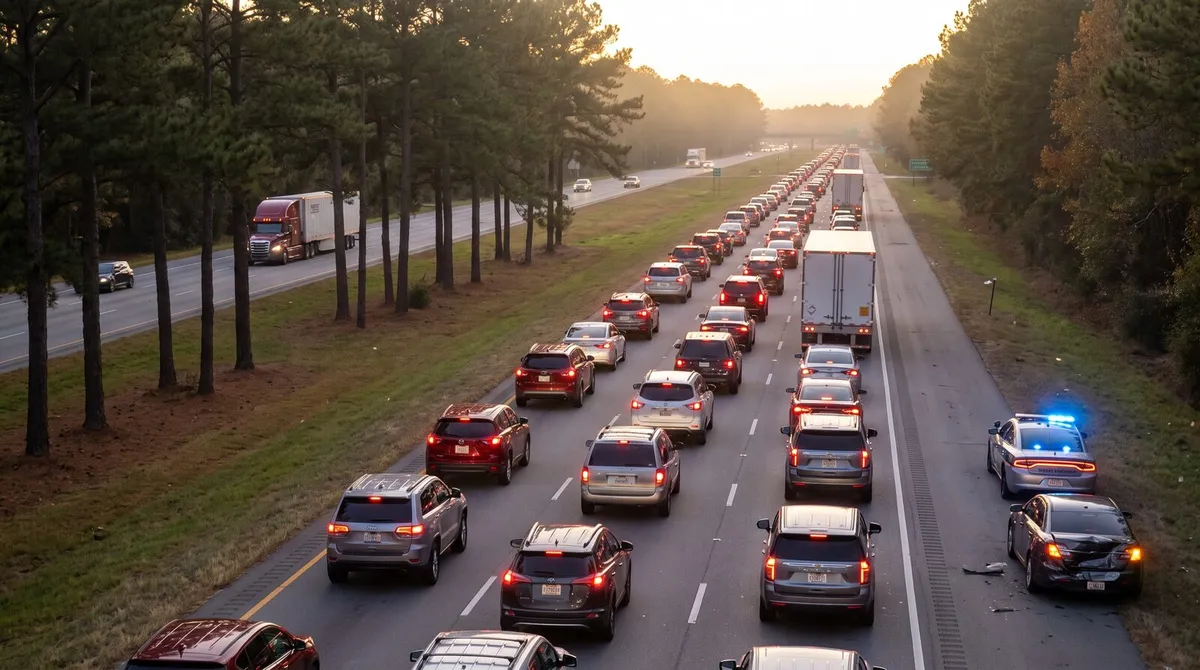
Thanksgiving week puts more cars on eastern North Carolina highways than any other week of the year. Families drive I-40 from Raleigh to Wilmington, coastal visitors follow US-17 through Brunswick and Onslow counties, and military families leave Camp Lejeune for home. Tractor-trailers keep moving freight for the shopping weekend, and the sun sets around 5 p.m. When a crash happens in that mix, the people involved often live in three different states and leave town within days.
This guide covers what changes on I-40 and US-17 during Thanksgiving week, where and when crashes cluster, what to do at the scene, and how a holiday crash claim works under North Carolina law. I’m Robert L Armstrong. I have handled personal injury cases for over 41 years, and I represent injury victims and their families across eastern North Carolina. I wrote this for injury victims and their families who were hurt on these roads over the holiday, and for anyone planning the drive this year.
Why Thanksgiving week is the riskiest drive of the year in eastern NC
Thanksgiving is the busiest travel holiday in the country, ahead of Memorial Day and Independence Day. In North Carolina, nearly every holiday traveler drives. Four risks stack up in the same seven days: heavy traffic, impaired drivers, deer, and darkness. Each one is manageable alone. Together, on a rural interstate at 70 miles an hour, they produce the chain-reaction and high-speed crashes I see every December.
Many holiday drivers are on roads they do not know, which is why so many of the holiday crash cases I handle involve out-of-state drivers, rental cars, or both. AAA’s Thanksgiving forecast for North Carolina last year projected 2.27 million travelers, a state record, and noted that flight disruptions could push even more people onto the road.
Thanksgiving week 2026 day by day
The holiday travel period, as AAA defines it, runs from the Tuesday before Thanksgiving through the following Monday. This year that is November 24 through November 30. The chart below shows when traffic is heaviest each day, based on last year’s AAA and INRIX pattern, along with the crash risk that tends to peak that day.

Two days deserve extra caution. Wednesday combines the heaviest outbound traffic with the busiest rental-car pickup day and one of the heaviest drinking nights of the year. Sunday brings the return rush, when drivers are tired, traffic on I-40 westbound stops and starts for miles, and the last hour of the drive often falls after sunset.
Thanksgiving Day itself usually has the lightest traffic of the week. Light traffic brings its own problem, because open lanes invite speed, and the drive home after dinner is when impaired drivers share the road with families.
How can you lower your risk on a Thanksgiving drive?
Nothing removes the risk of other drivers, but a few choices made before you leave cut down your exposure to the worst hours of the week. These are the ones I would point a family member to.
- Leave in the morning. Last year’s AAA forecast put the best travel windows before about 11 a.m. on most days of the holiday week, and after 8 p.m. on Monday.
- Avoid Wednesday night and Thursday night on the road. Those are the hours when impaired drivers are most likely to be out.
- Plan to finish before dark. With sunset near 5 p.m., a midday departure from Raleigh can still put the last hour of an I-40 drive in deer country after dark.
- Check the car before the trip. Tires, wipers, headlights, and the battery cause many of the breakdowns that leave families stranded on a shoulder.
- Set the route and the music before you pull out. Unfamiliar exits on I-140 and US-17 tempt drivers to look down at a phone at the worst moment.
- Switch drivers every two hours. Fatigue builds quietly on the long, straight rural stretches of I-40.
- Turn on your dashcam, or buy one. If someone else causes a crash, the footage may settle the fault question before an adjuster can argue about it.
Where crashes happen on I-40 and US-17
I-40 and US-17 fail in different ways. I-40 is a limited-access interstate with long rural stretches through Pender, Duplin, and Sampson counties, where traffic moving at highway speed suddenly meets a slowdown it did not expect. US-17 is a divided highway with traffic signals, median crossovers, driveways, and shopping centers, so it produces turning and angle crashes. The table below breaks down the stretches I see most.
| Stretch of road | What makes it risky over the holiday | Crash types I see most |
|---|---|---|
| I-40, Wilmington to Raleigh | Long rural stretches at highway speed, then sudden backups near exits, work zones, and earlier crashes | Rear-end and chain-reaction crashes |
| I-40 at the Wilmington end and the I-140 interchange | Merging traffic, drivers unsure which lane leads to the beach or downtown | Sideswipes and merge crashes |
| I-140 bypass | Freight traffic connecting I-40, US-17, and the port area | Truck crashes and lane-change crashes |
| US-17 through Brunswick County | Median crossovers and side roads meeting highway-speed traffic | Angle (T-bone) and left-turn crashes |
| US-17 through Hampstead and Jacksonville | Traffic signals, shopping centers, and Camp Lejeune holiday traffic | Rear-end crashes at signals and turning crashes |
A slowdown on I-40 can involve five or six vehicles in seconds. Those multi-vehicle crashes raise hard questions about who hit whom first, and insurers for each driver tend to point at the others. Photos of every vehicle’s final position and damage help sort that out later.
In recent years NCDOT has paused most lane closures on interstates and U.S. routes over the Thanksgiving travel period. Work zones do not disappear, though. Barrels, lane shifts, narrowed shoulders, and reduced speed limits often stay in place, and they catch drivers who are tired or unfamiliar with the road.
What to do after a crash on I-40 or US-17
A crash on a highway shoulder is more dangerous than a crash in a parking lot. Traffic passes within feet of you at high speed, and secondary crashes injure people who survived the first one. These steps put safety first and then protect the evidence. They are general information, not advice for a specific case.
Check for injuries and call 911
Call 911 for anyone who is hurt, and tell the dispatcher the road, direction, and nearest exit number or mile marker. North Carolina law requires drivers in a reportable crash to notify law enforcement right away.
Get out of the travel lanes if you safely can
If no one is seriously hurt and the car can be driven, moving it to the shoulder or the next exit is usually safer. If you cannot move it, stay buckled in with hazard lights on unless you can get well away from traffic, behind a guardrail.
Stay at the scene until the officer releases you
A driver in a crash involving serious injury or death must remain at the scene until law enforcement completes its investigation or allows the driver to leave. Leaving early creates problems for everyone.
Photograph everything before the vehicles move
Take photos of every vehicle, license plates, the final positions of the cars, skid marks, debris, traffic signs, work-zone barrels, and the weather and light. Note the mile marker.
Collect names from drivers and witnesses
Get each driver's name, phone number, insurer, and policy number, plus the names and phone numbers of witnesses. Many holiday witnesses live out of state and will be hard to find next week.
Ask for the officer's name and the report number
State Highway Patrol troopers handle most crashes on I-40 and rural stretches of US-17, and local police handle crashes inside city limits. The report number is how you get the report later.
Get medical care the same day
Adrenaline hides neck, back, and head injuries. A same-day visit to an emergency room or urgent care creates a record that ties your injuries to the crash, even if you are traveling.
Be careful with insurance calls
Report the crash to your own insurer and stick to facts. Wait before giving a recorded statement to another driver's insurer, and do not guess about speed, distance, or fault.
That last step matters more than most people expect. An adjuster may call while you are still at a relative’s house, before you have seen a doctor at home. What you say in those recorded statements can follow the claim for months, and short, polite answers are enough.
The evidence clock after a holiday crash
Every crash claim depends on evidence, and holiday crashes lose it faster than most. Travelers go home, rental cars go back to the counter, and dashcam memory cards record over the drive. The timeline below shows what tends to disappear, and when.

The state’s crash reporting statute requires the investigating officer to write a report within 24 hours. That report carries weight with insurers, and mistakes in it are easier to correct while the officer still remembers the scene. I explain how to request and read one in my post on the Wilmington police report.
Video is the most fragile evidence of all. Your own camera, another driver’s camera, a truck’s forward-facing camera, and a gas station camera near an exit may each have captured the crash. Many systems overwrite footage within days, so I explain how to save it in my post on dashcam footage.
Out-of-state drivers and rental cars
When a crash happens on a North Carolina road, the claim is generally decided under North Carolina law, wherever the drivers live and whichever state issued their policies. That includes the filing deadlines and the contributory negligence rule. The scene, the officer, and most of the physical evidence are here, so the claim is usually handled here too.
Insurance is where home states still matter. A driver from Virginia or New York carries a policy written under that state’s rules, and its limits may be lower or higher than North Carolina’s minimums. If the at-fault driver’s limits fall short, underinsured motorist coverage on your own policy may fill part of the gap. My post on the out-of-state driver claims covers how that works in practice when you live somewhere else.
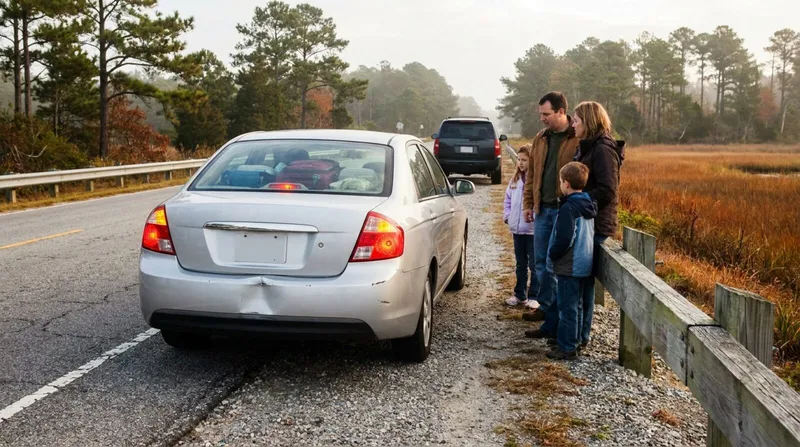
Rental cars add another layer, with a rental agreement, counter products, and sometimes a credit card benefit. Wednesday before Thanksgiving is the busiest rental pickup day of the year, so many holiday crashes involve at least one rental. I cover who pays in a rental car crash over the holidays in a separate post.
Drunk drivers and the night before Thanksgiving
The night before Thanksgiving is one of the heaviest drinking nights of the year, and the weekend that follows brings family gatherings and football parties. According to NHTSA’s traffic safety campaign data, 910 people died in drunk-driving crashes during Thanksgiving festivities from 2020 to 2024, more than a third of all traffic deaths over the holiday.
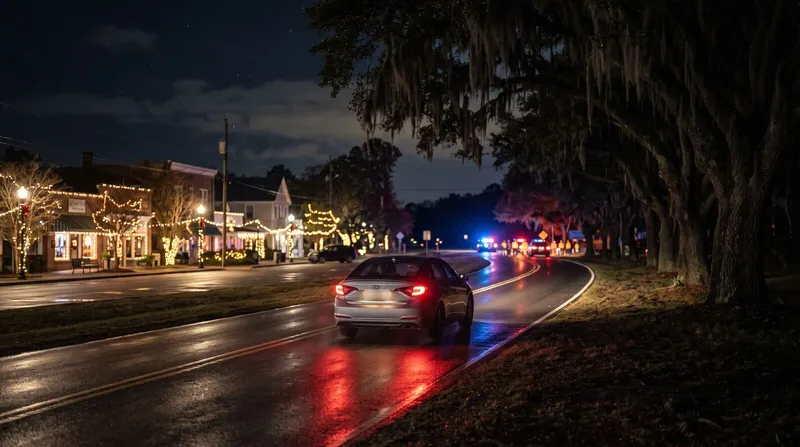
A crash with an impaired driver can change the claim in two ways. The criminal case creates evidence, such as a blood alcohol test and the officer’s observations, that may help prove fault. North Carolina also allows punitive damages in some impaired-driving cases. I cover both, along with claims against a bar or host who over-served the driver, in my post on holiday crashes involving drunk drivers.
Tractor-trailers in holiday traffic
Freight does not stop for Thanksgiving. Retailers stock stores for the shopping weekend, and trucks share I-40 and the I-140 bypass with heavy passenger traffic. A loaded tractor-trailer needs far more distance to stop than a car, and in a sudden I-40 slowdown that difference can turn a near miss into a fatal crash.
Truck drivers work under federal rules that limit how long they can drive. Under the hours-of-service rules, a property-carrying driver can drive up to 11 hours within a 14-hour window after 10 hours off duty. Holiday deadlines create pressure to push past those limits, and the driver’s electronic logging data shows whether that happened.
A truck crash is a different claim from a car crash. The trucking company may be responsible for its driver, its maintenance, and its hiring, and federal law requires interstate carriers to carry much higher insurance than a passenger car does. My post on trucking insurance limits explains those minimums. If you were hit by an 18-wheeler over the holiday, the carrier’s records have a shelf life. The federal rule requires carriers to keep hours-of-service records and supporting documents for only 6 months, so I send a preservation letter early.
Deer and darkness on rural stretches
November is the peak of North Carolina’s deer season on the roads. The UNC Highway Safety Research Center found that more than half of the state’s deer-related crashes in 2020 happened from October through December, with almost a quarter in November alone, according to its deer crash research. The rural stretches of I-40 and US-17, with woods on both sides, are where many of those crashes happen.
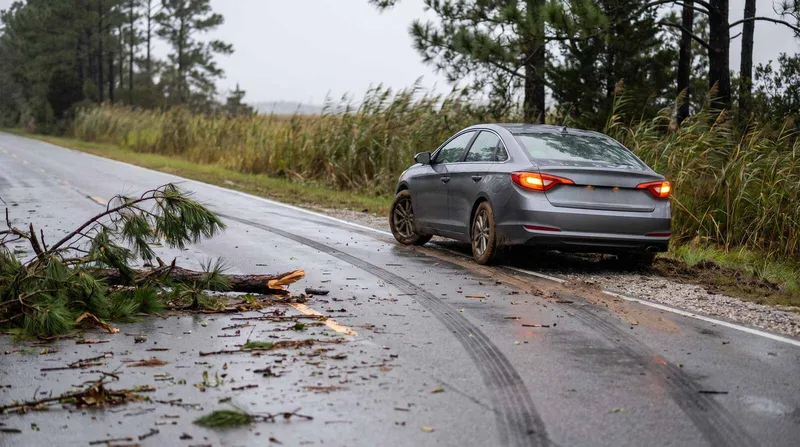
Deer are most active at dawn and dusk, and in late November dusk arrives during the drive home. A deer strike with no other vehicle involved usually runs through the physical damage coverage on your own auto policy. The injury claim changes when a driver swerves to avoid a deer and hits another car, or when a car stopped after a deer strike is hit from behind. In those cases, the sudden emergency doctrine may come up, and how each driver reacted becomes the central question.
How contributory negligence affects a holiday crash claim
North Carolina is one of a small number of states that follow contributory negligence. Under that rule, an injury victim found even slightly at fault can be barred from recovering anything from the other driver. Holiday crashes give insurers plenty of material for that argument.
| What the insurer argues | What often answers it |
|---|---|
| You stopped suddenly in traffic | The following driver’s duty to keep a safe distance, brake-light and dashcam evidence, and the backup ahead of you |
| You were unfamiliar with the road and hesitated | Lane markings, signage, and the other driver’s speed and lookout |
| You were tired from a long drive | No evidence of a driving error caused by fatigue, and the other driver’s conduct |
| You should have seen the deer or the stopped car sooner | Lighting, sight distance, and the time available to react |
| You were not wearing a seat belt | North Carolina law generally keeps seat belt use out of evidence on fault in a car crash claim |
None of those arguments wins by being raised. They are answered with the scene evidence, which is one more reason to collect it early. In some cases, the last clear chance doctrine lets an injury victim recover even if they made a mistake, when the other driver had the final opportunity to avoid the crash.
Who may pay for injuries from a holiday crash
Several coverage sources can come into play after a crash on I-40 or US-17, and each one answers a different question. This table shows the common ones.
| Coverage source | What it may pay | When it applies |
|---|---|---|
| At-fault driver’s liability insurance | Medical bills, lost income, pain and suffering | When the other driver caused the crash, up to the policy limits |
| Trucking company’s insurance | The same damages, with much higher limits | When a commercial truck or its driver caused the crash |
| Your underinsured motorist coverage | The gap above the at-fault driver’s limits | When the other driver’s limits are too low for your injuries |
| Your uninsured motorist coverage | Damages the at-fault driver would have owed | When the other driver had no insurance or left the scene |
| Your medical payments coverage | Medical bills up to a set amount | Whoever caused the crash, if you carry it |
| Your health insurance | Medical treatment | Right away, with repayment rights against a later recovery |
The policy language decides what each one pays. North Carolina auto policies generally include uninsured and underinsured motorist coverage, and my guide to uninsured motorist coverage explains how it follows you and members of your household.
How long do you have to file a claim?
Most personal injury lawsuits in North Carolina must be filed within 3 years of the crash, and most wrongful death lawsuits within 2 years of the death. Missing the deadline usually ends the claim, no matter how strong it was. I explain the exceptions in my post on the claim deadline for car accident cases.
The practical deadlines arrive much sooner. Your own policy likely requires prompt notice of a crash, and the evidence clock above starts running at the scene. A claim that begins in late November can be well organized by the new year if the early work gets done.
Talking to a Wilmington lawyer after a Thanksgiving highway crash
A crash on I-40 or US-17 over Thanksgiving often involves drivers from several states, a rental car or a commercial truck, a crash report from a trooper, and evidence that leaves town by the weekend. I handle every case personally, the consultation is free, and there is no fee unless I win. I work with injury victims and their families in New Hanover, Brunswick, Pender, and Onslow counties and throughout eastern North Carolina.
If you or someone in your family was hurt in a holiday crash, especially one involving a tractor-trailer, I invite you to reach out. Talk to a Wilmington truck accident lawyer about the evidence, the insurance, and the deadlines in your case.
Frequently asked questions
Is Thanksgiving really the most dangerous time to drive in North Carolina?
It is the busiest. AAA projected a record 2.27 million North Carolinians would travel at least 50 miles over Thanksgiving week in 2025, about 2.1 million of them by car. More traffic, more impaired drivers at night, more deer on rural roads, and earlier darkness all land in the same week. The roads most of my holiday crash calls come from are I-40 between Wilmington and Raleigh and US-17 through Brunswick, New Hanover, Pender, and Onslow counties.
The other driver lives in another state. Can I still bring a claim in North Carolina?
Yes. A crash on a North Carolina road is generally handled under North Carolina law, and the claim can usually be brought here, where the scene, the officer, and the witnesses are. The other driver’s out-of-state insurer still has to respond to the claim. Your own policy may also matter if that driver carries low limits, because underinsured motorist coverage can follow you.
I was hit by a tractor-trailer on I-40 over the holiday. What is different about that claim?
A truck crash usually involves a trucking company, a federal rulebook, and much higher insurance limits than a car crash. The carrier keeps driver hours-of-service records, electronic logging data, and maintenance files, and the federal rule for keeping hours-of-service records is 6 months. I send a preservation letter early so those records are not lost before a lawsuit is filed.
The insurer says I was partly at fault for stopping suddenly in traffic. Does that end my claim?
Not automatically. North Carolina’s contributory negligence rule lets an insurer argue that even 1% fault bars recovery, so adjusters raise arguments like this often. A driver behind you still has a duty to keep a safe distance and a proper lookout in heavy holiday traffic. Dashcam video, the crash report, the damage pattern, and witness statements often answer the argument, and the last clear chance doctrine can apply in some cases.
I flew home after the crash. Do I need to come back to Wilmington for my case?
Often, very little. Much of an injury claim runs on records, phone calls, and video meetings, and many claims resolve without a trial. If a lawsuit is filed, a deposition or court date may require travel, and I plan around that with you well in advance. What matters most early is that someone local collects the evidence before it is gone.
How long do I have to file a claim after a Thanksgiving crash?
Most personal injury lawsuits in North Carolina must be filed within 3 years of the crash under NCGS 1-52, and most wrongful death lawsuits within 2 years of the death under NCGS 1-53. Insurance policies set their own notice requirements, which are much shorter. Claims involving a government vehicle can raise special notice rules, so it helps to ask early.
What does it cost to talk with you about a holiday crash?
The consultation is free, and there is no fee unless I win. I explain how case costs are handled in that first conversation, before you sign anything. Bring the crash report number, photos, your insurance card, and any letters you have received, and I will tell you where each one fits.
A Thanksgiving crash on I-40 or US-17 starts several clocks at once.
Out-of-town witnesses go home, camera video gets recorded over, and a trucking company's records have a shelf life. Get a free review of your crash while the evidence can still be collected.
Related Articles
Rental car accident insurance in NC and who covers injuries
Rental car accident insurance in NC rarely covers your injuries the way people assume. See which policy pays first in a Wilmington crash. Free consultation.
Drunk driving accident lawyer in NC for holiday crashes
NC dram shop and social host claims, punitive damages beyond the usual cap, and filing deadlines after a holiday DWI crash near Wilmington. Free consultation.
How NC's sudden emergency doctrine works and where it fails
The sudden emergency doctrine in NC has two elements, and a driver who caused the emergency can't use it. Four NC cases explained. Free Wilmington consultation.