
Car Accidents
Car accidents · Wilmington, NC
A Wilmington lawyer for crashes where fault splits many ways.
The biggest risk in a pile-up is settling with one insurer before the others are valued, because releasing a driver too early can cancel what the rest still owe you. I have spent over 41 years working contribution and apportionment cases on the I-40, I-140, and US-17 corridors in North Carolina. The consultation is free. No fee unless I win your case.
What this case depends on
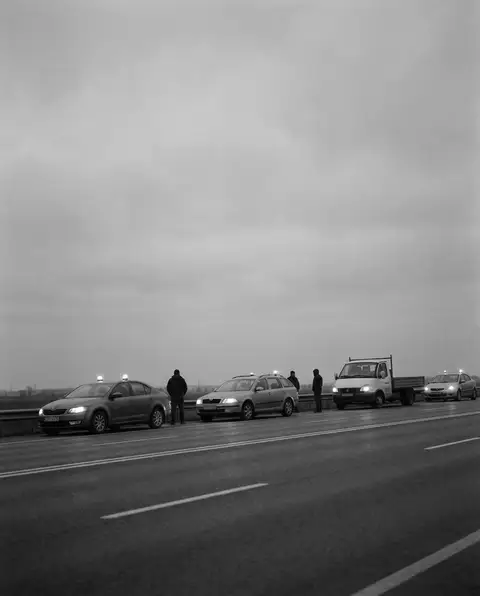
Two questions decide a multi-vehicle case before the medical file ever does.
Liability apportionment across drivers
In a chain-reaction wreck, each insurer points fault at the next driver. Under North Carolina joint-and-several liability, any one driver can be made to pay the full judgment if the others cannot, so which insurer I pursue first is a strategic decision, not a formality.
Settle-and-release ordering
Settling with one driver too soon can cancel your right to collect that driver's share from the others. I map every driver's likely share of the fault before anyone signs a release, so an early offer does not quietly shrink your total recovery.
How I work multi-vehicle cases
Who actually caused the pile-up is rarely obvious, and the evidence that proves it starts disappearing when the tow trucks arrive.
Chain-reaction wrecks rarely have one obvious cause. Each driver has a reason to push the blame onto the next, so the case is won on the evidence, and that evidence starts disappearing the moment the tow trucks arrive.
How I build the sequence
I work the wreck in a clear order so the record, not the finger-pointing, decides who pays:
- Pull the black-box data from each vehicle to show who braked, who did not, and in what order the cars struck.
- Photograph the scene and the damage before the cars are towed and the pattern of impacts is lost.
- Take witness statements while the order of the collisions is still fresh in memory.
- Reconstruct the sequence and assign each driver a share, which anchors every settlement demand that follows.
That reconstruction is what turns the legal rules into dollars. Contributory negligence can bar your recovery if the defense pins even one percent of the fault on you, and settling with one driver in the wrong order can release the others from covering that driver's share. Both move the settlement values as much as the medical file does, which is why I map every driver's share before I negotiate with any of them.
The consultation is free. No fee unless I win your case. If contributory negligence is going to bar the case, I will tell you that on the first call.
— Robert L Armstrong
Related under Car Accidents
Pile-ups overlap with two other car-accident patterns.
Most chain reactions begin as sequenced rear-end wrecks. When one of the drivers leaves the scene, the uninsured-motorist analysis changes the math.
See all Car Accidents sub-typesRear-end collisions
The wreck pattern at the start of most chain reactions. Adjusters defend these with fast offers before the downstream impacts are valued.
Hit and run
When one of the drivers in a pile-up flees, recovery shifts toward uninsured-motorist coverage and the apportionment math reshapes.
In their words
What car accident clients said after their case closed.
“Mr. Armstrong was very helpful in my car accident. He makes sure you are getting the best help and what you need in every decision. I could not ask for a better lawyer than him and his staff. Thank you so much!”
Jamaila
Google review
“From the moment I met Robert, I sensed that he would be the lawyer I could trust. By the time my case was resolved a year later, I felt like I had a new friend who just happened to be a REALLY good lawyer!”
Laurie
Avvo review
“First time I had ever had a settlement in a car accident. I am very pleased with not only the settlement, but also the professionalism and honest support from Mr. Armstrong, along with his legal assistant Stephanie who could answer almost any question.”
Bill
Google review
From the resource library
Guides for cases like this.
Car Accidents
Car Accident Cases With Multiple Defendants

NC Personal Injury Law
NC's Last Clear Chance Rule in Car Accidents
Common questions
About multi-vehicle cases.
The questions that come up most often on chain-reaction and pile-up cases in North Carolina.
Frequently asked questions
The wreck involved four cars. Whose insurance pays?
Every driver who contributed to the wreck is potentially on the hook, and every one of their policies is potentially in play. North Carolina applies joint-and-several liability in most multi-defendant tort cases, which means a single defendant can be held responsible for the full judgment even if their share of fault is smaller. Contribution rights among the defendants run separately. Practically, that means I look at the full policy stack, decide which carriers to demand against first, and value the case across the combined limits rather than treating each driver as a standalone claim.
The driver behind me was hit and pushed into my car. Am I still owed anything?
Often yes. The inciting driver, the one who started the chain reaction, carries liability for the foreseeable downstream impacts. The driver who hit you may or may not share fault depending on following distance, speed, and reaction time. The evidence required to establish that sequence is heavy: event-data from each vehicle, scene photographs, witness statements, and physical damage patterns on the bumpers and frames. The longer you wait to gather that evidence, the harder the chain becomes to prove.
One of the insurers offered to settle fast. Should I take it?
Not until the full picture is mapped. Settling with one defendant in a multi-vehicle case can extinguish your contribution rights against the others and shrink the total recovery. The order in which defendants are released matters. I work the apportionment math before any release is signed, decide which defendant should pay first and which should pay last, and structure the settle-and-release language to preserve the remaining claims. Before you sign anything from any of the insurers, the consultation is free.
What if I was partly at fault for the pile-up?
North Carolina contributory negligence still applies. If the defense proves you were even 1% at fault for the wreck, your recovery from the at-fault defendants can be barred entirely. In a multi-vehicle case that question gets asked from several directions at once, because each defendant has an incentive to argue you contributed. That is precisely why the investigation has to be built carefully from the start, on every angle, not just the one you think matters.
When you are ready to map who hit whom and in what order, the call is free.
No fee unless I win your case. Tell me what happened and which insurers have already called. I will tell you honestly whether I think the case can be defended under North Carolina contributory negligence and which carriers I would demand against first.
Contingency-fee representation. Free consultation.