Drunk driving accident lawyer in NC for holiday crashes

On this page
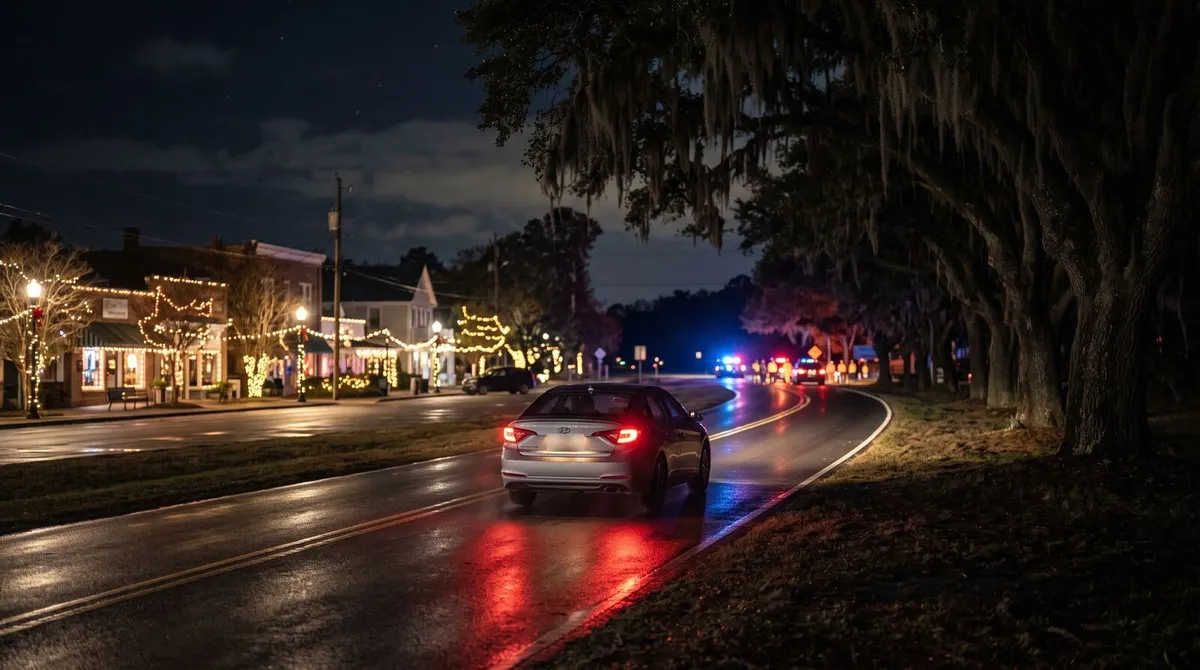
Thanksgiving is Thursday, November 26, 2026, and from that night through New Year’s Day, my phone rings more often with calls about crashes caused by a drunk driver. The crashes follow holiday parties, office gatherings, bar crawls, and family dinners that run late. Federal data shows the pattern: in the combined Decembers of 2020 to 2024, nearly 5,000 people were killed in crashes involving an alcohol-impaired driver, and December 2024 alone accounted for 934 of those deaths.
I’m Robert L Armstrong, a Wilmington personal injury lawyer with over 41 years of experience, and I represent injury victims and their families in eastern North Carolina. This guide covers who can be held responsible after a holiday drunk driving crash, how dram shop and social host claims work in North Carolina, why punitive damages are treated differently when the defendant was impaired, how the criminal case affects your civil claim, and the deadlines that apply. It reflects North Carolina law as of October 2026, and it is general information, not advice for your case.
Why Thanksgiving to New Year’s is the riskiest stretch
Holiday drinking puts more impaired drivers on roads that are already crowded with travelers. A drunk driving accident in this window often follows a pattern I hear again and again: a gathering with free-flowing drinks, a late departure, and a drive home on a road that is also full of tired out-of-town drivers.
The national numbers come from NHTSA, which reports on its winter holidays campaign page that the Decembers from 2020 through 2024 averaged over 30 lives lost every day of the holiday season to crashes involving an alcohol-impaired driver. North Carolina’s own figures are similar in scale. According to NC Vision Zero, which reports NCDOT crash data, 361 people were killed and 7,227 were injured in North Carolina crashes involving alcohol-impaired drivers in 2024.
Law enforcement answers with a push of its own. The North Carolina Governor’s Highway Safety Program runs its Holiday Booze It & Lose It campaign every winter. In 2025 it ran from December 15, 2025, through January 4, 2026, adding patrols and sobriety checkpoints, according to WECT’s report. Checkpoints and extra patrols reduce risk, but they do not reach every road in New Hanover, Brunswick, Pender, Onslow, Bladen, or Duplin County on a holiday night.
Who can be held responsible after a holiday drunk driving crash
The first question most families ask is whether the driver’s insurance will cover everything. Often it will not, and the driver is not the only person whose conduct matters. Depending on the facts, three parties may share responsibility, and each one follows different rules.

| Party | Legal basis | What has to be shown |
|---|---|---|
| The impaired driver | Negligence, with impaired driving under G.S. 20-138.1 as the breach | The driver was impaired, and the impairment caused the crash and injuries |
| A bar, restaurant, or store | Common-law negligence, with G.S. 18B-305 as the standard of care; or the dram shop act if the driver was under 21 | The seller served the driver while knowing or having reason to know of the intoxication |
| A social host | Common-law negligence under Hart v. Ivey | The host served a guest known to be intoxicated and knew the guest would drive |
Every case starts with the driver. Under North Carolina law, drunk driving breaks a public safety statute, and the Supreme Court has treated that breach as negligence. The questions that follow are whether anyone else added to the danger, and whether enough insurance exists to cover what the injuries cost.
How North Carolina dram shop liability works
“Dram shop” is an old term for a place that sells alcohol. Many people assume North Carolina’s dram shop act lets any injury victim sue a bar that served a drunk driver. It does not. The act, found in G.S. 18B-120 through 18B-129, is narrower than that.
The act applies to sales to people under 21. Under G.S. 18B-121, an injured person has a claim against a permittee or a local ABC board only if all three of these are true:
- The seller or its employee negligently sold or furnished alcohol to an underage person.
- The alcohol caused or contributed to the underage driver being impaired at the time of the crash.
- The injury was proximately caused by that driver’s negligent operation of a vehicle while impaired.
The act also sets limits that matter in a serious case. Total damages for all injured people from one crash cannot exceed $500,000 per occurrence under G.S. 18B-123, and if the claims add up to more, each claim is reduced in proportion. The seller and the driver are jointly and severally liable under G.S. 18B-124, which means the injured person can pursue either one, with a right of contribution between them. Holders of certain limited permits, such as special occasion permits, are excluded under G.S. 18B-125. A person who aided or abetted the sale to the underage driver cannot sue under the act.
The act also has the shortest deadline in this area. G.S. 18B-126 sends dram shop claims to the limitation period in G.S. 1-54, which is one year.
When the drunk driver was an adult
Most holiday crashes involve adult drivers, so the dram shop act does not apply to them. That does not leave injury victims without options. G.S. 18B-128 states that the act does not take away any claim that exists under the common law, and North Carolina courts recognize a negligence claim against a seller who serves an intoxicated customer.
The legal footing is G.S. 18B-305(a), which makes it unlawful for a permittee, an employee, or an ABC store employee to knowingly sell or give alcohol to an intoxicated person. A violation does not automatically win the case, but it frames the argument that the seller owed a duty and breached it. The $500,000 cap applies to claims under the dram shop act itself, and a common-law claim follows the ordinary 3-year deadline for personal injury.
The hard part is proof, because the driver’s blood alcohol level is measured after the crash, not at the bar. The evidence that tends to matter is below.
| Evidence | What it can show | Why it needs early action |
|---|---|---|
| Tabs and card receipts | How many drinks were served, and when | Businesses keep records for limited periods |
| Security and bar camera video | How the driver looked and acted at the time of service | Many systems record over footage within days or weeks |
| Server and bartender identities | Who can testify to what they saw | Staff turn over, especially around the holidays |
| Witnesses at the venue | Whether the driver was stumbling, slurring, or arguing | Memories fade and people scatter after the event |
| Blood or breath test result and its timing | The driver’s alcohol level and how it relates to the last drink | Hospital and lab records need a legal request |
Social host liability for holiday parties
Holiday parties raise a question the dram shop act never answers: what about a person who is not selling alcohol? North Carolina’s Supreme Court addressed it in Hart v. Ivey, decided in 1992, and its test has been used ever since. As restated in Camalier v. Jeffries, an individual may be held liable in common-law negligence if the person served alcohol, knew or should have known the guest was intoxicated, and knew the guest would be driving afterward.
All three elements have to be proved, and the middle one is the usual battleground. In Camalier, the party’s host and the company that sponsored it won summary judgment because none of the more than 300 people at the party indicated that the driver appeared intoxicated when he was served, even though his blood alcohol level was 0.191 less than two hours after he left. The court looked at what the hosts knew when the drinks were served, not at the driver’s condition after the crash.
That standard shapes how I evaluate a host claim. I look for who poured the drinks, how long the driver was there, whether anyone commented on the driver’s condition, and whether the host knew the driver would be getting behind the wheel. A home party with a few guests tends to produce better witnesses than a 300-person event. Employer-sponsored parties raise their own questions about whether the employee was acting within the scope of employment, which North Carolina courts examine closely.
Punitive damages and the cap exemption
Compensatory damages pay for the harm, including medical bills, lost income, and pain and suffering. Punitive damages are a separate award meant to punish particularly serious conduct. North Carolina allows them in narrow circumstances, and drunk driving is one of the situations where the law treats them differently.
The general standard is in G.S. 1D-15. The injured person must prove the defendant is liable for compensatory damages and that one aggravating factor was present: fraud, malice, or willful or wanton conduct. The proof must be clear and convincing, which is a higher bar than the usual civil standard. A defendant also cannot be hit with punitive damages for someone else’s conduct alone, so a bar or employer is exposed only if its own people took part in the conduct or the company’s managers condoned it.
Most punitive awards face a cap. G.S. 1D-25 limits them to 3 times the compensatory damages or $250,000, whichever is greater. That cap has an exception that matters here. G.S. 1D-26 says the cap does not apply to a claim for harm arising from a defendant’s operation of a motor vehicle when the conduct would amount to driving while impaired. The exemption speaks to the driver’s operation of the vehicle, so I treat it as a tool against the driver and evaluate any claim against a seller or host under the ordinary rules.
Punitive damages are never automatic. A jury decides whether the conduct qualifies and sets any amount separately from compensatory damages. Facts such as a very high blood alcohol level or a prior DWI history may bear on that question. I do not predict an outcome in any case.
The criminal case and your civil claim
When police arrest a driver after a crash, the district attorney prosecutes the case, and the state is the party, not you. The criminal case can resolve with a conviction, a plea to a lesser charge, or a dismissal. None of those outcomes is a substitute for a civil claim, and a civil claim does not need to wait for the criminal case to end.
Three connections between the two cases are worth knowing.
- Restitution. At sentencing, the court decides whether to order the defendant to repay the victim. Under G.S. 15A-1340.35, the court looks at medical costs, therapy and rehabilitation, lost income, and funeral expenses in a fatal crash. The court also considers the defendant’s ability to pay and may order partial restitution under G.S. 15A-1340.36, so the order often covers less than the full loss.
- Credit against the civil case. A restitution order does not take away the right to sue. G.S. 15A-1340.37 says any amount the defendant pays under the order is credited against a civil judgment for the same victim, so the two cannot double up.
- Guilty pleas. A plea to impaired driving is admissible in the civil case, though under Camalier it is not conclusive and the defendant may explain it. In practice a plea often makes the question of the driver’s fault much easier to establish.
A civil claim also reaches harm the criminal case does not, such as pain and suffering, the future cost of care, and the responsibility of a bar or host that is not a defendant in the criminal case. The civil standard is the greater weight of the evidence, not proof beyond a reasonable doubt.
Contributory negligence and passengers who knew the driver was drunk
North Carolina is one of the few states that still applies contributory negligence in its strict form. If a jury finds an injured person even 1% at fault, the rule can bar recovery. Insurers look for that 1% in almost every case.
In a drunk driving crash, the other driver, a pedestrian, or a cyclist rarely has much to answer for, and the drunk driver’s impairment usually dominates the fault picture. The issue comes up most often with passengers. The defense argues that a passenger who got into the car knowing or having reason to know the driver was impaired took on the risk and shares the blame.
The facts that matter are specific. How much did the passenger see the driver drink? Did the two leave a party together after hours of drinking? Was the driver slurring or unsteady, or did the driver seem fine? Did the passenger have a realistic way home? A passenger who was asleep, who joined the car before the drinking started, or who had no reason to doubt the driver faces a different argument than one who watched the driver drink all evening. If you were a passenger, I want to hear the whole story before anyone decides what the rule means for you.
Insurance coverage after a drunk driving crash
The driver’s liability insurance is the first source of payment, and serious injuries can exceed the policy limits quickly. A drunk driver may also have no insurance at all. That is why I look at every policy that could apply.
Your own auto policy can help. Uninsured motorist coverage may apply when the driver had no insurance, and underinsured motorist coverage under G.S. 20-279.21 may apply when the driver’s limits are too low. These coverages can also come from a policy held by a relative in your household. Medical payments coverage, health insurance, and disability benefits may also play a part.
A business that sells alcohol usually carries its own liability policy, which is one reason the second and third parties on the chart deserve a look even when the driver has insurance.
Filing deadlines after a drunk driving crash
The deadline depends on the kind of claim, and the shortest one is easy to miss.
| Claim | Deadline | Statute |
|---|---|---|
| Personal injury lawsuit against the driver, a seller, or a host | 3 years from the date of injury | G.S. 1-52 |
| Wrongful death lawsuit | 2 years from the date of death | G.S. 1-53 |
| Dram shop claim for an underage sale | 1 year | G.S. 1-54 |
Delay causes other problems too. The bar’s video may be gone in weeks, and a claim that could have named a second party may shrink to a claim against the driver alone. My guide to the claim deadline in North Carolina covers the general rules, including exceptions.
When a drunk driving crash is fatal, the family’s claim follows its own rules about who may bring it and what damages are available. My guide to wrongful death recovery in North Carolina explains that process.
Preserving evidence before it disappears
My guide to the first steps after being hit by a drunk driver covers the immediate response at the scene. Liability claims against a bar or host add a few steps that depend on speed.
- Ask the police for the crash report and the arrest and charge information as soon as it is available. My page on the police report explains how to get it.
- Write down where the driver was drinking, based on the officer’s report, the driver’s statements, or witnesses. Names of the venue or the host matter.
- Do not give a recorded statement to any insurer before you have talked with a lawyer.
- Keep every medical record and bill, and keep a short weekly note about pain, sleep, and what you cannot do.
- Have a lawyer send a preservation letter to the venue so video, receipts, and employee schedules are kept.
Talking to a Wilmington car accident lawyer about a holiday drunk driving crash
A holiday drunk driving crash raises more questions than most collisions. The driver’s fault is usually clear, but the full picture depends on a bar or host’s role, the policies that apply, how the criminal case affects the civil one, and a one-year deadline that applies to only some of the claims. Punitive damages against a drunk driver are not capped the way most punitive awards are, and the evidence that supports every claim is often held by someone other than the driver.
I represent injury victims and their families in New Hanover, Brunswick, Pender, Onslow, Bladen, and Duplin counties, and I handle each case personally. The consultation is free, and there’s no fee unless I win. If you or someone in your family was hurt by a driver who had been drinking, I’d like to hear your story. Talk to a Wilmington car accident lawyer about what happened and what your options are.
Frequently asked questions
Can I sue a bar or restaurant that served the drunk driver who hit me?
Possibly. North Carolina law makes it unlawful to knowingly sell alcohol to an intoxicated person under G.S. 18B-305, and the courts recognize a common-law negligence claim when a server provides alcohol to someone the server knew or should have known was intoxicated and would be driving. The proof is the hard part. Tabs, card receipts, security video, and witness accounts of how the driver looked at the time of service usually decide the claim.
Is a host liable if a guest drove drunk after leaving a holiday party?
It can happen, though it is difficult. Under Hart v. Ivey, a host may be liable in negligence if the host served alcohol to a guest when the host knew or should have known the guest was intoxicated and knew the guest would drive afterward. The claim fails when no one at the event saw signs of intoxication, as happened in Camalier v. Jeffries.
Is there a limit on punitive damages when the defendant was driving drunk?
Not the usual one. Punitive damages in North Carolina are normally capped at 3 times the compensatory damages or $250,000, whichever is greater. G.S. 1D-26 removes that cap for claims arising from impaired driving. Punitive damages still require proof by clear and convincing evidence that the conduct was willful or wanton, and the jury decides the amount separately from compensatory damages.
The driver pleaded guilty. Does that win my civil case?
It helps, but it does not decide the case on its own. A guilty plea to impaired driving is admissible in the civil case, and the North Carolina Supreme Court has said it is not conclusive evidence and that the defendant may explain it. A civil claim also covers things the criminal case does not, such as pain and suffering and the responsibility of other parties.
Can I recover if I was a passenger in the drunk driver’s car?
It depends on what you knew. North Carolina’s contributory negligence rule lets the defense argue that a passenger who knew or should have known the driver was impaired shared the fault, and even a small share of fault can bar a claim. Facts such as how much the driver visibly drank, whether you drank at the same event, and what alternatives existed matter. Other coverage, such as your own policy, may still apply.
What does it cost to talk with you about a drunk driving crash?
The consultation is free, and there’s no fee unless I win your case. I’ll listen to what happened, review the crash report and any charges, and tell you plainly which parties may be responsible and which deadlines apply.
Hurt by a drunk driver this holiday season? Other parties may share the blame.
A bar that over-served the driver or a host who kept pouring may be liable in addition to the driver, and the evidence against them fades fast. Get a free review of who may be responsible.
Related Articles
What to do if you're hit by a drunk driver in Wilmington, NC
Hit by a drunk driver near Wilmington? The evidence to save, how the DWI case affects your claim, and coverage if the driver was uninsured. Free consultation.
Rental car accident insurance in NC and who covers injuries
Rental car accident insurance in NC rarely covers your injuries the way people assume. See which policy pays first in a Wilmington crash. Free consultation.
How Long Do I Have to File a Car Accident Claim in NC?
North Carolina gives you three years to file a car accident claim, but shorter deadlines apply to some claims. Know which clock is running for you.