What to do if you're hit by a drunk driver in Wilmington, NC

On this page
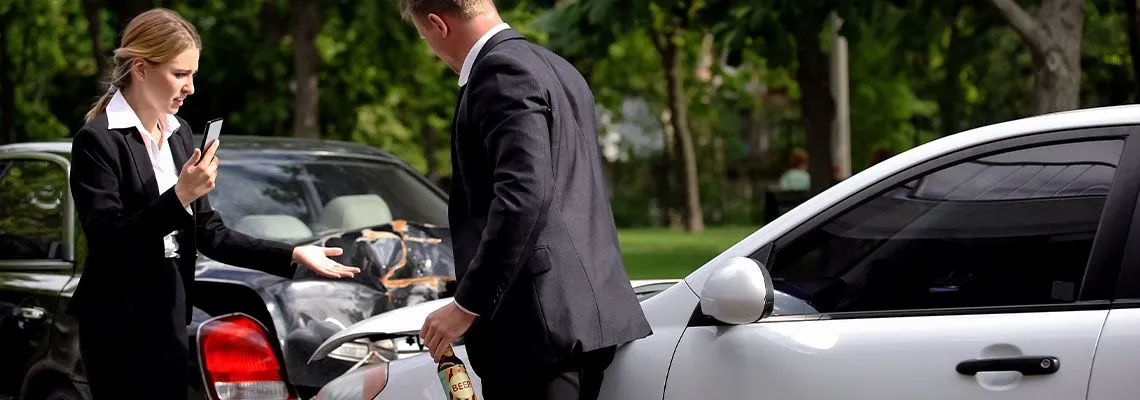
A crash with a drunk driver usually happens fast and leaves people shaken, hurt, and unsure who to call first. The steps you take in the next few hours and weeks shape what can be proved later, both in the criminal case against the driver and in your own claim for medical bills, lost pay, and the harm the crash caused. Drunk driving remains a serious problem on North Carolina roads, and most of the families I meet after these crashes never expected to need a lawyer.
I’m Robert L Armstrong, a Wilmington personal injury lawyer with over 41 years of experience, and I represent injury victims and their families in eastern North Carolina. This guide covers what to do at the scene, the evidence worth saving, how the DWI charge relates to your claim, who besides the driver may be responsible, and what coverage may apply if the driver had little or no insurance. It reflects North Carolina law as of October 2026 and is general information, not advice for your case.
How common are drunk driving crashes in North Carolina?
Every drunk driving accident I handle is part of a larger pattern. According to NC Vision Zero, which reports NCDOT crash data, 361 people were killed and 7,227 were injured in North Carolina crashes involving alcohol-impaired drivers in 2024. Those numbers include drivers, passengers, pedestrians, and cyclists who did nothing wrong.
The risk rises around the holidays, when parties and late nights put more impaired drivers on the road. My guide to holiday crashes involving drunk drivers covers that season in detail, including claims against bars and party hosts.
What to do at the scene if you suspect the other driver is drunk
Your safety comes before any evidence. If you can move, and your car is in a dangerous spot, get yourself and your passengers out of traffic. Then work through these steps as you are able.
- Call 911 and say you suspect impairment. Tell the dispatcher someone is hurt, if anyone is, and that you think the other driver has been drinking. That information shapes how the officer approaches the driver and whether a breath or blood test is requested.
- Do not confront the driver. An impaired person may be unpredictable. Stay in a safe place and wait for police.
- Note what you notice. The smell of alcohol, slurred speech, stumbling, open containers, or a driver who tries to leave are all details worth writing down or recording on your phone while they are fresh.
- Photograph the scene. Take pictures of the vehicles, their positions, skid marks, road conditions, and the other car’s license plate.
- Collect witness names and numbers. Bystanders often leave before police finish their work, and an independent witness can confirm what the driver said and how the driver acted.
- Accept medical care. Adrenaline hides pain. Let paramedics examine you, and see a doctor the same day or the next if you decline transport. A gap in treatment is one of the first things an insurer points to later.
Avoid apologizing or guessing about fault while you are still at the scene. A polite “I’m sorry” can be repeated back to you later.
Evidence to preserve after a drunk driving crash
Drunk driving cases rest on evidence that other people control, and much of it can disappear if no one asks for it. Here is what I look for first.

| Evidence | Where it comes from | Why it matters |
|---|---|---|
| Crash report | The investigating agency, such as the Wilmington Police Department or the State Highway Patrol | It records the officer’s observations, the parties, and any citations |
| DWI charge and court file | The clerk of court in the county where the driver was charged | It shows the charge, test results offered in court, and how the case ends |
| Breath or blood test result | Law enforcement and the hospital or lab | It shows the driver’s alcohol level and when it was measured |
| 911 calls and body camera video | The 911 center and the arresting agency | They capture the driver’s speech and behavior close to the crash |
| Medical records and bills | Every provider who treated you | They connect your injuries to the crash and show what care has cost |
| Receipts and video from where the driver drank | The bar, restaurant, or store | They show how much was served and how the driver looked at the time |
My page on getting your police report explains how to request it and what to do if it contains a mistake. Keep a short weekly note about pain, sleep, missed work, and activities you can’t do, because those details are hard to remember months later.
What not to tell the insurance company
Expect a call from the drunk driver’s insurer within days. The adjuster may sound sympathetic, and a quick offer may follow. You can report the crash and give the basic facts, but there are a few things I suggest holding back until you have advice.
- A recorded statement. You are not required to give one to the other driver’s insurer, and a recording can be used to question your account.
- Guesses about your injuries. Saying “I’m fine” or “it’s just sore” before a doctor has examined you can follow you through the claim.
- Anything about your own driving. North Carolina applies contributory negligence, which can bar recovery if you are found even 1% at fault. Even in a clear drunk driving crash, insurers look for that 1%.
- A signed release. Signing a release usually ends the claim, even if your injuries turn out to be worse than you thought.
Your own insurer is different. Your policy likely requires prompt notice of a crash, so let your company know it happened.
The DWI charge and your injury claim
When police charge the driver with driving while impaired under G.S. 20-138.1, the State prosecutes that case. You are a witness, not a party. Your civil claim is separate, and it does not have to wait for the criminal case to end.
The two cases still connect in useful ways. A guilty plea to DWI is admissible in the civil case, though it is not conclusive and the defendant may try to explain it. At sentencing, the criminal court may order restitution for medical costs and lost income, and under G.S. 15A-1340.37 any restitution paid is credited against a civil judgment for the same loss. A civil claim also reaches harm the criminal case does not, such as pain and suffering and the future cost of care, and it uses a lower standard of proof than the criminal case.
North Carolina courts treat the violation of a safety statute like the DWI law as negligence. In practice, that means the main fights in many drunk driving claims are about the extent of the injuries and the amount of insurance available, not about whether the driver was careless.
Who can be held responsible besides the driver?
The driver is the starting point, but not always the only party. Two others come up often enough that I check for them in every case.
A bar, restaurant, or store. The statute people usually quote is G.S. 18B-305, which still reads: “It shall be unlawful for a permittee or his employee or for an ABC store employee to knowingly sell or give alcoholic beverages to any person who is intoxicated.”
In plain English, a business with an alcohol permit, its staff, and ABC store employees may not knowingly serve someone who is already drunk. The statute is a licensing rule, not a lawsuit statute, but North Carolina courts use it as the standard of care in a negligence claim against a seller who served a visibly intoxicated customer. The separate dram shop act, starting at G.S. 18B-120, gives a direct claim only when the driver was under 21, caps damages at $500,000 per crash, and has a 1-year deadline.
A social host. A person who served drinks at a private gathering may be liable if the host knew or should have known the guest was intoxicated and knew the guest would drive. Those claims are hard to prove and depend on witnesses.
Each of these claims rises or falls on proof gathered early, which is why I send preservation letters quickly when the driver’s last stop is known.
Punitive damages in North Carolina DWI cases
Compensatory damages cover your losses: medical bills, lost income, pain and suffering, and harm to your daily life. Punitive damages are a separate award meant to punish especially serious conduct, and drunk driving is one of the situations where North Carolina law treats them differently.
Under G.S. 1D-15, punitive damages require clear and convincing proof of fraud, malice, or willful or wanton conduct. Driving after drinking heavily can meet that standard, depending on the facts, such as a very high alcohol level or prior DWI convictions. Most punitive awards are capped at 3 times compensatory damages or $250,000, whichever is greater, but G.S. 1D-26 removes that cap for claims based on a defendant’s driving while impaired.
A jury decides whether punitive damages are appropriate and how much to award. Many auto policies do not pay punitive damages, so collection can depend on the driver’s own assets. I never promise a result in any case, and punitive damages are no exception.
If the drunk driver had no insurance or not enough
Drivers who drink and drive are more likely than most to carry minimum coverage or none at all. For policies issued or renewed on or after July 1, 2025, North Carolina’s minimum bodily injury limits are $50,000 per person and $100,000 per accident. A serious injury can use up those limits quickly.
Your own policy may help. Uninsured motorist coverage may pay when the driver had no insurance or fled the scene, and underinsured motorist coverage under G.S. 20-279.21 may apply when the driver’s limits fall short. Coverage can also come from a policy held by a relative who lives in your household. Medical payments coverage, health insurance, and disability benefits may fill other gaps. I review every policy that could apply before anyone accepts an offer.
When a drunk driving crash is fatal
When a family member dies in a fatal DWI crash, the claim belongs to the estate, and only a court-appointed personal representative can file it. My guide to opening an estate for a wrongful death claim walks through that first step with the clerk of superior court.
The time limit is shorter than for injury claims. My post on the wrongful death deadline explains the 2-year rule and who can file, and my guide to wrongful death recovery covers the damages North Carolina law allows, including punitive damages when the death was caused by willful or wanton conduct.
Filing deadlines to keep in mind
Most injury lawsuits must be filed within 3 years of the crash, a wrongful death claim within 2 years of the date of death, and a dram shop claim for an underage sale within 1 year. My guide to the claim deadline in North Carolina covers the general rules and their exceptions. Waiting rarely helps, because evidence held by bars, hospitals, and 911 centers is often kept only for a limited time.
Talking to a Wilmington car accident lawyer after a drunk driving crash
Being hit by a drunk driver often makes fault clear, but it doesn’t make the claim simple. The evidence sits with police, hospitals, and businesses, the criminal case moves on its own schedule, and the driver’s insurance may not come close to covering a serious injury. Getting medical care, keeping records, and saying little to the other insurer protect your position while those pieces come together.
I represent injury victims and their families in New Hanover, Brunswick, Pender, Onslow, Bladen, and Duplin counties, and I handle each case personally. The consultation is free, and there’s no fee unless I win. If you or someone in your family was hurt by a driver who had been drinking, I’d like to hear your story. Talk to a Wilmington car accident lawyer about what happened and what your options are.
Frequently asked questions
Can I sue the bar that served the drunk driver who hit me?
Possibly. G.S. 18B-305 makes it unlawful for a seller to knowingly serve an intoxicated person, and North Carolina courts recognize a negligence claim against a seller who served someone it knew or should have known was intoxicated. The state’s dram shop act itself covers only sales to people under 21, with a $500,000 cap and a 1-year deadline. Receipts, video, and witness accounts usually decide whether a claim against a bar is worth pursuing.
Does the criminal DWI case affect my injury claim?
It affects it, but it does not control it. The district attorney prosecutes the DWI, and your civil claim moves on its own track. A guilty plea is admissible as evidence in the civil case but is not conclusive. Restitution ordered in the criminal case is credited against a later civil judgment, so the two cannot pay twice for the same loss.
Should I talk to the drunk driver’s insurance company?
You can report the crash and give basic facts, but I suggest declining a recorded statement until you’ve had legal advice. Adjusters look for anything that suggests you share the fault, because North Carolina’s contributory negligence rule can bar a claim if you are found even slightly at fault.
What if the drunk driver had no insurance?
Uninsured motorist coverage on your own auto policy may pay for your injuries, and coverage can also come from a policy held by a relative who lives with you. If the driver had insurance but not enough, underinsured motorist coverage may cover part of the difference. For policies issued or renewed on or after July 1, 2025, North Carolina’s minimum bodily injury limits are $50,000 per person and $100,000 per accident.
Can I get punitive damages from a drunk driver?
You may be entitled to ask for them. North Carolina allows punitive damages when the defendant’s conduct was willful or wanton, proved by clear and convincing evidence, and G.S. 1D-26 exempts impaired driving claims from the usual cap of 3 times compensatory damages or $250,000. A jury decides whether to award them and how much, so no amount is ever guaranteed.
How long do I have to file a claim after a drunk driving crash?
Most injury lawsuits must be filed within 3 years of the crash under G.S. 1-52. A wrongful death claim must be filed within 2 years of the date of death, and a dram shop claim for a sale to an underage driver has a 1-year deadline. Exceptions exist, so it is worth checking your dates early.
What does it cost to talk with you about my crash?
The consultation is free, and there’s no fee unless I win. I’ll review the crash report and any charges, explain which parties and policies may be involved, and tell you plainly what deadlines apply.
Hit by a drunk driver? The evidence is easiest to save in the first weeks.
Blood test results, crash reports, and records from wherever the driver was drinking can be lost if no one asks for them. I'll review what happened and which policies may apply, and the consultation is free.
Related Articles
Drunk driving accident lawyer in NC for holiday crashes
NC dram shop and social host claims, punitive damages beyond the usual cap, and filing deadlines after a holiday DWI crash near Wilmington. Free consultation.
Prove Other Driver Was Texting in a Wilmington, NC Car Crash
Prove the other driver was texting in your Wilmington, NC car crash. Learn key steps and evidence. Call Robert Armstrong for a free consultation.
How Long Do I Have to File a Car Accident Claim in NC?
North Carolina gives you three years to file a car accident claim, but shorter deadlines apply to some claims. Know which clock is running for you.