Hurricane-Season Car Accidents in NC: Who's Liable?

On this page
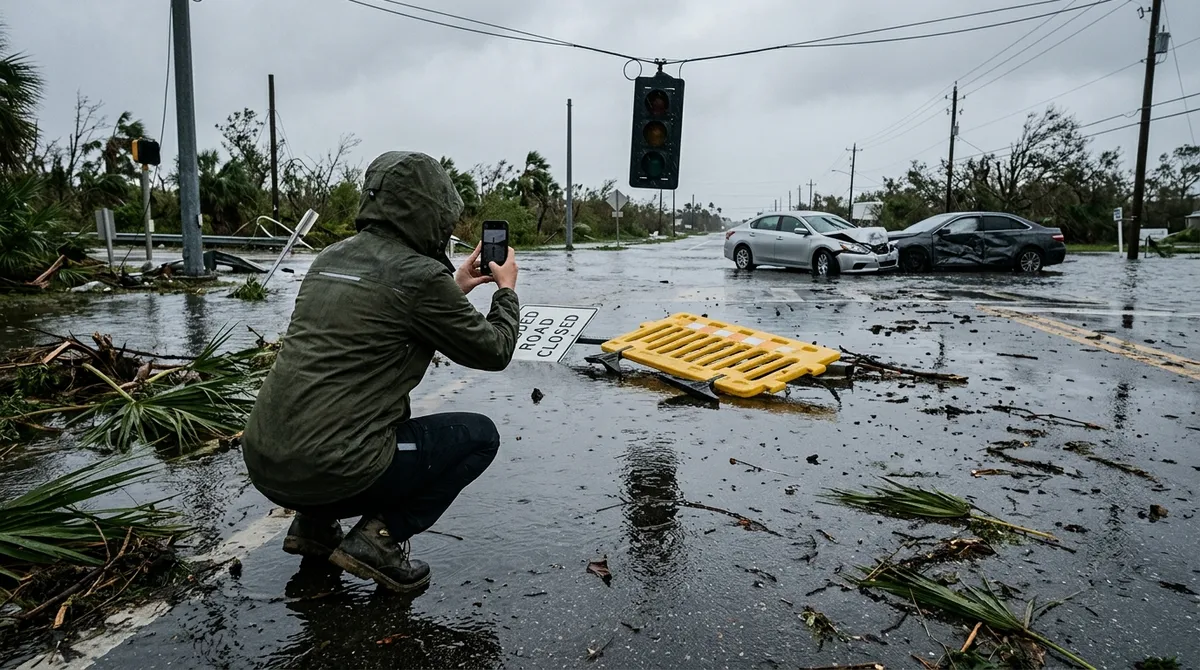
Hurricane season in eastern North Carolina runs June through November, and the crashes that come with it are not just weather stories. They are liability stories. When a driver slides across US-17 in a downpour, when a wind-loosened branch takes out a truck on I-40, or when someone runs a dark signal in Wilmington the morning after a landfall, someone still has to answer for the injuries.
This guide covers how NC law handles fault after a hurricane-season crash, where the contributory negligence rule cuts off otherwise strong claims, and which insurance layers usually come into play.
Weather Is Not a Get-Out-of-Fault Card
NC does not give drivers a pass because it was raining or windy. The standard is whether the driver operated the vehicle reasonably for the conditions on the road at that moment.
Reasonable-for-conditions in practice
Two everyday examples of what that standard looks like on the road:
- If visibility drops and traffic slows, the driver who keeps going 65 and rear-ends a stopped car is liable.
- If a heavy rain sheets across the highway, the driver who does not back off the accelerator and ends up hydroplaning into another lane is liable.
Citations that follow storm-season crashes
Two citable violations show up over and over in storm-season files:
- Driving too fast for conditions. Below the posted limit, but too fast for what the road looks like right now.
- Following too closely. A safe gap on a dry day is a rear-end collision on a wet one.
If you were hit under either of those patterns, the underlying Wilmington car accident claim is often stronger than it looks in the police report’s weather box. The companion piece on coastal flooding and hydroplaning walks through the standing-water and NCDOT road-defect fact patterns that show up alongside hurricane crashes.
The weather box on a crash report describes the sky, not the fault. Once the reasonable-for-conditions standard is applied, most storm-season rear-ends and hydroplane crashes still land on the driver who did not adjust.
The Contributory Negligence Trap After a Storm
North Carolina is one of the few states that still applies pure contributory negligence. If the injured driver is even 1 percent at fault, the entire claim is barred.
Insurer arguments that push fault above zero
In storm-season cases, insurers reach for a specific set of arguments to push that number above zero:
- The plaintiff was driving during an active evacuation order
- The plaintiff drove through a road that was barricaded or clearly flooded
- The plaintiff failed to treat a dark signal as a four-way stop
- The plaintiff ignored a curfew or driving restriction
Any of those, if proven, can end the case.
Why the contemporaneous record matters
That is why the contemporaneous record matters so much. Three pieces of evidence usually beat testimony offered months later:
- A weather report from that day
- A state or county order archived from the same time window
- Photos of what the road actually looked like when the crash happened
The what is contributory negligence explainer walks through how NC courts apply the rule day to day, and why storm cases attract these defenses more often than most.
Contributory negligence is the reason storm-season files hinge on evidence collected in the first three days, not statements collected three months later.
Downed Signals, Barricades, and Government Defendants
Storm crashes often involve conditions the city, county, or NCDOT was supposed to manage. When a public entity’s response is the reason for the crash, an entirely different set of deadlines and immunity rules kicks in on top of the driver-versus-driver picture.
Dark signals become four-way stops
When a storm knocks out traffic signals, state law treats the intersection as a four-way stop. Drivers who ignore that rule are at fault for the resulting collisions.
Photos of the dark signal, timestamped, are one of the highest-value pieces of evidence in these cases, because power gets restored before insurance adjusters or lawyers ever see the intersection.
When a public entity is on the hook
Some storm cases go beyond driver-versus-driver liability. Common fact patterns that can support a road-defect claim under the NC Tort Claims Act:
- A city that leaves a known downed tree in the roadway
- An NCDOT crew that fails to install barricades where a road washed out
- A municipality that reopens a flooded stretch too early
Special rules that private defendants do not get
Government cases come with a distinct playbook:
- Shorter notice deadlines
- Dollar caps
- Immunity defenses
Missing the notice deadline can end an otherwise strong claim, so a case that involves a public road defect needs review quickly.
Between dark signals, delayed road closures, and shorter government-defendant deadlines, any storm crash that involves a public condition needs an attorney’s eyes on it well before the three-year clock in a normal crash would matter.
The Insurance Stack in a Hurricane-Season Crash
Storm cases often involve more than one policy. A typical layout:
- The at-fault driver’s liability policy covers bodily injury and property damage the driver caused.
- Your own uninsured or underinsured motorist coverage covers you when the at-fault driver has too little insurance or none at all. Storm cases produce a lot of hit-and-run and uninsured drivers, which makes uninsured motorist coverage in NC one of the most important sections of your own policy to understand.
- Your comprehensive coverage pays for storm-caused damage to your own car, such as flood or wind or falling-tree damage. Liability-only policies do not include this.
- MedPay covers your medical bills up to the policy limit, regardless of fault, and does not have to wait for the liability case to resolve.
Stacking these correctly is where a lot of storm-season money is left on the table by unrepresented drivers. Adjusters do not volunteer the layers you did not think to ask about.
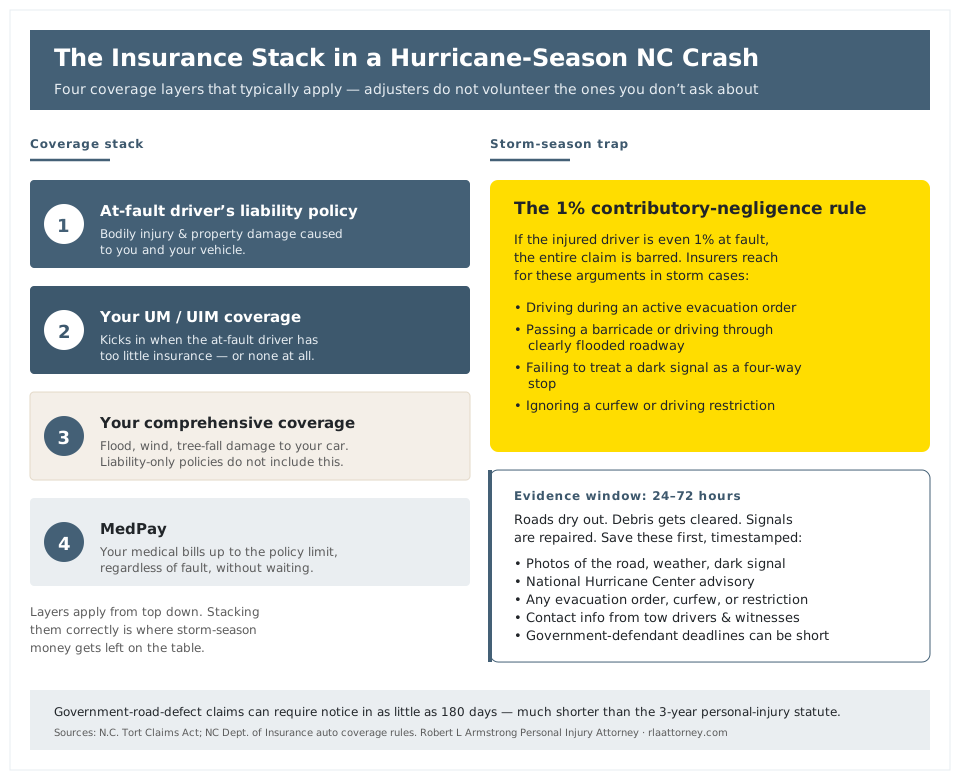
Working the coverage stack correctly can double or triple what a storm-season file recovers, and it is one of the most common places unrepresented drivers leave money on the table.
Evidence to Gather Before the Weather Moves On
The storm-season evidence window is short. The road dries out, the debris gets cleared, the signal is repaired. In the 24 to 72 hours after the crash:
- Photograph the scene, the vehicles, and any weather features (standing water, wind damage, downed limbs).
- Save a copy of the National Hurricane Center advisory covering that day and time, along with any local forecast office bulletin.
- Screenshot any state or county evacuation order, curfew, or driving restriction that was in effect.
- Get contact information from anyone who stopped to help, including tow drivers and first responders.
- If a signal was out, note the timestamp and the direction you were traveling.
If a Wilmington-area crash attorney gets involved early, that same window can also be used to send preservation letters for traffic camera footage at businesses and intersections nearby.
Everything in that 24- to 72-hour window is what later blunts the insurer’s weather-was-the-cause argument, so the sooner it gets locked down, the stronger the file.
When to Call a Lawyer
Any storm-season crash deserves an early legal review when it involves:
- Serious injuries
- A disputed fault picture
- A possible government defendant
NC’s three-year personal injury deadline still runs during hurricane season, and the government-defendant deadline is much shorter than that.
Get Your Storm-Season Crash Reviewed Before the Evidence Moves On
Weather, evacuation orders, and knocked-out signals give insurers a menu of contributory-negligence arguments, and the physical evidence has a 24- to 72-hour shelf life. Preservation letters, National Hurricane Center advisories, and camera pulls need to happen while the road is still fresh. Robert L Armstrong represents eastern NC drivers on a contingency basis, so there is no fee unless the case recovers. Book a free consultation or call (910) 256-1233 to have your crash, coverage stack, and evidence window reviewed before the storm cleanup buries the case.
Frequently asked questions
If it was raining hard, is the other driver still liable for the crash?
Usually yes. NC law expects drivers to slow down, increase following distance, and adjust to visibility and road conditions. A driver who hydroplanes at 65 mph in a downpour is not off the hook because it was raining. Speed too fast for conditions is its own citable violation.
What if a hurricane knocked out the traffic lights?
State law treats a dark signalized intersection as a four-way stop. A driver who blows through it without stopping is at fault for the collision. Photos or video showing the dark signal are important evidence, since power is usually restored before an adjuster inspects the scene.
Can I recover if I was hit while driving through standing water?
It depends on why you were in the standing water. If it was unmarked and reasonable to assume passable, another driver’s negligence in causing the crash can still support a claim. If the road was barricaded or an evacuation order was in effect, contributory negligence can bar recovery.
Does my auto policy cover flood damage to my car?
Only if you carry comprehensive coverage. Liability-only policies do not cover flood, wind, or tree-fall damage. Comprehensive claims run through your own insurer and are separate from any bodily-injury claim against an at-fault driver.
What about a crash caused by a downed tree or road debris?
Fault turns on who was responsible for the hazard. A city or NCDOT crew that failed to remove a known obstruction can be liable, but government-defendant claims come with strict notice deadlines and immunity rules that shorten the window to act. Private property owners can also be liable for trees they knew were dangerous.
Do NC’s normal deadlines still apply during a hurricane?
The three-year personal injury statute of limitations still runs. Courts may close for a few days during a storm, but the filing clock does not pause. Government-defendant claims have shorter deadlines, in some cases 180 days or less, so early legal review matters.
What should I document after a storm-season crash?
Photos of the weather, the road, any downed signals or barricades, and every vehicle involved. Save weather reports from the day and time of the crash. Note whether an evacuation order or driving restriction was in effect. All of this becomes evidence when an insurer argues that weather, not the other driver, caused the collision.
Storm-season evidence disappears in days.
Roads dry out, debris gets cleared, and signals get repaired inside a week. Get an eastern NC injury attorney sending preservation letters and reviewing government-defendant deadlines while the record is still fresh.
Related Articles
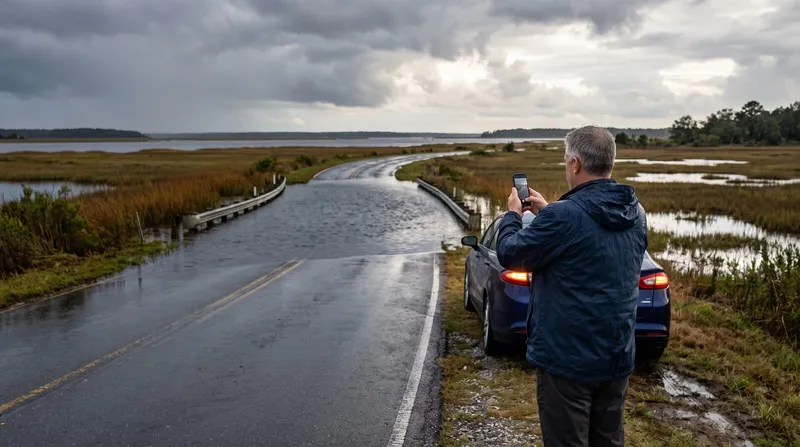
Hydroplaning accident in NC and who is at fault
A hydroplaning crash in eastern NC is usually blamed on speed, but hidden water, king tides, and road defects can shift fault. Ask about a free consultation.

How to Sue City of Wilmington for Road Defect Car Accident
Injured by a road defect in Wilmington? Learn how to sue the City of Wilmington for a road defect car accident. Get expert legal help today.

Wilmington, NC Car Crash Attorney Near Me
Injured in a car crash? Find a Wilmington, NC car crash attorney near you. Get expert legal help and maximize your compensation. Call for a free consult.