Teen driver car accident and parent liability NC


On this page
National Teen Driver Safety Week runs October 18 to 24, and it exists because crashes involving 16 to 19 year old drivers happen at a far higher rate than crashes involving older drivers. When your own teenager is the one hurt, or the one blamed, in a Wilmington car accident, the questions come fast: who pays the medical bills, what happens to your insurance, and whether you, as a parent, could be held responsible for what your teen did behind the wheel.
That last question catches most families off guard. North Carolina has two legal doctrines, the family purpose doctrine and negligent entrustment, that can put a parent’s own insurance policy and assets on the hook for a teen’s crash, especially when the teen already had a shaky driving record before the wreck. I’m Robert L Armstrong, and I have represented injury victims and their families in eastern North Carolina for over 41 years, including teen driver cases that turned on exactly this issue.
What to do in the first hours after a teen car accident in Wilmington
Get medical care and document the scene
Call 911 if anyone is injured, an airbag deployed, or a vehicle cannot be moved safely. Teens often say they feel fine right after a crash, because shock and adrenaline can mask real injuries for hours. Get your teen seen by a doctor within 24 hours even when nothing seems obviously wrong.
Once everyone is safe, start preserving evidence. Photograph every vehicle from several angles, the road surface, traffic signals, and any visible injuries. Write down the other driver’s name, license number, and insurance information, along with contact information for anyone who saw what happened. Tell your teen not to post about the crash on social media; insurance adjusters check those accounts.
Handle insurance communications carefully
Report the crash to your own insurance company promptly, but be careful when the other driver’s insurer calls. Avoid giving recorded statements or signing a medical release before you talk to a Wilmington attorney. North Carolina’s strict contributory negligence rule means even a small admission in that call (something your teen says about speed or distraction) could be used to argue your family’s claim should be barred entirely.
Write down what your teen remembers while it’s fresh, in your own notes rather than a recorded call with an adjuster. Memory fades fast after a crash, and a teen’s account of speed, distance, and timing often shifts in the days afterward simply because that’s how memory works under stress. A private, written account you keep for your own file protects your teen far better than an early recorded statement given under pressure.
When a parent can be held liable for a teen’s crash in North Carolina
I hear this question often in meetings with Wilmington families: can I be sued, or can my own insurance be reached, because of what my teen did behind the wheel? The honest answer is sometimes, and North Carolina law gives an injury victim two separate paths to get there.
The family purpose doctrine can make the vehicle’s owner responsible
Under North Carolina’s family purpose doctrine, a parent who owns, provides, or maintains a vehicle for the family’s general use, pleasure, and convenience can be held responsible when a family member drives it carelessly, even if the parent was nowhere near the crash. The doctrine looks at whether the car was kept for the whole household to use, not just at who happened to be driving that day. If your teen had express or implied permission to drive the family car, that permission alone can be enough to bring a parent into the case under the pattern jury instruction North Carolina courts use for these claims.
Negligent entrustment turns on your teen’s driving record
Negligent entrustment reaches further. It applies when an owner lets someone drive while knowing, or having reason to know, that the driver is incompetent, inexperienced, or reckless. A teen’s own history (prior tickets, a past crash, a restricted or suspended license) is the evidence that matters here. I recently handled a teen driver case that turned on this exact point: what the car’s owner already knew about the teen’s driving record before handing over the keys.
Proving what a parent knew usually comes down to records that already exist before the crash ever happens. A prior citation on the teen’s driving record, a past fender-bender the family paid for out of pocket instead of reporting, a note from a driving instructor, or even a text message between parent and teen about an earlier close call can all show the parent had reason to know. I request the teen driver’s full record early in a case, because a single prior ticket can change how an insurer values the entire claim.

Both doctrines can run in either direction. If another family’s teenager hit your car, these rules can reach that family’s insurance and assets, not just the teen driver’s own limited coverage. If your teen caused the crash, the same rules can reach yours. I don’t give case-specific advice in a blog post, but if either situation sounds like your family’s, it’s worth a conversation before you sign anything with an insurer.
North Carolina’s graduated licensing system and why it matters after a crash
North Carolina eases teen drivers onto the road through a three-stage graduated licensing program rather than handing over full driving privileges all at once. A Level 1 limited learner permit allows only supervised driving, generally between 5 a.m. and 9 p.m., for at least the first six months. A Level 2 limited provisional license, available at 16, allows unsupervised daytime driving but limits passengers under 21 and still requires a supervising adult late at night. Full, unrestricted driving generally does not arrive until a teen turns 18.
I check where a teen driver stood in this licensing system at the time of a crash, because a violation of a license restriction (an extra passenger, a late-night drive without supervision) can become part of the fault argument an insurer raises. The stakes behind these rules are real. Per mile driven, drivers age 16 to 19 have a fatal crash rate close to three times that of drivers 20 and older, according to crash risk data the CDC tracks every year.
Contributory negligence and the filing deadline your family is working against
Most personal injury claims in North Carolina must be filed within three years under G.S. 1-52, and the clock typically runs from the date of the crash. A minor’s own injury claim is generally paused until the teen turns 18 under G.S. 1-17, which gives your teen more time on their own claim. The medical bills you, as a parent, already paid out of pocket are a different story. Your own claim for those expenses doesn’t automatically get the same extra time, so waiting to sort out a teen driver crash is risky even when your teen’s personal claim isn’t close to expiring.
On top of the deadline, North Carolina’s contributory negligence rule can bar your family’s recovery completely if your teen is found even slightly at fault. North Carolina presumes a child over 14 capable of contributory negligence, the same way an adult can be, so a 16 or 17 year old’s own driving mistakes can be used against your family’s claim, not just the other driver’s.
Gathering evidence after a teen driver car accident
The evidence that protects your teen often disappears fastest. Requesting the police reports as soon as they’re available matters, since they document the officer’s initial read on fault. Traffic camera footage and 911 call recordings are frequently kept only for a short, fixed window before they’re overwritten on a routine schedule.
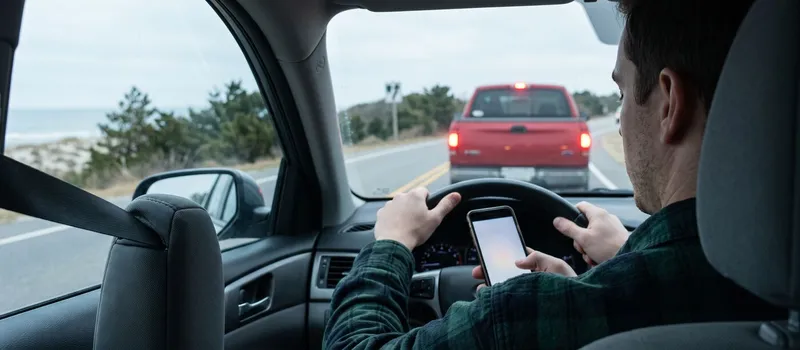
Phone records deserve particular attention in a teen driver case. When texting evidence shows the other driver was on a phone in the moments before the crash, that record needs to be requested before carriers purge it on their normal schedule. The same goes for your own teen’s phone; if a question ever comes up about distraction on either side, having the records pulled and preserved early protects your family rather than leaving the timeline to memory.
Witness statements matter just as much, and they’re often the first piece of evidence lost. A passerby who saw the crash rarely stays in touch for long after giving a name and number to an officer. I reach out to witnesses quickly, while the crash is still fresh in their mind, rather than waiting for an insurer to decide the claim is worth investigating. I gather all of this, along with vehicle data and the responding officer’s own notes, so the story of what happened doesn’t come down to guesswork months later.
Teen driver car accident FAQs
Who pays for my teen’s medical bills, and how do health insurance, MedPay, and liability coverage interact?
You are initially responsible for your teen’s medical bills, even when another driver caused the crash. Your health insurance is usually the first resource for immediate payment. MedPay coverage, if you have it, typically provides $1,000-$10,000 and pays quickly without needing repayment from any later recovery.
Will my auto insurance premiums increase if I file a claim for a crash my teen didn’t cause?
A not-at-fault crash can still trigger a premium increase, depending on your insurer’s own policies. If the other driver lacks enough coverage, you may need to use your own collision or uninsured motorist coverage, which some insurers treat as a first-party claim. North Carolina’s contributory negligence rule means even minor fault on your teen’s part could force you to rely on your own insurance instead of the other driver’s.
Are parents liable for a teen driver’s crash in NC?
Sometimes. Under the family purpose doctrine, a parent who keeps a car for the whole family’s use can be held responsible for a teen’s careless driving, even without being in the car. Under negligent entrustment, a parent who lets a teen with a poor driving record drive again can face a separate claim. I look at both angles in every teen driver case I take, whether your family is the one hurt or the one facing a claim.
Do most Wilmington teen driver cases settle, or will my family have to go to court?
Most car accident cases in North Carolina settle before trial. Cases involving disputed liability, serious injuries, or a low initial offer are more likely to require a lawsuit, and even then, many still settle before the trial date arrives.
How long do I have to file a claim after my teen’s car accident?
Most North Carolina personal injury claims must be filed within three years of the crash under G.S. 1-52. Your teen’s own injury claim is generally paused until they turn 18 under G.S. 1-17, but the bills you paid out of pocket as a parent are a separate claim that doesn’t always get the same extra time. I don’t recommend waiting to find out which rule applies to your situation.
Does my teen’s own driving record affect our case?
Yes, in two different ways. If your teen caused the crash, their record can support a negligent entrustment claim against whoever let them drive. If another driver hit your teen, North Carolina’s contributory negligence rule means an insurer will look just as hard at your teen’s record and actions to try to shift some of the blame back onto them.
Talking to a Wilmington car accident lawyer about your teen’s crash
A teen driver crash in Wilmington can turn on the fine print of a graduated license, a family purpose doctrine claim against a parent, or a negligent entrustment argument tied to a driving record, on top of the medical bills and insurance calls every family faces after a wreck. I handle these cases personally, from the first phone call through negotiations with the insurer, and I work with injury victims and their families across New Hanover, Brunswick, Pender, Onslow, Bladen, and Duplin counties. The consultation is free, and there is no fee unless I win.
If your teen was hurt, or your family is facing a claim over what your teen did behind the wheel, Talk to a Wilmington car accident lawyer before the filing deadline or the evidence works against you.
One statement from your teen could end the family's claim.
North Carolina's contributory negligence rule means even a small admission after a teen crash can bar recovery. Have the insurance communications handled for you before adjusters start asking questions.
Related Articles

Prove Other Driver Was Texting in a Wilmington, NC Car Crash
Prove the other driver was texting in your Wilmington, NC car crash. Learn key steps and evidence. Call Robert Armstrong for a free consultation.

Elderly Driver Car Accident Attorney in Wilmington, NC
Elderly driver car accident attorney Wilmington, NC. Compassionate legal help for seniors. Protect your rights—contact us for a free consult.
Texting and driving accident NC law and phone records
A Wilmington texting and driving accident can turn on phone records and one line in NC's G.S. 20-137.4A. See the evidence timeline and get a free consultation.