FedEx & Amazon truck accidents · Wilmington, NC
Wilmington FedEx truck accident lawyer, for Amazon van crashes too.
After a FedEx truck accident, the first thing you may hear is that the driver works for someone else. Amazon says the same about its delivery vans. Both brands run their routes through separate contractor companies, and that setup is built to keep the big name off the claim. With over 41 years in personal injury, I trace the contract chain, save the route data before it is erased, and name every company that can be held responsible. Consultation is free. No fee unless I win your case.
5.0 on Google across 43 reviews
What injury clients said after their case closed.
“Robert Armstrong is not only a great attorney, he has become a good friend. You can call any time and there is always a pleasant greeting as if he has been expecting your call. His determination is relentless and his knowledge of the law is totally remarkable. I feel completely secure with Robert Armstrong handling my affairs, and so will you.”
“Mr. Armstrong is an extremely passionate and effective attorney — an aggressive advocate for his clients who obtains positive results. He kept in contact with me throughout the entire process, and questions and concerns were addressed in a very timely manner. I would highly recommend him.”
“I was in a car accident on New Year's Eve and did not know which way to turn. I googled attorneys and Robert's name popped up, so I gave him a call. He was amazing to work with and very responsive.”
How I work FedEx and Amazon cases
The name on the truck and the company on the policy are rarely the same.
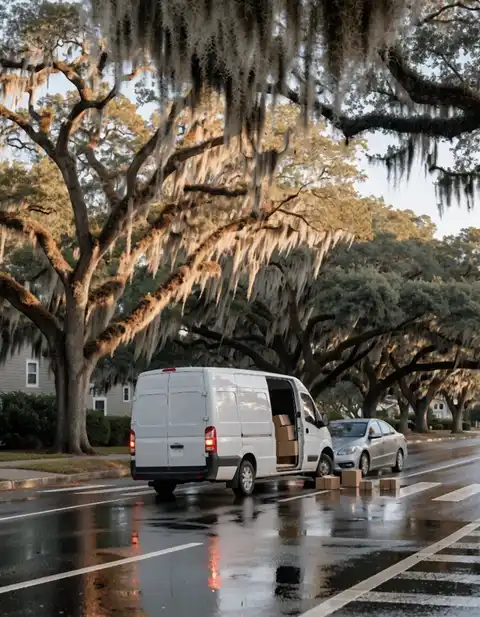
Most FedEx truck accident claims in Wilmington start with a white step van on a neighborhood street, not a tractor-trailer on the interstate. FedEx Ground does not employ the people who drive those routes. It contracts each territory to an Independent Service Provider, a separate business that hires the drivers, carries the insurance, and often owns or leases the trucks. FedEx Express has long used its own employee couriers, but FedEx has been moving more of that work to contractors as it merges its networks. Amazon built its Delivery Service Partner program the same way. A small company runs a set of Amazon routes, often in Amazon-branded vans, and Amazon tells the adjuster the driver was never its employee.
North Carolina law looks past the label. Under the test the NC Supreme Court set out in Hayes v. Elon College, the question is who had the right to control how the work was done. Amazon's app assigns every stop and delivery window. Cameras in the van score the driver's following distance and speed. FedEx sets service standards, scan requirements, and vehicle specifications for its contractors. Facts like those can make the brand share responsibility with the contractor, or give rise to claims for negligent hiring and supervision when a driver with a poor record was kept on the road.
So I build these files in a set order. The preservation letter goes to the brand, the contractor, and the telematics provider before route data, camera footage, and stop scans are overwritten. I pull the vehicle registration, because G.S. 20-71.1 treats ownership as evidence that the driver was acting for the owner. I request the contractor agreement and every declarations page that might respond, including your own underinsured motorist coverage. And because North Carolina still applies contributory negligence, I work to shut down any 1% fault argument from the first call.
Personal injury is all I do, and I have done it for over 41 years. I represent injured people, never delivery companies or their insurers. I handle every FedEx truck accident and Amazon van case personally, with no associates and no handoffs, and calls are returned within 24 hours. Tell me what happened, and I will tell you honestly whether I think the claim can be won and which companies belong in it.
Robert L Armstrong
Delivery contractor cases I handle
Each delivery model shields the brand a different way.
Which model put the driver on your street decides who gets named, which insurance applies, and what records to demand first.
FedEx Ground contractor trucks
Residential and business deliveries run by Independent Service Providers. The contractor employs the driver and insures the truck, while FedEx sets the service standards and vehicle specifications. The contract between them shows how much control FedEx kept.
Amazon Delivery Service Partner vans
Amazon-branded vans driven by employees of a small partner company. Amazon assigns the routes and watches the driver through in-van cameras and driving scores. That monitoring data is often the best evidence of who controlled the work.
Amazon Flex drivers
Gig drivers delivering from their own cars after signing up in an app. Coverage can depend on whether the driver was logged in, carrying packages, or between blocks, so the app records come first.
Heavier step vans and federal rules
Many full-size step vans are rated above 10,000 pounds. When one of those crosses state lines in commerce, federal motor carrier safety rules on driver qualification and vehicle inspection can apply. Most Amazon vans sit just under that line.
Negligent hiring and supervision
A contractor that hires a driver with a bad record, skips training, or keeps a driver on after repeated camera alerts can be liable for its own choices. Those records come from the contractor's files and the brand's scoring systems.
Pedestrians, cyclists, and parked cars
Delivery drivers stop, reverse, and pull out dozens of times a shift. Backing crashes, sidewalk and driveway injuries, and doors opened into traffic are common, and stop-scan timestamps can place the truck to the second.
Hit by a FedEx or Amazon truck? Find out who is really responsible.
Tell me which truck hit you and what the driver was doing. I will tell you which companies likely belong in the claim and what records we need to save this week. No fee unless I win your case.
By the numbers
What over 41 years looks like in the file.
Common questions
About FedEx and Amazon truck accident claims.
The questions people ask most after a branded delivery truck or van hits them in North Carolina. Answered the way I would answer them on the phone.
Frequently asked questions
FedEx says the driver doesn’t work for them. Can I still bring a claim?
Yes. That answer is the opening move in almost every FedEx truck accident case, not the end of it. FedEx Ground contracts its routes out to Independent Service Providers, and the driver works for the contractor. The contractor and its insurer are responsible for the driver’s carelessness. Whether FedEx itself can also be held responsible turns on how much control it kept over the route, the truck, and the driver’s day, and that is a question of evidence. I gather that evidence before I accept anyone’s label for the relationship.
Who is responsible after an Amazon delivery van hits me in North Carolina?
Usually the Delivery Service Partner that employed the driver, and its insurer, at a minimum. Amazon sets the routes, the delivery windows, and the stop counts through its own app, and it watches drivers through in-van cameras and driving-score software. Those facts can support a claim that Amazon kept enough control to share responsibility. The van’s registration matters as well: under G.S. 20-71.1, proof of who owns the vehicle is evidence that the driver was acting for the owner.
The driver was an Amazon Flex driver in their own car. Is that different?
Yes. Flex drivers sign up through an app and deliver in their personal vehicles, so there is no route contractor in the middle. The first coverage is often the driver’s own auto policy, which may exclude deliveries for pay, and then any commercial coverage that applies while the driver was logged in and carrying packages. Getting the app records that show exactly when the driver was on a delivery block is the first step.
Is a route contractor’s insurance enough to cover a serious injury?
Sometimes, and sometimes not even close. A small contractor running a dozen routes may carry one policy for its whole fleet. A spinal fracture, a brain injury, or a death can run past that limit fast. That is why I look for every responsible company and every policy at the start, including your own underinsured motorist coverage, instead of settling with the first insurer to call.
The contractor’s adjuster already called and wants a recorded statement. What should I do?
Say you will call back after speaking with a lawyer, and then call one. North Carolina’s contributory negligence rule can bar your recovery if you are found even 1% at fault, and a recorded statement given the week of the crash is where the defense looks first. My guide on what to do after a truck accident covers the first few days, step by step.
Is it worth going up against companies the size of FedEx and Amazon?
Their size works against them in one way: they record almost everything. GPS breadcrumbs, stop scans, camera clips, driver scores, and dispatch messages exist for nearly every route. The hard part is getting that data preserved before it is overwritten, which is why the preservation letter goes out early. If the truck was a UPS or Postal Service vehicle instead, the rules change, and my delivery truck accident page explains how.
How long do I have to file a claim after a FedEx or Amazon crash?
Three years from the crash for an injury claim under G.S. 1-52, and two years for a wrongful death claim under G.S. 1-53. The data you need disappears much sooner than that, often within weeks. If the crash involved a FedEx tractor-trailer on I-40 instead of a local delivery truck, the federal trucking rules apply, and my 18-wheeler accident practice handles those cases.
When you're ready to talk through how the delivery truck hit you, the call is free.
No fee unless I win your case. Tell me what happened and whose truck it was. I will tell you honestly whether I think the case can be won under North Carolina law and which companies can be held responsible.
Contingency-fee representation. Free consultation.